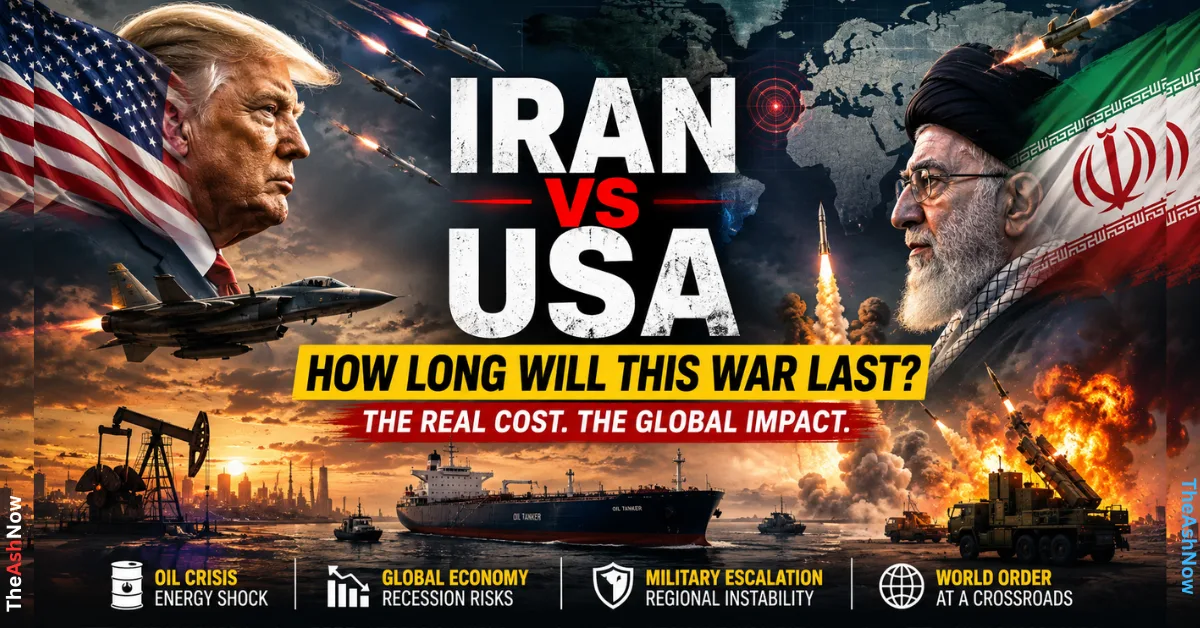
Iran USA War 2026: On a dark February morning, the Middle East crossed a line that diplomats, generals, intelligence agencies, and energy traders had spent decades trying to avoid.
The first reports were confused.
Explosions.
Radar failures.
Your Leadership Story Deserves the Spotlight
Get featured on TheAshNow — the editorial platform trusted by founders, CEOs & executives worldwide for Google visibility, LinkedIn authority & global recognition.
Apply for Featured Profile →Missile launches.
Emergency military communications.
Then came the headline that immediately changed the century’s geopolitical trajectory.
The United States and Israel had launched a massive coordinated strike campaign against Iran.
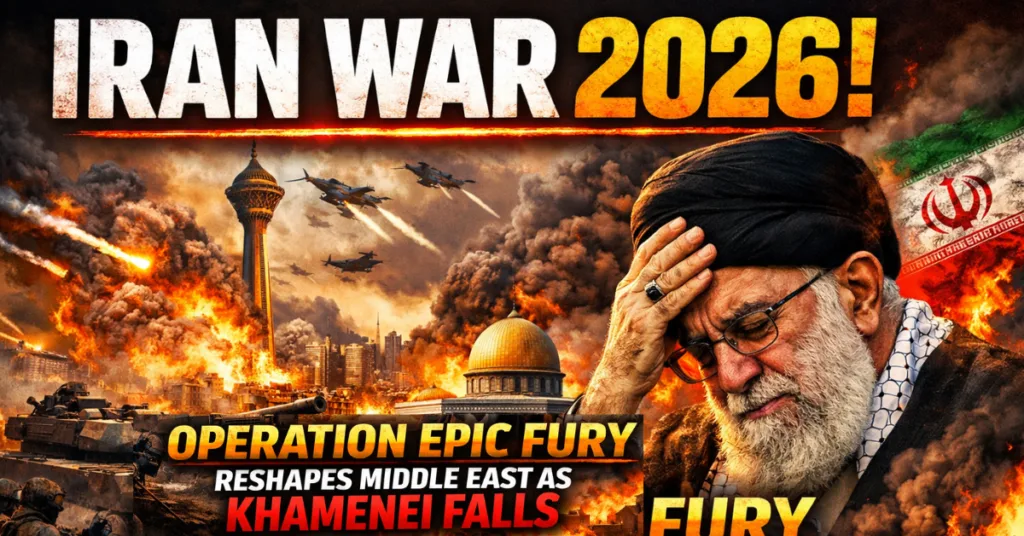
Within hours, military installations across Iran were burning. Command centers were hit. Air-defense systems were shattered. Senior leadership figures were reported dead. By the end of the day, the region had entered the largest direct military confrontation between Iran and the United States in modern history.
What many policymakers initially expected to be a short and decisive campaign instead evolved into something far more dangerous: a prolonged strategic struggle involving missile warfare, drone attacks, cyber operations, naval confrontations, economic warfare, energy disruption, proxy networks, and a global financial shock.
Three months later, on May 31, 2026, the war remains unresolved.
Neither side has achieved its ultimate objectives.
Neither side can claim a clear victory.
And neither side can easily walk away.
BUILD YOUR LEGACY IN PRINT
Editorial features for founders, CEOs & executives — engineered for search visibility, LinkedIn credibility & industry authority.
APPLY NOW →The Iran USA war is no longer simply a military confrontation.
It has become a test of American power, Iranian resilience, global energy security, modern warfare doctrine, and the stability of the international system itself.
The question now being asked in Washington, Tehran, Beijing, Moscow, Brussels, Riyadh, New Delhi, and financial centers around the world is no longer how the conflict started.
The question is how long it can continue.
And perhaps even more importantly:
What kind of world will exist when it finally ends?
Table of Contents
Iran USA War 2026: How the Conflict Began
The roots of the Iran America conflict stretch back decades.
The 1979 Iranian Revolution fundamentally transformed relations between Tehran and Washington.
Since then, sanctions, covert operations, proxy conflicts, nuclear disputes, assassinations, and regional rivalries created a foundation of permanent hostility.
For years, both countries operated inside what military planners often describe as the “gray zone.”
Iran used regional networks and allied militias.
The United States relied on sanctions, intelligence operations, deterrence, and regional partnerships.
Direct war remained rare.
Dangerous incidents occurred frequently.
But both governments generally avoided full-scale confrontation.
That changed in 2026.
American and Israeli leaders increasingly concluded that Iran’s expanding missile programs, regional influence, drone capabilities, and nuclear infrastructure represented a growing strategic threat.
Iranian leaders meanwhile believed Washington and its allies were pursuing a long-term strategy aimed at weakening the Islamic Republic and eventually forcing regime collapse.
By early 2026, mutual distrust had reached levels not seen in years.
Negotiations had stalled.
Regional tensions intensified.
Military deployments increased.
Then came the strikes.
The opening phase of the war was built around a familiar military assumption that has shaped many modern conflicts.
Shock.
Disruption.
Decapitation.
Rapid dominance.
The theory was straightforward.
Hit hard enough.
Destroy command networks.
Eliminate key leadership.
Cripple military capabilities.
Force political concessions.
Yet history repeatedly shows that wars rarely follow initial plans.
Iran proved no exception.
What Washington Expected
American planners entered the conflict with several strategic assumptions.
First, Iran’s military infrastructure could be significantly degraded through sustained airpower.
Second, leadership disruption would weaken command cohesion.
Third, economic pressure combined with military strikes could force Tehran into concessions.
Fourth, regional partners would help contain escalation.
From a purely military perspective, parts of those assumptions proved accurate.
American airpower remains unmatched.
Precision strike capabilities remain among the most sophisticated in the world.
Iran suffered major military losses.
Infrastructure damage was significant.
Leadership structures faced severe disruption.
Yet the broader political assumptions proved far less reliable.
Wars are not won solely by destroying targets.
They are won by changing political realities.
That proved much harder.
What Tehran Expected
Iran entered the conflict with a very different strategic calculation.
Iranian doctrine has never been based on defeating the United States conventionally.
Instead, it focuses on imposing costs.
The goal is endurance rather than dominance.
Iranian strategists understood they could not match American aircraft carriers, stealth bombers, satellite networks, or advanced airpower.
Instead, they aimed to make victory too expensive.
Too prolonged.
Too politically damaging.
Too economically disruptive.
This approach reflects lessons learned from decades of confrontation.
Iran’s leadership believed that by threatening regional stability, energy flows, shipping routes, and American interests across the Middle East, they could create enough pressure to eventually force negotiations.
In many respects, that strategy has shaped the conflict’s evolution.
The Escalation Timeline
The opening strikes rapidly evolved into a broader regional confrontation.
Initial air campaigns were followed by Iranian missile attacks.
Drone operations expanded.
Shipping routes became contested.
Energy infrastructure emerged as a central battlefield.
The Strait of Hormuz quickly became one of the war’s most important flashpoints. Roughly one-fifth of global oil shipments move through this narrow maritime corridor, making it one of the world’s most strategically important waterways.
As the conflict intensified, shipping disruptions triggered market panic.
Insurance costs surged.
Tanker traffic slowed.
Energy traders scrambled.
Governments activated emergency planning mechanisms.
The conflict increasingly resembled a hybrid war involving military force, economic coercion, maritime disruption, cyber operations, and diplomatic maneuvering.
By spring 2026, ceasefires had been proposed, negotiated, violated, restored, and challenged repeatedly.
Yet no comprehensive settlement emerged.
Why Victory Is So Difficult
The central reality of this war is that victory means different things to different actors.
For the United States, victory originally implied significantly reducing Iranian military capabilities and strategic threats.
For Iran, victory meant survival.
These objectives are fundamentally asymmetrical.
History shows survival is often easier than transformation.
Destroying a government is difficult.
Changing a political system is harder.
Creating a stable replacement is harder still.
Military power can destroy infrastructure.
It cannot automatically create political outcomes.
This dilemma has haunted great powers throughout modern history.
Vietnam.
Afghanistan.
Iraq.
Each conflict demonstrated the limits of military superiority when political objectives become unclear.
The Iran conflict is exposing similar challenges.
Battlefield Realities
The war has highlighted several major shifts in modern warfare.
The first is the declining dominance of traditional battlefield concepts.
Large mechanized formations matter less when precision missiles can strike hundreds of miles away.
Drone networks now operate as persistent surveillance systems.
Artificial intelligence increasingly assists targeting processes.
Cyber capabilities shape battlefield awareness.
Information warfare influences public perception.
This conflict is not being fought primarily through territorial conquest.
Instead, it revolves around disruption, deterrence, endurance, and strategic pressure.
Missile Warfare
Missiles have become one of the defining features of the war.
Iran has long invested heavily in ballistic and cruise missile development.
Those investments now form the backbone of its deterrence strategy.
Missiles allow Tehran to threaten military bases, energy infrastructure, ports, and regional targets without relying on traditional airpower.
American missile defenses have intercepted many attacks.
Yet interception is expensive.
Attack systems are often cheaper than defensive systems.
This creates what military economists call a cost-imposition problem.
A missile costing tens of thousands of dollars may require interceptors worth millions.
Over time, this dynamic becomes strategically significant.
Drone Warfare
If missiles represent the war’s hammer, drones represent its nervous system.
The Iran US war may ultimately be remembered as one of the most important demonstrations of large-scale drone warfare.
Low-cost drones have repeatedly challenged expensive military assets.
Surveillance drones monitor shipping lanes.
Attack drones threaten bases and infrastructure.
Swarm tactics complicate defense planning.
The conflict has accelerated global military interest in autonomous systems, AI-assisted targeting, and counter-drone technologies.
Future military academies will likely study this war extensively.
Naval Warfare and the Strait of Hormuz
No aspect of the conflict has generated more global concern than maritime disruption.
The Strait of Hormuz sits at the center of world energy security.
Even limited disruptions create immediate economic consequences.
Oil prices surged dramatically during peak tensions, at times moving above $100 per barrel amid fears of prolonged supply disruptions.
For energy-importing nations, this became a strategic crisis.
For financial markets, it became a major inflation threat.
For governments, it raised fears of recession.
The maritime dimension transformed a regional conflict into a global economic challenge.
Cyber Warfare
Much of the war’s most important activity remains invisible.
Cyber operations have become a central battlefield.
Both sides possess significant capabilities.
Cyber campaigns target communications, logistics, financial systems, infrastructure, intelligence collection, and military coordination.
Unlike missiles, cyber attacks often leave limited visible evidence.
Yet their impact can be enormous.
The conflict has reinforced the reality that modern wars increasingly occur simultaneously across physical and digital domains.
Intelligence Operations
Intelligence services have played a crucial role throughout the conflict.
Target identification.
Leadership tracking.
Infrastructure mapping.
Cyber infiltration.
Electronic surveillance.
Strategic deception.
The war has highlighted the growing integration of intelligence and military operations.
Success increasingly depends on information superiority rather than sheer firepower.
The side that understands faster often gains decisive advantages.
Proxy Warfare
Although this is often described as a direct Iran versus United States conflict, regional actors remain deeply involved.
Iran’s network of regional partners and allied organizations continues to influence strategic calculations.
Washington meanwhile relies heavily on partnerships across the Gulf and broader Middle East.
Proxy warfare expands geographic risk.
It also complicates diplomacy.
Negotiating peace becomes harder when multiple actors possess independent interests.
Humanitarian Consequences
While geopolitical discussions often focus on strategy, economics, and military operations, civilians bear the greatest burden.
Cities have experienced infrastructure damage.
Families have been displaced.
Essential services have been disrupted.
Medical systems face enormous strain.
The human cost extends far beyond casualty statistics.
Long after military operations end, societies continue living with trauma.
Reconstruction frequently takes decades.
Economic Damage Inside Iran
Iran’s economy entered the war under significant pressure from sanctions and structural challenges.
The conflict intensified those pressures dramatically.
Industrial facilities suffered damage.
Energy exports faced disruption.
Investment collapsed.
Currency pressures increased.
Unemployment rose.
Economic contraction became severe. Multiple estimates now suggest wartime damage has pushed Iran toward one of its deepest economic crises in decades.
The longer the war continues, the harder recovery becomes.
Economic Damage Inside America
The United States has not experienced direct large-scale infrastructure destruction.
However, war costs remain significant.
Defense spending has surged.
Naval deployments expanded.
Missile interception operations continue.
Regional force protection requirements increased.
The most politically sensitive effect has been inflation pressure.
Energy prices affect nearly every aspect of economic activity.
Higher fuel costs raise transportation expenses.
Those costs ripple through supply chains.
Consumers eventually feel the impact.
Inflation Risks
One of the conflict’s most important global consequences involves inflation.
The world spent years attempting to stabilize prices after previous economic disruptions.
Energy shocks threaten that progress.
Central banks face difficult decisions.
Higher oil prices increase inflation.
Higher interest rates slow growth.
Policymakers must balance competing risks.
This challenge extends far beyond the United States.
Europe.
Asia.
Latin America.
Africa.
Every major economy faces exposure.

Global Oil Market Disruption
Energy markets respond not merely to actual disruptions but also to perceived risks.
The possibility of supply interruptions often matters nearly as much as actual shortages.
This war has demonstrated that reality repeatedly.
Oil traders monitor every military announcement.
Every naval movement.
Every diplomatic signal.
Every ceasefire rumor.
Markets now price geopolitical uncertainty as aggressively as supply fundamentals.
Supply Chains and Business Uncertainty
Globalization created extraordinary efficiency.
It also created vulnerability.
Modern supply chains depend on predictable transportation routes.
Maritime disruption threatens that predictability.
Businesses dislike uncertainty more than almost anything else.
Investment decisions become harder.
Capital spending slows.
Corporate planning becomes cautious.
Hiring weakens.
Growth expectations fall.
These effects rarely appear immediately.
But they accumulate.
Financial Markets
Stock markets initially reacted with sharp volatility.
Energy stocks surged.
Defense companies benefited.
Shipping markets experienced severe stress.
Airline sectors faced pressure.
Emerging markets suffered capital outflows.
Investor psychology became increasingly tied to war developments.
The conflict reminded financial markets that geopolitics remains a powerful economic force.
Defense Industry Impact
One sector experiencing significant gains is defense manufacturing.
Missile inventories require replenishment.
Air defense systems remain in demand.
Drone production has expanded.
Electronic warfare capabilities attract growing investment.
Governments around the world are reassessing procurement priorities.
Military spending is likely to remain elevated for years.
Political Pressure in Washington
Wars are never fought solely overseas.
Domestic politics always matters.
American leaders face competing pressures.
Some demand stronger military action.
Others call for de-escalation.
Congress remains divided over long-term commitments.
Questions increasingly focus on objectives.
How much is enough?
What constitutes success?
What is the exit strategy?
These questions become more difficult as wars lengthen.
Political Pressure in Tehran
Iranian leadership faces a different challenge.
The central objective remains regime survival.
Nationalist sentiment can strengthen governments during conflict.
Yet prolonged economic hardship creates risks.
Public frustration grows.
Elite divisions emerge.
Resource constraints intensify.
Maintaining internal cohesion becomes increasingly important.
Public Opinion
Public opinion remains fluid on both sides.
Initial support often declines during prolonged conflicts.
Casualties matter.
Economic hardship matters.
Perceived progress matters.
Political messaging shapes perceptions.
But reality ultimately carries weight.
If citizens believe sacrifices lack purpose, support weakens.
History repeatedly demonstrates this pattern.
Regional Diplomacy
The conflict has transformed regional diplomacy.
Countries across the Middle East face a delicate balancing act.
Most seek stability.
Few want escalation.
Nearly all worry about economic consequences.
Diplomatic activity has intensified significantly.
Yet achieving consensus remains difficult.
Israel’s Position
Israel views Iran through a security lens shaped by decades of confrontation.
Israeli policymakers argue that Iran’s missile programs, regional networks, and nuclear ambitions pose long-term threats.
Consequently, Israel has supported aggressive efforts to degrade Iranian capabilities.
Yet prolonged war also creates risks for Israel.
Regional instability.
Economic uncertainty.
Potential escalation.
Strategic overstretch.
All remain concerns.
Saudi Arabia, UAE, Qatar, and Oman
The Gulf states occupy particularly sensitive positions.
Saudi Arabia seeks regional stability while remaining wary of Iranian influence.
The UAE prioritizes economic continuity and trade security.
Qatar continues playing mediation roles.
Oman remains one of the region’s most important diplomatic channels.
These states increasingly recognize that prolonged conflict threatens their broader economic ambitions.
Turkey’s Strategic Position
Turkey approaches the war pragmatically.
Ankara opposes regional instability.
It also seeks strategic autonomy.
Turkish policymakers worry about refugee flows, economic disruption, and shifting power balances.
At the same time, they see opportunities to expand diplomatic influence.
Russia’s Calculations
Moscow views the conflict through several lenses.
First, weakening American focus elsewhere can create strategic advantages.
Second, higher energy prices often benefit Russian revenues.
Third, regional instability creates opportunities for diplomatic leverage.
However, Russia also seeks to avoid uncontrolled escalation that could destabilize broader international markets.
China’s Calculations
China arguably faces some of the greatest economic exposure.
Chinese growth depends heavily on stable energy imports and predictable trade routes.
Beijing therefore prioritizes de-escalation.
At the same time, Chinese leaders view the conflict as evidence of vulnerabilities within the American-led security architecture.
The war has reinforced China’s interest in alternative trade corridors and strategic diversification.
Europe’s Response
Europe remains deeply concerned.
Energy security.
Inflation.
Migration.
Regional stability.
All intersect with European interests.
European governments have generally supported diplomatic initiatives while attempting to prevent broader escalation.
Yet their influence remains constrained.
India’s Concerns
India faces particularly significant exposure.
A substantial portion of its energy imports depends on Gulf stability.
Shipping disruptions immediately affect costs.
Inflation risks rise.
Economic planning becomes more complicated.
Indian policymakers have therefore watched the Strait of Hormuz crisis with growing concern.
Nuclear Escalation Risks
Perhaps the most dangerous aspect of the conflict remains nuclear uncertainty.
No responsible analyst currently predicts imminent nuclear war.
However, escalation pathways deserve serious attention.
The collapse of diplomacy.
Expanded military operations.
Miscalculation.
Leadership instability.
Each increases risk.
History shows that crises often become most dangerous when decision-makers believe they are regaining control.
Why Peace Efforts Have Struggled
The central obstacle to peace is not a lack of negotiations.
It is a lack of trust.
Each side believes the other seeks strategic advantage.
Each side fears appearing weak.
Each side worries concessions may encourage future pressure.
Diplomacy therefore becomes extraordinarily difficult.
Recent talks involving regional mediators have produced temporary openings, but major disagreements remain unresolved.
Lessons from Iraq, Afghanistan, Vietnam, and the Gulf War
Military planners increasingly compare the conflict to several historical precedents.
Vietnam demonstrated the limits of military superiority against determined resistance.
Afghanistan showed how long wars can exhaust even powerful states.
Iraq revealed the challenges of transforming political systems through force.
The Gulf War illustrated how clear objectives can produce decisive outcomes.
The Iran conflict contains elements of all four examples.
That is precisely why it is so difficult to predict.
Strategic Mistakes by the United States
Several potential American miscalculations have become increasingly evident.
Underestimating Iranian resilience.
Overestimating the impact of leadership decapitation.
Assuming military pressure would rapidly produce political concessions.
Expecting economic coercion alone to alter strategic behavior.
Such assumptions have appeared repeatedly in modern conflicts.
They rarely produce predictable outcomes.
Strategic Mistakes by Iran
Iran has also made significant errors.
Overreliance on escalation threats.
Underestimating the scale of military retaliation.
Failing to prevent economic isolation.
Allowing strategic confrontations to damage domestic economic stability.
Misjudging international reactions.
These factors have weakened Tehran’s position in important ways.
What Military Planners Are Learning
Several lessons already appear clear.
Drones matter more than many expected.
Missiles remain powerful deterrents.
Naval chokepoints retain enormous strategic value.
Cyber operations increasingly shape outcomes.
Economic warfare can rival traditional military campaigns.
Artificial intelligence is becoming deeply integrated into conflict.
The future battlefield looks increasingly decentralized, automated, and information-driven.
Best-Case Scenario
The best-case scenario involves a negotiated settlement over the next several months.
Shipping routes normalize.
The Strait of Hormuz reopens fully.
Energy markets stabilize.
Military operations gradually decrease.
Limited confidence-building measures emerge.
Probability estimate: approximately 25%.
The primary challenge is political distrust.
Most Likely Scenario
The most likely scenario is a prolonged period of unstable confrontation.
Neither full peace nor full-scale escalation.
Intermittent strikes.
Limited maritime disruptions.
Continuing negotiations.
Periodic crises.
Temporary ceasefires.
Strategic competition without decisive resolution.
Probability estimate: approximately 50%.
This outcome aligns most closely with current realities.
Worst-Case Scenario
The worst-case scenario involves broader regional war.
Expanded attacks.
Major energy disruptions.
Direct involvement of additional powers.
Severe economic shock.
Global recession risks.
Nuclear escalation fears.
Probability estimate: roughly 25%.
While not the most likely outcome, it cannot be dismissed.
How Long Could the War Realistically Last?
The most important question remains duration.
The answer depends on how one defines the war.
Large-scale intensive combat could diminish within months if negotiations succeed.
Yet strategic confrontation may continue for years.
History suggests conflicts rooted in deep geopolitical rivalry rarely end quickly.
The United States and Iran are not merely disputing specific military targets.
They are contesting regional influence, security architecture, deterrence credibility, and political legitimacy.
Those issues cannot be solved through airstrikes alone.
Realistically, the current high-intensity phase could continue anywhere from several more months to two years.
The broader strategic conflict could persist for a decade or longer.
Is Permanent Peace Possible?
Permanent peace remains possible.
But it requires something both sides currently lack.
Mutual confidence.
History offers examples of bitter rivals eventually reaching accommodation.
The United States and Vietnam.
The United States and China.
France and Germany.
Yet such transformations usually emerge after prolonged strategic exhaustion.
The Iran America conflict has not yet reached that point.
The Long-Term Consequences
Whatever happens next, the world that emerges after this conflict will not look identical to the world that existed before it.
American military power remains formidable.
Yet the war has highlighted the limits of force in achieving political transformation.
Iran has demonstrated resilience.
Yet resilience alone does not guarantee prosperity or security.
Energy markets have learned painful lessons about concentration risk.
Governments have learned new lessons about drones, missiles, cyber warfare, and economic vulnerability.
Financial markets have rediscovered geopolitics.
Military planners have rediscovered endurance.
Diplomats have rediscovered how difficult trust becomes once wars begin.
The most important legacy of the Iran–United States war may ultimately extend far beyond Tehran or Washington.
This conflict is exposing the realities of a changing international order.
An era where military superiority does not guarantee political success.
Where economic disruption can travel faster than armies.
Where drones costing thousands threaten systems costing millions.
Where energy chokepoints influence global stability.
Where regional wars instantly become worldwide economic events.
And where great powers increasingly discover that winning battles is often easier than shaping the peace that follows.
Long after the missiles stop flying and the headlines move elsewhere, historians may remember this conflict not simply as a war between Iran and the United States.
They may remember it as one of the defining tests of the twenty-first century—a confrontation that revealed how power works in a fragmented world, how fragile global stability has become, and how the future of international order may depend less on who can fight the longest and more on who can prevent the next war before it begins.
FAQ: Iran USA War 2026
Q1. How long could the Iran–United States war last?
The conflict could continue for months or even years depending on military escalation, diplomacy, economic pressure, and regional involvement.
Q2. Why is the Strait of Hormuz important in the Iran US war?
The Strait of Hormuz carries a large share of global oil shipments, making it one of the world’s most important energy chokepoints.
Q3. How does the Iran America conflict affect oil prices?
Military escalation increases fears of supply disruption, often pushing global oil prices higher and increasing inflation risks.
Q4. Could the Iran US war trigger a global recession?
A prolonged conflict combined with energy disruptions and supply chain instability could increase recession risks for many economies.
Q5. Is there a risk of a wider Middle East war?
Yes. Regional actors, proxy groups, and strategic alliances increase the possibility of broader escalation beyond Iran and the United States.
Q6. Can diplomacy still end the conflict?
Diplomatic solutions remain possible, but deep mistrust, security concerns, and political pressures continue to complicate negotiations.
Sources
- Reuters – Iran War Coverage Hub
- Reuters Analysis: Is the US Losing the Iran War?
- Reuters: US and Iran Peace Negotiation Progress
- Reuters: Framework Deal and Strait of Hormuz Talks
- Reuters: Iran–US Ceasefire Extension Discussions
- Reuters: Global Markets Impact of Iran War
- Reuters: Oil Prices and Iran Conflict Updates
- Reuters: New US Strikes Inside Iran Report
- UNCTAD Report on Strait of Hormuz Disruptions
- US Energy Information Administration – World Oil Transit Chokepoints
- The Guardian: Iran–US Peace Deal Analysis
- The Guardian: Economic Fallout Inside Iran
- Financial Times: Iran’s Cyber and AI Warfare Capabilities
- Reuters: India and US Discussions on Iran Conflict
- Reuters: Political Pressure on Trump Administration
- University of Illinois Analysis on the Strait of Hormuz Crisis
- Al Jazeera: Commercial Shipping Risks in Hormuz
- Al Jazeera: Why the Strait of Hormuz Matters Globally
- India Briefing: India’s Energy Security Concerns
- Reuters: India’s Shipping Concerns in the Gulf
- Reuters: European Markets and Iran War Impact
Disclaimer
This article is an independent geopolitical analysis written for informational, educational, and journalistic purposes only. The assessments, forecasts, probability estimates, military evaluations, economic projections, and strategic interpretations presented in this article reflect analytical judgments based on publicly available information, historical patterns, geopolitical developments, and global events up to May 31, 2026.
War and international conflicts are highly dynamic situations that can change rapidly. Actual events, military outcomes, diplomatic developments, economic impacts, casualty figures, political decisions, and geopolitical consequences may differ significantly from the scenarios discussed in this analysis.
This article does not support, endorse, justify, or promote any government, military action, political ideology, armed group, or conflict participant. The purpose of this publication is to examine the Iran–United States conflict from multiple perspectives while maintaining neutrality and analytical balance.
Readers should understand that information emerging from active conflict zones can be incomplete, contested, delayed, politically influenced, or subject to revision as new evidence becomes available. Some claims made by governments, intelligence agencies, military officials, political leaders, or media organizations may remain unverified at the time of publication.
Any references to military capabilities, strategic objectives, battlefield assessments, economic projections, diplomatic efforts, or future scenarios should not be interpreted as definitive predictions. They represent analytical possibilities rather than guaranteed outcomes.
The publisher, author, and platform assume no responsibility for decisions, actions, investments, political opinions, financial choices, or policy conclusions made based on the information contained in this article.
All trademarks, country names, government entities, organizations, and public figures mentioned remain the property and responsibility of their respective owners and institutions.
Readers are encouraged to follow ongoing developments through multiple reputable international news organizations, official government statements, independent research institutions, and professional geopolitical analysis sources for the most current information regarding the Iran–United States conflict and related global events.