
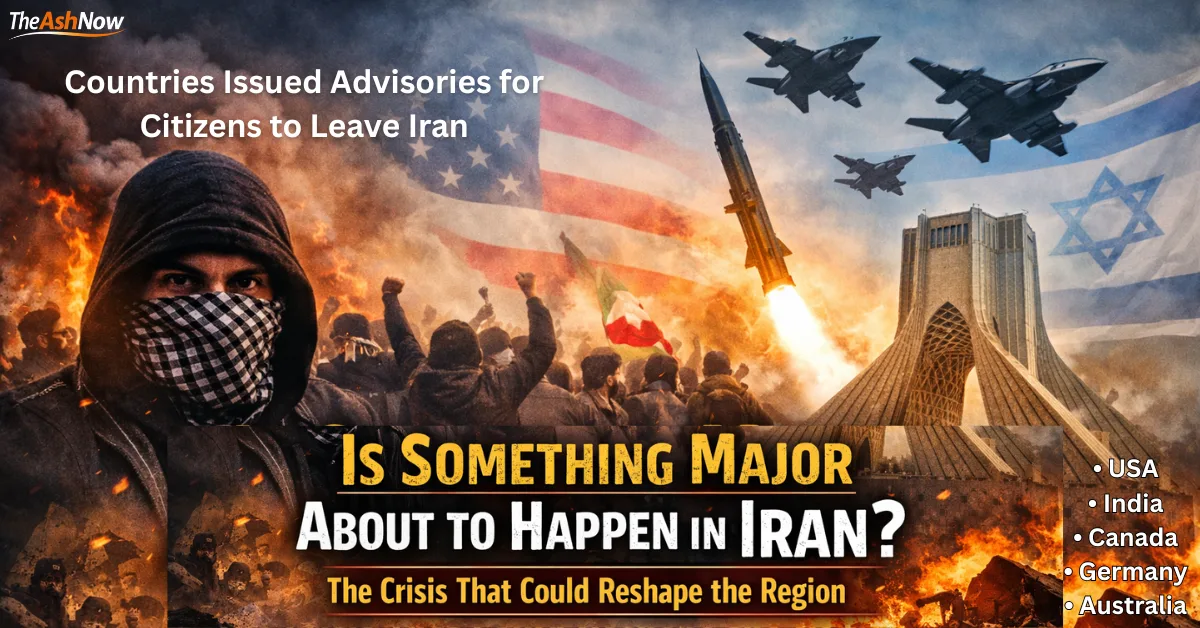
Tehran, January 14, 2026 — Iran stands at one of the most turbulent moments in its modern history, with widespread protests, a brutal government crackdown, rising international pressure, and the looming threat of broader conflict. What began in late December as demonstrations over economic hardship has evolved into a major national crisis that experts warn could reshape not only Iran but the wider Middle East.
Countries That Have Issued Advisories for Citizens to Leave Iran
- • United States — The U.S. State Department and U.S. Embassy have warned American citizens in Iran to leave immediately if safe to do so, citing escalating protests and risks of arrest or detention.
- • India — The Government of India and its Embassy in Tehran have urged Indian nationals to depart Iran at the earliest by available means and strongly advised against travelling to Iran due to the evolving security situation.
- • Canada — Global Affairs Canada has updated its travel advice, urging Canadian citizens in Iran to leave now if it is safe, warning of intensified protests and crackdowns.
- • Germany — The German government has advised citizens to leave Iran as soon as possible, noting risks including arbitrary arrest and limited consular support.
- • Australia — Australia has urged its citizens to leave Iran immediately and avoid all travel to the country amid violent protests and security concerns.
- • Argentina — Argentina’s Foreign Ministry has warned against travel to Iran due to protest-related tensions and advised its citizens to avoid the country.
Nationwide Unrest Turns Deadly
Nationwide protests that erupted in late December 2025 have continued into mid-January 2026, spreading across all 31 provinces of Iran. Initially sparked by soaring inflation, collapsing currency value, and rising living costs, demonstrations quickly broadened into anti-government rallies calling for the end of the clerical establishment led by Supreme Leader Ayatollah Ali Khamenei.
According to rights groups, the unrest has become the deadliest in decades. The U.S.-based Human Rights Activists News Agency reported that at least 2,571 people have been killed in the crackdown, while independent sources, including Iran International, suggest higher figures — potentially up to tens of thousands — though such numbers cannot be independently verified amid ongoing restrictions.
Iranian authorities imposed a near-total internet and communications blackout in early January — a hallmark tactic used to control information and hinder protest organisation. While partial phone services have recently been restored, full connectivity remains restricted.
Your Leadership Story Deserves the Spotlight
Get featured on TheAshNow — the editorial platform trusted by founders, CEOs & executives worldwide for Google visibility, LinkedIn authority & global recognition.
Apply for Featured Profile →LATEST POST
- Anmol Jaiswal – The Story Behind Indian Backpacker and India’s Most Adventurous Travel Creator

- Why Sugar Prices Are Rising in India: Is Ethanol Behind the Price Surge?
- AI Deception Exposed: UK AI Security Institute Catches Anthropic and OpenAI Models Lying
- India’s 80th Independence Day 2026: History, Significance & Celebrations
- Joshua Freedman: Emotional Intelligence Leader & CEO




Harsh Government Response and Legal Repression
Tehran’s response has been severe. Security forces have used lethal force, arresting thousands, and the judiciary has signalled impending trials and executions of detained demonstrators. Among these cases is that of 26-year-old Erfan Soltani, sentenced to death on charges of “waging war against God,” a capital offence under Iranian law, with rights groups warning that his execution could set a precedent for further executions of protest participants.
The government has also labelled protestors as enemies of the state and blamed foreign interference for instigating unrest, with state media and officials pointing fingers at the United States and Israel for seeking to destabilise the country.
International Reaction and Rising Tensions
International responses have intensified alongside the internal crisis. The United States, under President Donald Trump, has openly criticised Tehran’s violent suppression of protestors, urged Iranians to continue their demonstrations, and hinted at “very strong action” if executions proceed. U.S. officials have also advised American citizens to leave Iran amid growing risks.
European nations, including the United Kingdom, have announced additional sanctions targeting key sectors in Iran, aimed at penalising the regime for its crackdown. The UK’s foreign secretary described the repression as intolerable and urged cooperation with international partners.
Meanwhile, diplomatic communications have been active, including high-level talks with other nations’ foreign ministers seeking to manage regional fallout and prevent escalation.
Regional Security Risks and Broader Conflict Fears
The crisis in Iran carries implications beyond its borders. Military preparedness has increased, with Iranian commanders asserting readiness to counter any external military action. Reports indicate that some U.S. personnel stationed at regional bases have been advised to take precautions or evacuate amid heightened tensions.
Regional powers such as Saudi Arabia, Qatar, and others have engaged in diplomatic efforts to avert military escalation, recognising the potential for wider instability should confrontation unfold. Analysts warn that any attack or external intervention — even limited — could rally portions of the Iranian population behind the regime, potentially prolonging conflict rather than resolving it.
Humanitarian Impact and Exodus
The humanitarian toll of the unrest has been stark. Thousands of Iranians, fearing persecution and violence, have fled across borders into neighbouring countries such as Turkey, seeking refuge amid the crackdown. The situation has prompted travel advisories and evacuation guidance from foreign governments.
What Could Happen Next?
While the Iranian regime has sought to portray an image of control, the scale and intensity of the protests, combined with international sanctions and diplomatic pressures, suggest that Iran remains in a precarious state. Experts caution that without a political solution that addresses core grievances — from economic decline to calls for broader freedoms — the crisis could deepen. The risk of broader regional fallout remains a significant concern for global policymakers.
BUILD YOUR LEGACY IN PRINT
Editorial features for founders, CEOs & executives — engineered for search visibility, LinkedIn credibility & industry authority.
APPLY NOW →As of mid-January 2026, Iran’s internal crisis reflects far more than protests over economic conditions; it highlights fundamental tensions between a population demanding change and a government determined to maintain authority, all against the backdrop of potential international military and diplomatic escalations.
Most Globally Searched FAQs on the Iran Crisis
1. Why are protests happening in Iran?
Protests in Iran began in late December 2025 primarily due to economic hardship, including runaway inflation, a collapsing currency, and rising prices of basic goods. Initially economic, the demonstrations have evolved into broader anti-government protests demanding political change.
2. How many people have been killed in the protests so far?
Estimates vary due to restricted communications, but human rights groups report thousands of protesters killed nationwide, with some independent estimates suggesting the death toll may be very high, making this one of the most violent crackdowns in recent Iranian history.
3. Is the U.S. considering military action against Iran?
U.S. President Donald Trump has publicly warned of strong action if Iran continues to violently suppress protesters. This has led to international speculation about possible U.S. military involvement, although diplomatic engagement remains open.
4. Are foreign governments urging their citizens to leave Iran?
Several countries, including the United States and India, have issued advisories urging their citizens in Iran to leave immediately if it is safe to do so, citing risks associated with the protests and rising geopolitical tension.
5. What is the situation with the internet and communications in Iran?
Iranian authorities imposed a near-total internet and phone blackout in early January 2026 to hinder protest organisation and restrict information flow — a tactic that has severely limited independent reporting on the crisis. Partial services have been restored in some areas, but disruptions persist.

Thi is a great article no doubt about it, i just started following you and i enjoy reading this piece. Do you post often ? we have similar post on the german best freelancer platform called you can check it out if you want. Thank you
[…] Is Something Major About to Happen in Iran? The Crisis That Could Reshape the Region (Gold Is Rising) […]
[…] Is Something Major About to Happen in Iran? The Crisis That Could Reshape the Regionby TheAshNow Team […]
[…] Is Something Major About to Happen in Iran? The Crisis That Could Reshape the Region […]