
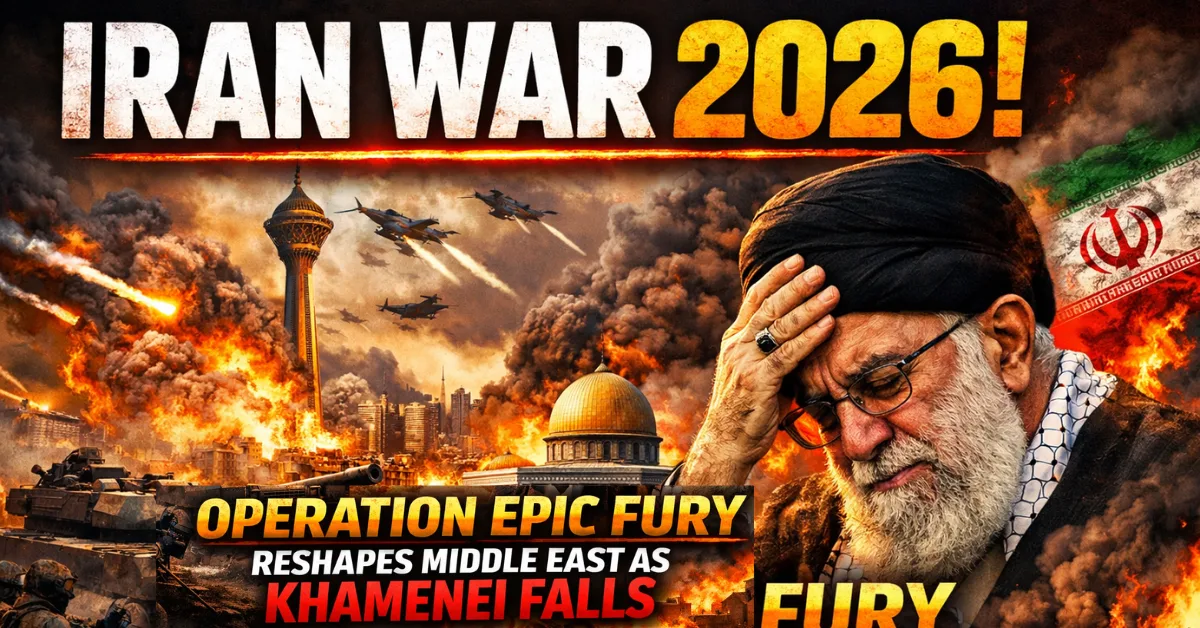
A Historic Military Operation and the Death of Iran’s Supreme Leader!
Table of Contents
The Dawn of a New Conflict
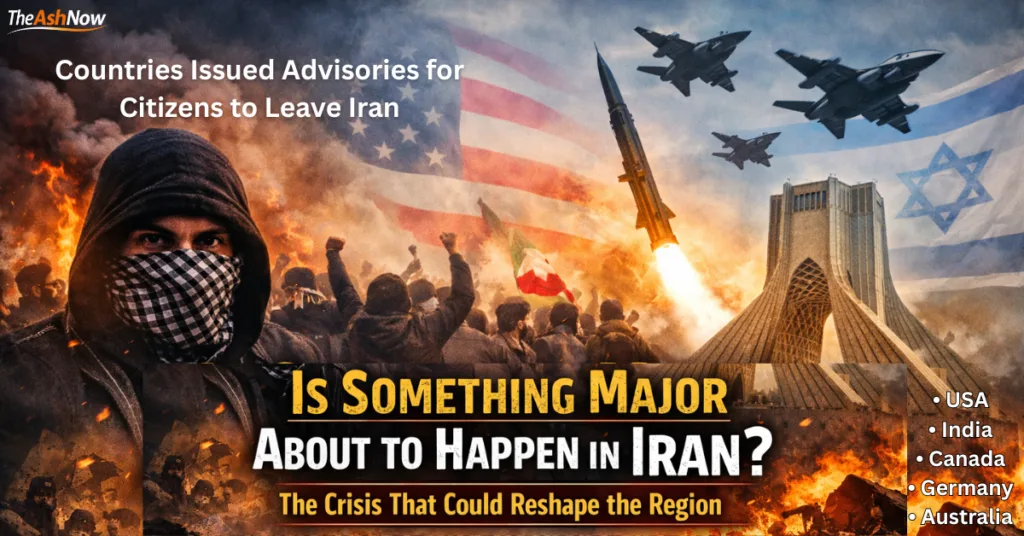
At approximately 7:00 AM local time in Iran, the skies over Tehran erupted in a symphony of explosions that would forever alter the geopolitical landscape of the Middle East. What began as another tense morning in the Islamic Republic quickly transformed into what military analysts are calling the largest coordinated military operation in the region in a generation. The United States and Israel had launched a massive joint military campaign against Iran—codenamed “Operation Epic Fury” by the Pentagon and “Operation Roaring Lion” by the Israel Defense Forces.
This wasn’t a limited surgical strike. This was an all-out assault designed to fundamentally reshape the power dynamics of an entire region.
Your Leadership Story Deserves the Spotlight
Get featured on TheAshNow — the editorial platform trusted by founders, CEOs & executives worldwide for Google visibility, LinkedIn authority & global recognition.
Apply for Featured Profile →An Unconventional Announcement
In an age where major military operations are typically announced through carefully orchestrated press conferences and congressional briefings, President Donald Trump took a decidedly different approach. At 2:00 AM Eastern Standard Time, while at his Mar-a-Lago resort, Trump posted an eight-minute video to his Truth Social platform announcing that the United States had begun “major combat operations” against Iran.
There was no prime-time address to the nation. No somber press conference in the Situation Room. Just a social media post that would send shockwaves around the world.
“Our objective is to defend the American people by eliminating imminent threats from the Iranian regime, a vicious group of very hard, terrible people,” Trump declared in the video. His message was direct, unfiltered, and left no room for diplomatic ambiguity.
The Scope of the Attack
The scale of Operation Epic Fury was unprecedented. Israeli military sources revealed that approximately 200 Israeli Air Force fighter jets—including F-35s and F-15s—participated in what the IDF called “the largest ever Israeli Air Force operation.” These aircraft dropped hundreds of munitions on roughly 500 targets across Iran.
The United States complemented this aerial assault with its own formidable military assets. Two aircraft carrier strike groups—the USS Gerald R. Ford and USS Abraham Lincoln—were positioned in the region. F-22 Raptors, F-35 Joint Strike Fighters, KC-135, and KC-46 tankers were all deployed. Marine F-35Cs and Navy F/A-18 Super Hornets launched from the carrier decks, while B-2 bombers struck from bases far beyond the region.
US Central Command described it as “the largest regional concentration of American military firepower in a generation.”
The Targets: Dismantling a Military Infrastructure
The strikes were comprehensive and systematic, targeting multiple categories of Iran’s military and governmental apparatus:
Nuclear Infrastructure
Despite previous strikes in June 2025 during “Operation Midnight Hammer” that had decimated Iran’s enrichment facilities at Fordow and Natanz, as well as metallurgy facilities at Isfahan, the current operation continued to target peripheral nuclear capabilities. Reports indicated strikes on the Iran Atomic Energy Agency headquarters in Tehran and the explosive research testing facility at Parchin.
Military Command and Control
Islamic Revolutionary Guard Corps (IRGC) headquarters, command centers, and administrative facilities across 24 provinces were hit. The operation specifically targeted senior military leadership, with Israeli officials claiming that seven senior defense and intelligence officials were killed in the opening strikes, and approximately 30 top military and civilian leaders were targeted overall.
Missile and Drone Capabilities
Ballistic missile launchers, production facilities, and drone launch sites were primary targets. Given Iran’s extensive missile arsenal and its previous attacks on regional targets, neutralizing this capability was a stated objective of both the US and Israel.
BUILD YOUR LEGACY IN PRINT
Editorial features for founders, CEOs & executives — engineered for search visibility, LinkedIn credibility & industry authority.
APPLY NOW →Naval Assets
The operation also aimed to “annihilate” Iran’s navy, though specific details of naval targets remain limited in initial reports.
Geographic Spread
The strikes hit Tehran, Isfahan, Qom, Karaj, Kermanshah, Bushehr, and numerous other cities. The breadth of the assault indicated a comprehensive effort to simultaneously degrade Iran’s military capabilities across the entire country.
Ad
- Why Sugar Prices Are Rising in India: Is Ethanol Behind the Price Surge?

- Colombia Earthquake: A 7.4-Magnitude Disaster Exposes the Human Cost of Seismic Risk Across Western Colombia
- Bankipur By-Election Result 2026 LIVE: Counting Updates, Vote Margin & Latest Trends
- Assam Floods 2026: When the Brahmaputra Turns Into a Sea
- Pralhad Joshi Takes Charge as India’s New Education Minister



The Most Consequential Strike: The Death of Ayatollah Khamenei
Perhaps the most significant development of the entire operation came when Israeli forces struck the compound of Iran’s Supreme Leader, Ayatollah Ali Khamenei, in Tehran. President Trump announced hours into the operation that Khamenei had been killed. Initially, there was confusion and conflicting reports, but Iranian state television ultimately confirmed what many had feared: the 86-year-old leader who had ruled Iran with an iron fist for 36 years was dead.
“It is announced to the martyr-nurturing people of Iran that Grand Ayatollah Khamenei, the Supreme Leader of the Islamic Revolution, was martyred in a joint attack by the criminal United States and the Zionist regime,” Iranian state media reported.
The implications of Khamenei’s death cannot be overstated. As Supreme Leader since 1989, he held ultimate authority over all branches of government, the military, and the judiciary, and served as the country’s spiritual leader. His death creates a leadership vacuum at a moment when Iran is under the most severe military assault in its modern history.
Iranian media also reported that Khamenei’s daughter, son-in-law, and grandchild were killed in the strikes. Iran declared a 40-day mourning period and a week of public holidays in honor of the fallen leader.
Iran’s Retaliation: A Region Ablaze
Iran did not remain passive in the face of this assault. Within hours of the initial strikes, the Islamic Revolutionary Guard Corps launched what it described as “retaliatory” strikes across the Middle East. The targets were extensive and strategic:
- Israel: Dozens of ballistic missiles were fired at northern Israel and Tel Aviv, causing casualties and damage. Israeli emergency services reported one person killed and 121 injured.
- US Military Bases: Iran struck American military installations in Jordan, Syria, Kuwait, Bahrain, Qatar, Saudi Arabia, and the United Arab Emirates. The headquarters of the US Navy’s Fifth Fleet in Bahrain was directly targeted, with missiles striking the facility and causing significant concern about American casualties.
- Gulf States: Iranian missiles and drones hit targets in the UAE, Qatar, and Kuwait. A drone struck Kuwait International Airport, causing damage, while a concourse at Dubai International Airport was also damaged.
- Red Sea Operations: The Houthis in Yemen announced they would resume attacks in the Red Sea, adding another dimension to the expanding conflict.
Iranian state media claimed that the Islamic Republic had intercepted hundreds of missiles and drones with air defense systems, though the actual effectiveness of these defenses remains difficult to verify given the scale of the assault.
The Diplomatic Fallout: A World Divided
The international response to Operation Epic Fury revealed deep divisions in the global community:
Supporters of the Operation
United States Allies:
- Canada’s Prime Minister Mark Carney voiced firm support, stating that “Canada supports the United States acting to prevent Iran from obtaining a nuclear weapon.” He described Iran as “the principal source of instability and terror throughout the Middle East.”
- Australia’s Prime Minister endorsed the military action, declaring that “Australia stands with the brave people of Iran in their struggle against oppression.”
Cautious Responses
European Powers: The United Kingdom, France, and Germany issued a joint statement noting they did not participate in the strikes but remained in close contact with the US and Israel. While acknowledging their efforts to reach a negotiated solution over Iran’s nuclear program, they condemned Iranian retaliatory attacks on regional countries and called for a resumption of negotiations.
Critics of the Operation
Regional Powers:
- Oman’s Foreign Minister Badr Albusaidi expressed “dismay” at the outbreak of violence despite recent negotiations, urging the United States to “not get sucked in further” into the conflict, adding “this is not your war.”
- Pakistan’s Foreign Ministry “strongly condemned the unwarranted attacks against Iran” and called for the urgent resumption of diplomacy.
International Organizations: UN Secretary-General António Guterres told an emergency Security Council meeting that he deeply regretted that an opportunity for diplomacy had been “squandered.” He warned that “military action carries the risk of igniting a chain of events that no one can control in the most volatile region of the world.”
Gulf States’ Position
Saudi Arabia, the UAE, Bahrain, Qatar, and Kuwait all condemned Iran’s retaliatory strikes on their territories in the strongest terms, emphasizing violations of their sovereignty and pledging solidarity with each other. However, their responses to the initial US-Israeli strikes were notably more measured, reflecting the complex regional dynamics at play.
Ad
- Anmol Jaiswal – The Story Behind Indian Backpacker and India’s Most Adventurous Travel Creator
- Joshua Freedman: Emotional Intelligence Leader & CEO
- Alex Hormozi: The Entrepreneur Who Turned Business Growth Into a $100M Playbook
- Alakh Pandey: The Founder of Physics Wallah Who Turned Affordable Education Into a National EdTech Movement
- Kunal Shah: How the FreeCharge and CRED Founder Came to Lead WhatsApp Globally
- From Testing Code to Leading Change: The Inspiring Career Journey of Anjali Singh






The Stated Objectives: Beyond Military Targets
President Trump was explicit about the goals of Operation Epic Fury, outlining four military objectives:
- Preventing Iran from acquiring nuclear weapons – Despite previous operations that destroyed key facilities, the concern remained that Iran could rebuild its program.
- Destroying Iran’s missile arsenal and production sites – Given Iran’s demonstrated ability to strike throughout the region with ballistic missiles, eliminating this capability was deemed essential.
- Degrading proxy networks – Trump specifically mentioned Hamas, Hezbollah, and the Houthis as Iranian-backed groups that needed to be weakened.
- Annihilating Iran’s navy – Naval assets that could threaten shipping lanes and regional stability were targeted.
However, Trump and Israeli Prime Minister Benjamin Netanyahu made it clear that the ultimate objective went beyond military degradation: they were calling for regime change.
“Our joint action will create the conditions for the courageous Iranian people to take their destiny into their own hands,” Netanyahu stated. “The time has come for all segments of the Iranian people—the Persians, the Kurds, the Azeris, the Baluchis, and the Ahwazis—to throw off the yoke of tyranny and bring about a free and peaceful Iran.”
Trump’s video message concluded with a direct appeal to Iranians: “When we are finished, take over your government. It will be yours to take. The hour of your freedom is at hand.”
The Context: How Did We Get Here?
To understand Operation Epic Fury, one must understand the complex series of events that led to this moment.
A History of Escalation
The relationship between Iran and the United States has been fraught since the 1979 Iranian Revolution and the subsequent hostage crisis. Trump catalogued what he characterized as 47 years of Iranian aggression, beginning with the seizure of the US Embassy in Tehran.
More recently, several factors contributed to the escalation:
The JCPOA Withdrawal (2018): The United States withdrew from the Joint Comprehensive Plan of Action (the Iran nuclear deal) in 2018, re-imposing sanctions on Iran. This marked a fundamental shift from diplomacy to pressure.
Operation Midnight Hammer (June 2025): Eight months before Operation Epic Fury, the US and Israel engaged in 12 days of fighting with Iran. The US used B-2 bombers to strike Iranian nuclear infrastructure in what Trump called a successful mission to destroy Iran’s nuclear program. However, concerns remained about Iran’s ability to rebuild.
Failed Negotiations: In the weeks leading up to Operation Epic Fury, three rounds of negotiations took place between the US and Iran, with Oman serving as mediator. The US presented three core demands:
- A permanent end to all uranium enrichment
- Strict limits on Iran’s ballistic missile program
- A complete halt to support for regional proxy groups
On February 27, 2026—just one day before the strikes—Oman’s Foreign Minister announced a “breakthrough” had been reached, with Iran agreeing to never stockpile enriched uranium and to full IAEA verification. However, this eleventh-hour agreement was apparently deemed insufficient or insincere by Washington and Jerusalem.
Internal Crisis in Iran: Iran had been experiencing a severe internal crisis in the months leading up to the strikes. Massive economic problems, widespread protests, and a brutal government crackdown had killed thousands of Iranian civilians. Just weeks before Operation Epic Fury, security forces carried out what has been described as one of the worst massacres in modern history, with reports suggesting that at least 1,800 people were killed in protests on January 8-9, 2026, alone.
Oil Export Surge: Between February 15-20, 2026, Iran increased its oil exports to three times the normal rate and reduced oil storage—a move that, in retrospect, appears to have been preparation for the conflict.
Trump’s Ultimatum: On January 28, Trump posted to Truth Social that “a massive Armada is heading to Iran,” warning that “time is running out.” According to reports, Operation Epic Fury began precisely as a ten-day deadline Trump had issued to Iran expired.
Ad
- AI Deception Exposed: UK AI Security Institute Catches Anthropic and OpenAI Models Lying
- The End of Paper Invitations? Why Digital Invitations Are Taking Over Weddings and Events Worldwide in 2026
- Inside TheAshNow AI: Engineering a Scalable Revenue Engine for US Real Estate Teams
- Game-Changing Gadgets of 2026: The Next Tech Revolution
- 10 Best Gaming Gadgets in 2026 Every Serious Gamer Must Own





The Human Cost: Tragedy Amid the Strategy
While military analysts discuss strategic objectives and geopolitical implications, the human toll of Operation Epic Fury is devastating.
Civilian Casualties in Iran
Iranian Red Crescent Society reported more than 200 people killed in strikes across Iran in the initial hours. However, the most horrific incident occurred at the Shajareh Tayyebeh girls’ elementary school in the southern city of Minab.
According to local authorities, at least 108 children were killed when the school was struck while approximately 170 schoolgirls were inside. Another school east of Tehran was also hit, killing at least two more people. The strikes on these schools have been met with international horror and condemnation, with many questioning how educational facilities became targets in a military operation.
Iranian state media reported that thousands of members of the Islamic Revolutionary Guard Corps were killed or wounded in attacks on military installations.
Israeli Casualties
Israel’s national emergency service reported one person killed and 121 injured in Iranian retaliatory strikes. A woman in her fifties was killed in Tel Aviv when an Iranian missile struck the city. The relatively low casualty count in Israel is attributed to the country’s sophisticated Iron Dome defense system and extensive network of bomb shelters.
Regional Impact
A civilian of Asian nationality was killed in the United Arab Emirates when debris from intercepted missiles fell in a residential area. Additional casualties were reported in other Gulf states, though comprehensive figures remain incomplete.
The Technological Dimension: Cyber Warfare and Communications Disruption
Operation Epic Fury extended beyond kinetic strikes into the digital realm. Within hours of the attacks beginning, Iran’s internet connectivity dropped to approximately 54 percent of normal levels, with some reports suggesting it fell as low as 46 percent.
This massive disruption suggests extensive cyber operations were being conducted simultaneously with the physical strikes. Internet monitoring group NetBlocks reported that mobile networks and messaging services were being actively disrupted, likely by Iranian authorities attempting to control information flow, though US and Israeli cyber operations may have contributed to the degradation.
Several Iranian news websites were reportedly hacked amid the wider cyber activity, adding another layer to the information warfare dimension of the conflict.
The timing of this disruption is particularly significant—by cutting off internet access, Iranian authorities made it much more difficult for citizens to organize protests or document government actions, even as Trump and Netanyahu were calling for a popular uprising.

The Aviation Impact: A Region Grounded
The immediate impact of Operation Epic Fury extended far beyond the military sphere, causing massive disruptions to civilian aviation across the Middle East.
Multiple countries closed their airspace as the conflict unfolded:
- Kuwait
- Iraq
- Bahrain
- Qatar
- Iran
Major airlines suspended operations:
- Emirates temporarily suspended operations to and from Dubai
- Qatar Airways suspended flights due to the Qatari airspace closure
- El Al cancelled flights through March 1
- Thousands of Middle Eastern flights were suspended or cancelled
Dubai Airports reported that a concourse at Dubai International Airport was damaged in an Iranian attack, further complicating air travel in one of the world’s busiest aviation hubs.
The aviation disruptions serve as a stark reminder that modern warfare in a globalized world has immediate cascading effects that extend far beyond the combatants.
The Succession Crisis: Iran’s Uncertain Future
With Ayatollah Khamenei dead and much of Iran’s senior leadership killed or wounded, the Islamic Republic faces its most severe succession crisis since its founding in 1979.
The Constitutional Framework
Under Iran’s constitution, an interim council assumes power while the Assembly of Experts—a body of 88 Islamic clerics—selects a new supreme leader. However, the situation is far from straightforward.
Israeli officials claim their opening strikes decimated the chain of command, targeting and killing seven senior defense and intelligence officials and approximately 30 top military and civilian leaders overall. This creates an unprecedented situation where the normal succession process may be impossible to follow.
Potential Successors and Power Centers
Ali Larijani: The secretary of Iran’s Supreme National Security Council, former parliament speaker, and one of Khamenei’s closest confidants, Larijani appears to be the most senior civilian official still standing. In a post on social media Saturday, he vowed Iran would deliver Israel and the US an “unforgettable lesson.”
Mojtaba Khamenei: The late supreme leader’s son had been widely discussed as a possible successor to his father. Israeli officials stated they targeted Khamenei’s sons, but intelligence assessments suggest they survived the strikes, making Mojtaba a potential figure in any succession scenario.
The IRGC: The Islamic Revolutionary Guard Corps represents another power center that could attempt to seize control during this chaos. Whether they choose to support a civilian succession or take direct control remains a critical question.
The Assembly of Experts: This body of senior clerics is constitutionally responsible for selecting a new supreme leader, but with the country under attack and communications disrupted, how and when they could convene remains unclear.
The Exiled Opposition
Exiled crown prince Reza Pahlavi—son of the last Shah of Iran—called on Iranians to prepare to return to the streets as the Islamic Republic “collapses.” He urged Iranian security forces to “join the nation and help ensure a stable and secure transition,” warning that otherwise “you will sink with Khamenei’s ship and his crumbling regime.”
However, actually implementing such a transition in the midst of an ongoing military conflict, with security forces still deployed and internet communications disrupted, presents enormous practical challenges.
Historical Parallels and Precedents
Operation Epic Fury invites comparison to several previous conflicts and operations:
The 2003 Iraq Invasion
Like the invasion of Iraq, Operation Epic Fury began with “shock and awe”—a massive military assault designed to quickly overwhelm the adversary. Both operations explicitly called for regime change and sought to fundamentally alter the political landscape of a major Middle Eastern power.
However, the lessons of Iraq loom large. The swift military victory in Iraq was followed by years of insurgency, sectarian violence, and the ultimate rise of ISIS. The question now is whether Operation Epic Fury will follow a similar trajectory.
The 1991 Gulf War
The scale of military assets deployed—with two carrier strike groups and hundreds of aircraft—recalls the buildup for the Gulf War. However, the 1991 operation had explicit UN authorization and a broad international coalition. Operation Epic Fury has neither.
Israel’s Previous Operations
Israel has a long history of preemptive strikes, from the 1981 bombing of Iraq’s Osirak nuclear reactor to the 2007 strike on a suspected Syrian nuclear facility. However, Operation Roaring Lion dwarfs all previous operations in scale and ambition.
Targeted Assassinations
The killing of Ayatollah Khamenei echoes other targeted killings of high-value targets, such as Osama bin Laden in 2011 or Iranian General Qasem Soleimani in 2020. However, Khamenei was not just a military commander or terrorist leader—he was the head of state of a nation of 90 million people.
The Legal Questions – Operation Epic Fury: Domestic and International Law
Operation Epic Fury raises profound legal questions on multiple levels:
Domestic US Law
The operation was launched without a formal congressional declaration of war, though the “Gang of Eight”—congressional leadership with access to classified intelligence—were notified shortly before strikes commenced.
Republican Representative Thomas Massie of Kentucky characterized the strikes as an act of war “unauthorized by Congress,” raising questions about executive power and the War Powers Resolution.
International Law
Critics of the strikes have called them illegal under international law, arguing that:
- The operation violated Iranian sovereignty
- It was not conducted in immediate self-defense
- It lacked UN Security Council authorization
- The explicit call for regime change violates the principle of non-interference
However, supporters argue that:
- Iran’s nuclear program posed an imminent threat
- Iran’s support for proxy groups constitutes ongoing aggression
- The right to self-defense under Article 51 of the UN Charter applies
The UN Security Council convened an emergency meeting, with Secretary-General Guterres warning of the risks of uncontrolled escalation, but no resolution was passed.
The Economic Implications: Energy Markets and Global Trade
The immediate economic impacts of Operation Epic Fury are already being felt globally:
Energy Markets
Despite Iran’s pre-conflict oil export surge, the disruption to Iranian oil production and exports—combined with the threat to other Gulf state production—has sent oil prices spiking. Any extended conflict in the region threatens approximately 20% of global oil supplies that transit through the Strait of Hormuz.
Shipping Disruptions
The resumption of Houthi attacks in the Red Sea, combined with airspace closures and the general instability, is disrupting major shipping routes. The Red Sea route connects Europe to Asia, and its disruption forces ships to take the much longer route around Africa, increasing costs and delivery times.
Insurance and Investment
The conflict has immediate implications for insurance rates for shipping, aviation, and business operations throughout the region. Investment in the Middle East will likely see a significant pullback as the situation remains fluid.
Humanitarian Concerns
With Iran under attack and neighboring countries also experiencing strikes, humanitarian organizations are warning of potential refugee flows, humanitarian crises, and long-term economic devastation.
The Information War: Narratives and Propaganda
Alongside the physical conflict, an intense information war is being waged:
Trump’s Direct Communication
Trump’s use of Truth Social to announce major military operations represents a fundamental shift in how war is communicated. The unfiltered, direct-to-public approach bypasses traditional media gatekeepers and congressional briefings, reflecting modern information dynamics.
Iranian State Media
Iranian media’s initial denials of Khamenei’s death, followed hours later by confirmation and the declaration of martyrdom, reflect the regime’s struggle to control the narrative amid unprecedented chaos.
Social Media and Citizen Journalism
Despite internet disruptions, videos and reports from inside Iran have continued to emerge, showing the impact of strikes and the confusion on the ground. These first-person accounts provide a counter-narrative to official statements from all sides.
Regional Media
Arab media coverage has been notably varied, with some outlets emphasizing Iranian aggression and others focusing on civilian casualties and regional instability. This reflects the complex and often contradictory interests of regional powers.
Looking Forward: Possible Scenarios
As Operation Epic Fury continues beyond its initial hours, several scenarios emerge:
Scenario 1: Swift Regime Change
Trump and Netanyahu’s stated hope is that Iranian security forces will defect or stand aside, allowing a popular uprising to topple the government and install a new regime friendly to Western interests. This scenario would represent a best-case outcome from the perspective of Washington and Jerusalem.
However, history suggests this is the least likely scenario. Iraq’s security forces largely dissolved in 2003, but the result was chaos rather than democracy. Iran’s Revolutionary Guard Corps is deeply ideologically committed and heavily armed, making a swift transition unlikely.
Scenario 2: Prolonged Conflict
More likely is an extended conflict in which the US and Israel continue strikes while Iran conducts asymmetric warfare through missiles, drones, cyber attacks, and proxy forces. This could resemble the conflicts in Iraq and Afghanistan—quick initial military victories followed by years of insurgency and instability.
Lebanon’s Hezbollah has already announced it will join the fighting. Iran has a proven track record of supporting and directing proxy forces across the region. The potential for a multi-front war involving numerous actors is very real.
Scenario 3: Regional Conflagration
The worst-case scenario is that the conflict expands beyond Iran to encompass multiple countries. With Iranian missiles already striking six Gulf nations, with Israel under attack, and with Hezbollah threatening involvement, the potential for a broader regional war is significant.
Such a conflict could draw in additional powers—Russia has already criticized the operation, while China has significant economic interests in Iran and the region. The risk of great power involvement, even indirect, cannot be dismissed.
Scenario 4: Negotiated Settlement
Despite the violence, diplomacy is not impossible. Oman’s mediation efforts, while unsuccessful in preventing the war, could provide a framework for eventual negotiations. However, with Khamenei dead and much of Iran’s leadership killed, it’s unclear who would negotiate for Iran or what authority they would have.
The Bigger Picture Operation Epic Fury: A Transformative Moment
Operation Epic Fury represents far more than a military operation—it is potentially a transformative moment in Middle Eastern history and international relations.
The End of the Islamic Republic?
If Trump and Netanyahu succeed in their stated objective of regime change, it would mark the end of the Islamic Republic that has governed Iran since 1979. What would replace it remains deeply uncertain. Would it be a democratic government? A military junta? Fragmentation along ethnic lines? Each outcome has profound implications for regional stability.
US Doctrine in the Middle East
The operation signals a return to direct, large-scale US military intervention in the Middle East after years of attempted “pivot” toward Asia and reduction of Middle Eastern commitments. Whether this represents a temporary departure or a new long-term approach will shape US foreign policy for years to come.
The Future of Nuclear Nonproliferation
The operation was justified in part by preventing Iran from obtaining nuclear weapons. However, the lesson other nations may draw is that only possessing nuclear weapons—not being on the path to them—provides security against regime change operations. This could accelerate proliferation rather than prevent it.
The International Order
Operation Epic Fury was conducted without UN authorization and over the objections of major powers, including Russia and China. If successful, it reinforces a vision of international relations where might makes right and unilateral action by powerful states is normalized. If it fails, it may accelerate the decline of US influence and the move toward a multipolar world.
Conclusion: An Unfinished Story Of Operation Epic Fury
As I write these words, Operation Epic Fury continues. Strikes are ongoing, Iranian retaliation persists, and the outcome remains unknown. What we do know is that February 28, 2026, will be remembered as a pivotal date—the day the United States and Israel launched the largest military operation in the Middle East in a generation, the day Iran’s Supreme Leader was killed, and potentially the day that reshaped the entire region.
The human cost is already tragic and will likely grow more severe. The geopolitical implications will reverberate for decades. And the questions raised—about the use of military force, about regime change, about international law, about the proper role of the United States in the world—will be debated by historians, policymakers, and citizens for generations to come.
President Trump declared that the bombing would “continue, uninterrupted throughout the week or, as long as necessary to achieve our objective of PEACE THROUGHOUT THE MIDDLE EAST AND, INDEED, THE WORLD!”
Whether Operation Epic Fury achieves peace or plunges the region into deeper chaos, whether it represents justice or aggression, whether it will be remembered as a necessary intervention or a catastrophic mistake—these are questions that only time can answer.
What is certain is that the Middle East of February 27, 2026, no longer exists. What emerges from Operation Epic Fury will define the region, and perhaps the world, for decades to come.
FAQs: Operation Epic Fury
1. What is Operation Epic Fury, and when did it start?
Operation Epic Fury is a massive joint military operation launched by the United States and Israel against Iran on February 28, 2026. The US codename is “Operation Epic Fury,” while Israel calls it “Operation Roaring Lion.” The operation involved approximately 200 Israeli fighter jets and significant US military assets, including two aircraft carrier strike groups, striking around 500 targets across Iran. The operation aims to destroy Iran’s nuclear capabilities, missile arsenals, and military infrastructure.
2. Is Ayatollah Khamenei really dead?
Yes, Iran’s Supreme Leader Ayatollah Ali Khamenei was killed on February 28, 2026, during the US-Israel strikes. President Trump announced his death, which was later confirmed by Iranian state television. Khamenei, who had ruled Iran for 36 years since 1989, was killed when Israeli forces struck his compound in Tehran. Iranian media also reported that his daughter, son-in-law, and grandchild were killed in the strikes. Iran has declared a 40-day mourning period.
3. How many people have been killed in the Iran attacks?
According to initial reports, more than 200 people were killed across Iran in the opening hours of the strikes. The most devastating incident occurred at the Shajareh Tayyebeh girls’ elementary school in Minab, where at least 108 children were killed. Iranian state media reported thousands of Islamic Revolutionary Guard Corps members were killed or wounded. On the Israeli side, one person was killed and 121 were injured in Iranian retaliatory strikes. Additional casualties were reported in Gulf states hit by Iranian missiles.
4. Why did the US and Israel attack Iran?
The stated objectives include: (1) preventing Iran from acquiring nuclear weapons, (2) destroying Iran’s ballistic missile arsenal and production facilities, (3) degrading proxy networks including Hamas, Hezbollah, and the Houthis, and (4) eliminating Iran’s naval capabilities. President Trump cited 47 years of Iranian aggression and the failure of diplomatic negotiations. The operation came after failed talks mediated by Oman, despite a reported “breakthrough” just one day before the strikes began.
5. Will this lead to World War 3?
While it’s too early to definitively say, the conflict has potential for significant escalation. Iran has already retaliated by striking targets in Israel and six Gulf nations (Jordan, Syria, Kuwait, Bahrain, Qatar, Saudi Arabia, and the UAE). Hezbollah in Lebanon has announced it will join the fighting, and Houthis in Yemen have resumed Red Sea attacks. The UN Secretary-General warned of “igniting a chain of events that no one can control.” However, whether this becomes a broader regional war or World War 3 depends on whether other major powers like Russia or China become directly involved.
6. What happens to Iran after Khamenei’s death?
Iran faces its most severe succession crisis since 1979. Under Iran’s constitution, an interim council assumes power while the Assembly of Experts (88 Islamic clerics) selects a new supreme leader. Potential successors include Ali Larijani (secretary of the Supreme National Security Council), Mojtaba Khamenei (the late leader’s son), or a power grab by the Islamic Revolutionary Guard Corps. However, with much of Iran’s senior leadership killed and the country under attack, the succession process is highly uncertain.
7. What is the international reaction to Operation Epic Fury?
Reactions are divided. Supporters: Canada and Australia backed the operation. Cautious: UK, France, and Germany didn’t participate but remained in contact with the US/Israel. Critics: UN Secretary-General António Guterres called it a “squandered” diplomatic opportunity. Pakistan and Oman condemned the attacks. Gulf states condemned Iranian retaliatory strikes on their territories but were measured about the initial US-Israel operation. Russia and China have criticized the strikes.
8. How will this affect oil prices and the global economy?
Oil prices have spiked amid a conflict threatening approximately 20% of global oil supplies that transit through the Strait of Hormuz. Iran’s oil production and exports are disrupted, and other Gulf state production is threatened. Shipping routes through the Red Sea are disrupted with Houthi attacks resuming, forcing ships to take longer routes around Africa. Insurance rates for shipping, aviation, and business operations throughout the region are increasing. An extended conflict could cause significant global economic disruption.
Disclaimer: Operation Epic Fury
Important Notice Regarding Content Accuracy and Verification
The information presented in this article is based on reports and search results available as of March 1, 2026, regarding alleged military operations involving the United States, Israel, and Iran. This content should be treated as preliminary reporting of developing events that require independent verification.
Key Points:
1. Developing Situation: The events described are ongoing and rapidly evolving. Information may be incomplete, unverified, or subject to change as new details emerge.
2. Multiple Sources: This article aggregates information from various sources, including government statements, media reports, and international organizations. Not all claims have been independently verified.
3. Conflicting Reports: In situations of active conflict, initial reports often contain errors, propaganda, or misinformation from all parties involved. Readers should consult multiple credible sources.
4. No Professional Advice: This article is for informational purposes only and does not constitute legal, military, political, or professional advice of any kind.
5. Casualty Figures: All casualty numbers reported are preliminary and based on available sources. Actual figures may be significantly different and will likely change as more information becomes available.
6. Not an Official Statement: This article does not represent the official position of any government, military organization, or international body. It is an independent analysis based on publicly available information.
7. Geopolitical Sensitivity: The subject matter involves active military conflict and international relations. Readers are encouraged to approach this content with critical thinking and awareness of potential bias in all reporting.
8. Verification Recommended: Readers should verify critical information through official government sources, established international news organizations, and reputable fact-checking services before making any decisions based on this content.
9. Emotional Content: This article contains descriptions of violence, civilian casualties, and warfare that some readers may find disturbing.
10. Time-Sensitive Information: Given the rapidly evolving nature of these events, information in this article may become outdated quickly. Always check for the most recent updates from reliable sources.
The author and publisher assume no responsibility for errors, omissions, or consequences arising from the use of this information. This content is provided “as is” without any warranties of any kind, either express or implied.
For official information, please consult:
- Official government websites and press releases
- United Nations official communications
- Established international news agencies
- Verified diplomatic sources
Last Updated: March 1, 2026




backbiome
Backbiome is a naturally crafted, research-backed daily supplement formulated to gently relieve back tension and soothe sciatic discomfort.
FAKE ARTICLE
DATED: Jan 1, 2026
Very PROPHETIC of this FAKE ROBOT AI SITE.
[…] Iran War 2026: Operation Epic Fury Reshapes Middle East as Khamenei Falls […]
Discover the excitement and top bonuses at [url=https://66exbet.com/]ExBet[/url], your ultimate destination for online gaming.
ExBet serves as a cutting-edge platform created to change the landscape of online betting.
Thank you 🙏 for showing 💖 us that 🌟 vulnerability can 🎯 be strength in disguise
This content perfectly captures what makes 🌈 your platform so unique and special
Backbiome is a naturally crafted, research-backed daily supplement formulated to gently relieve back tension and soothe sciatic discomfort.
Backbiome is a naturally crafted, research-backed daily supplement formulated to gently relieve back tension and soothe sciatic discomfort.
Should you have blonde hair, azure eyes, and light skin, identifying the perfect clothing colour choices can truly boost your overall look. Light summer hair colors like vibrant summer shades or icy winter hair colors often complement pale complexion perfectly, achieving a balanced and vibrant aesthetic. It’s beneficial to exploring classic summer hair hue ideas and shade ranges to determine the best hair color for a summer tone palette that works with your natural colouring.
For folks who are working to identify what tones work for light skin and blonde locks, professional colour analysis can be a fantastic method. The most flattering hues for light skin and blonde locks often encompass cooler shades, which work perfectly with preferred cool summer colours, guaranteeing a polished and glowing appearance. Review more tips and insights here should you need specific suggestions.
If you’re thinking to book moto de agua Tenerife or hunting for accommodation options around the island, there are numerous of choices to consider, especially in Tenerife Sur and Los Gigantes. Tariffs tend to change depending on the place and period, so it’s a smart idea to look at multiple options before booking. For those looking for a bit more experience, there are also plenty of jet ski tours and safaris on offer, such as the sought-after jet ski safari Tenerife or tours in Golf Sur.
To get the most useful overview of packages for jet ski booking and alquiler motos acuaticas Tenerife, I came across this site particularly helpful. Whatever your plans, you need a calm ride along Costa Adeje or an experience more daring around Playa de las Americas, the array of jet ski hire options and tours makes it convenient to find something that meets your riding experience and price range.
wish you all the best
When it comes to finding the most suitable clothing palette options for blonde hair, blue eyes, and light complexion, it’s key to think about your overall undertone and seasonal category. For those with a light summer hair color or vivid summer hair color, gentle tones like dusty rose, lavender, and powder blue generally complement light complexion beautifully. If you’re unclear about what hues suit light skin and blonde hair, hair color assessment can help you discovering the best colors for pale skin and blonde hair, along with light summer hair color recommendations that accentuate your natural features.
Looking into the cool-toned summer color palette hair possibilities spanning hair color for a summer complexion can certainly enhance your image. For illustration, recommended shades for cool summer feature ash blondes and muted browns, while bold winter hair color decisions lean more toward more intensity and dimension. To get more insight into soft summer best hair colors and deep winter hair colors, I came across this resource pretty informative at this link. It’s a great first step if you’re interested in the perfect hair color for a summer skin tone or want to discover cool summer hair colours yourself.
[…] Iran War 2026: Operation Epic Fury Reshapes Middle East as Khamenei Falls […]
Вы можете оформить чтобы получить его быстро и удобно прямо к вашему порогу.
Современные службы доставки алкоголя набирают всё большую популярность и обеспечивают простоту и быстроту получения желаемого продукта.
Многие магазины и специализированные сервисы предоставляют возможность заказать любимый напиток прямо на дом и указать удобное время и место доставки.
Чтобы заказать, нужно только выбрать напиток, ввести адрес доставки и произвести оплату.
При хорошей организации доставка занимает минимальное время.
Важно обращать внимание на возрастные ограничения и подтвердить свою личность при получении.
Многие компании предлагают акции и скидки для новых заказчиков, что делает услугу ещё более привлекательной.
Общая картина показывает, что услуги по доставке алкоголя значительно упрощают жизни современных людей.
Good a blog toper
Also ich spiele jetzt seit ein paar Monaten und muss ehrlich sagen, ich war anfangs skeptisch, ob so ein Laden mit Krypto uberhaupt was taugt. Uber nen Kumpel dort gelandet, der seit uber einem Jahr Poker mit Bitcoin spielt, und tja – hangen geblieben bin ich dann irgendwie. Als Spieler aus Deutschland ist das eh manchmal echt zah, was Ein- und Auszahlungen angeht, aber dazu gleich mehr.
Was die Auswahl angeht gibts echt genug zu tun – ich schatze mal so 1800 bis 2000 Slots, inklusive Tische. Die bekannten Studios sind naturlich vertreten: Pragmatic Play mit den Klassikern, Book of Dead, ruckelt nichts. Der Live-Bereich ist von Evolution, mit echten Croupiers und den Gameshows, da hab ich abends schon zu oft. Und klar, das Herz ist fur mich nun mal der Pokerbereich – Bitcoin Poker eben, darum gehts mir ja.
Zum Bonus: angeboten wurden mir einen 100%-Bonus bis 500€ und dazu Freispiele, nicht alle auf einmal. Der Umsatz ist 35-fach, ist fair genug im Vergleich, schaut euch das Kleingedruckte durch. Immer wieder gibts kostenlose Turniere und mal was ohne Einzahlung, so kann man antesten risikofrei das Ganze. Was gerade an Promos lauft schaut euch am besten direkt bei [url=https://best-bitcoin-poker.de/de-de]using bitcoin for online poker[/url] falls ihrs genau wissen wollt, lohnt sich.
Jetzt zum Nervigen – die Auszahlung. Uber Bitcoin lief es meist unter ner Stunde, da kann ich nicht meckern. Aber als ich mal uber Skrill wollte, dauerte es langer und der KYC-Kram war nervig. Die ublichen Zahlwege sind alle da, mal ehrlich der ganze Sinn ist ja, dass keiner gro? mitliest. Kleinster Einsatz lag bei 20€, Anmeldung schnell erledigt.
Am Handy laufts sauber – App ist vorhanden fur beide Systeme, und im Browser klappt es problemlos. Der Kundendienst zu jeder Zeit uber Live-Chat, die deutschsprachige Hilfe war ok, aber nicht perfekt, englisch ging aber immer. Lizenztechnisch ist es transparent, darauf achte ich. Fur alle hier aus Deutschland, die Poker fur Bitcoin reinschnuppern wollen – ich bleib erstmal dabei, kann sich ja noch andern.
Started using true fortune casino roughly half a year ago after a lad from my footy group banged on about it, and honestly I reckoned it’d be yet another throwaway sites that vanish after a month. Still here though, so that says something I suppose.
The library’s genuinely big — I’d guess around 2,000 slots and tables going by the counter. Play’n GO take up most of my recents, so expect all the standards — Sweet Bonanza eats the bulk of my spins, and there’s decent runs on Yggdrasil titles too. NetEnt classics are tucked away but you can find them.
The live rooms are Evolution-run as far as I can tell, so it’s about as good as it gets. Crazy Time draw a decent crowd around 8pm, dealers are actual people and the streams hold up on 4G. Sign-up offers was 100% up to ?300 with 75 spins on selected slots, playthrough is 35x and that’s fairly typical for the UK market. They ran a small no deposit thing when I joined too; the promos shift monthly so it’s worth a see what’s running at before depositing.
Minimum is a tenner I think, verification took maybe ten minutes with the ID upload. Debit card is what I use, Neteller are supported and Bitcoin’s an option too though I’ve not bothered. Cashouts via e-wallet landed in about 24 hours, though card took nearer 72 hours.
What did irritate me: the verification flagged my first upload for no clear reason, which held up a withdrawal over a weekend. The chat team fixed it eventually but I had to repeat myself. Licensing-wise it’s and I checked before depositing, and that’s non-negotiable for me.
No app on the Play Store, it’s browser-based — works well enough on my iPhone, though scrolling the lobby is a chore on a small screen. I’m still playing there, and that says more than a rating would.
Hi folks,
I’m at the moment examining the merits of pursuing either the CQE certification or the Lean Six Sigma Black Belt as I outline the next steps in my professional development in manufacturing process engineering. I’m specifically interested in understanding which certification might bring more real-world advantages and stronger market demand, especially considering growing industry trends and skill requirements.
I came across some comparison charts and career outcome surveys that reveal different career trajectories and skill focuses for each credential, which I’ve shared here
I’d very much appreciate hearing from anyone who’s tackled this decision or holds either certification—how has it influenced your career development and day-to-day work? Any feedback on which might align better with future-focused roles in manufacturing would be incredibly helpful.
I appreciate it for your perspectives and experiences!