
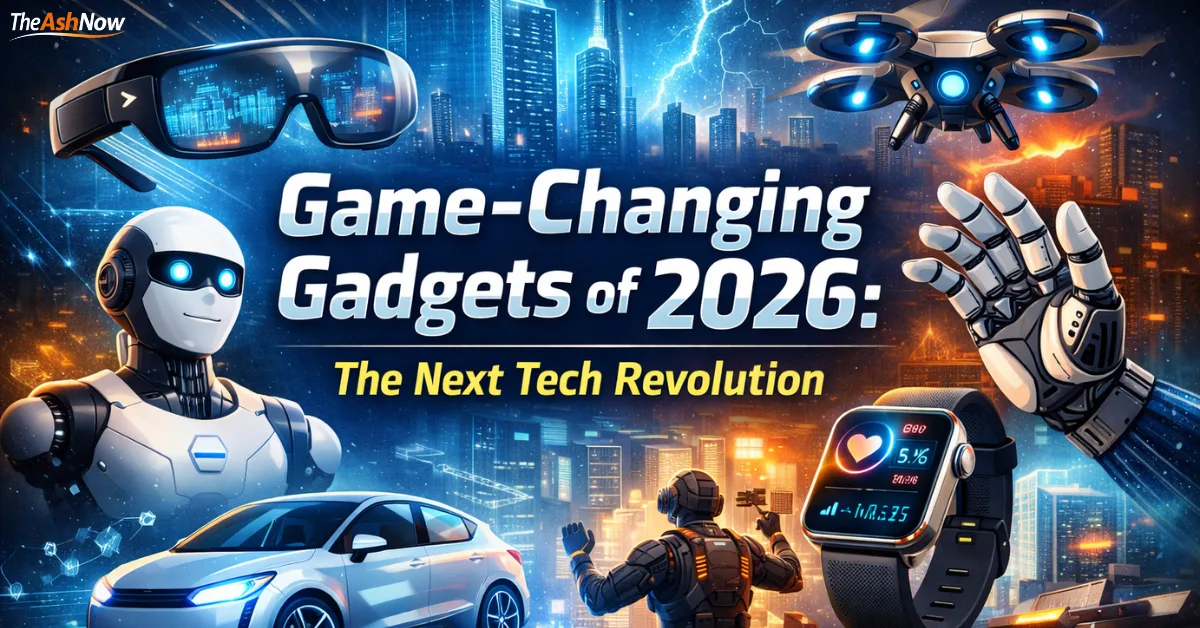
2026 is not just another tech year — it is the moment when gadgets stop being tools and start acting like intelligent partners. From glasses that can “see” the world with you, to batteries that charge in minutes, to robots that may share your kitchen, the next wave of devices is quietly rewriting how humans live, work, and think. These are not future concepts — they are arriving now, and they could reshape everything from healthcare to transportation to personal freedom in ways we are only beginning to understand.
Technology is entering a phase where it no longer just serves humans but actively understands, predicts, and collaborates with them. The year 2026 is emerging as a decisive turning point in how people interact with machines, data, and the physical world. The gadgets arriving now are not incremental upgrades — they represent a structural shift in intelligence, automation, and human–machine integration.
Table of Contents
The Year When Technology Becomes Truly Intelligent
For decades, gadgets were fast but passive. In 2026, they are becoming perceptive. Devices are learning from behavior, interpreting emotions, anticipating needs, and responding in context. This shift signals a move from “smart devices” to genuinely adaptive systems that reshape daily life, work, and decision-making.
AI Wearables That Can See, Think, and Assist
A new generation of AI-powered wearables is redefining personal computing. These devices use cameras, microphones, and real-time AI processing to analyze surroundings, translate languages instantly, summarize conversations, recognize objects, and provide intelligent guidance. Unlike traditional assistants, they understand visual context and human intent, making them powerful tools for students, professionals, and people with disabilities.
Your Leadership Story Deserves the Spotlight
Get featured on TheAshNow — the editorial platform trusted by founders, CEOs & executives worldwide for Google visibility, LinkedIn authority & global recognition.
Apply for Featured Profile →Augmented Reality Glasses: The End of Smartphones?
Ad
- AI Deception Exposed: UK AI Security Institute Catches Anthropic and OpenAI Models Lying

- The End of Paper Invitations? Why Digital Invitations Are Taking Over Weddings and Events Worldwide in 2026
- Inside TheAshNow AI: Engineering a Scalable Revenue Engine for US Real Estate Teams
- Game-Changing Gadgets of 2026: The Next Tech Revolution
- 10 Best Gaming Gadgets in 2026 Every Serious Gamer Must Own




Lightweight augmented reality glasses are poised to disrupt the smartphone industry. Instead of staring at screens, users can see digital information overlaid on the real world — navigation arrows on streets, live translations on signboards, meeting notes floating in front of them, or virtual displays appearing in space. Many analysts believe these glasses could gradually replace smartphones as the primary personal computing device.
Medical Wearables That Predict Diseases
Healthcare gadgets are becoming preventive rather than reactive. Advanced wearables in 2026 are expected to continuously monitor vital parameters such as glucose levels, heart rhythm, hydration, stress, and sleep quality. Some devices may even detect early warning signs of serious illnesses before symptoms appear, potentially saving millions of lives and reducing pressure on hospitals.
Solid-State Batteries: Powering the Future
Energy storage is undergoing a quiet revolution. Solid-state batteries promise faster charging, longer lifespan, higher safety, and greater efficiency than conventional lithium-ion cells. This breakthrough will accelerate the adoption of electric vehicles, renewable energy systems, and ultra-slim consumer electronics, removing one of the biggest technological bottlenecks of the modern era.
Smarter Household Robots Enter Everyday Life
Home robots are evolving beyond simple cleaning machines. By 2026, they are expected to cook meals, assist elderly individuals, organize spaces, and interact naturally with family members. These robots could transform caregiving, urban living, and domestic labor, especially in aging societies.
Ad
- Government Constitutes High-Powered Task Force on Examination Reforms Under Nandan Nilekani
- Dr. Ashwini Kumar Ashraf: A Life That Refused to Remain in the Dark
- How Vladimir Putin Is Quietly Reshaping the Global Power in 2026?
- How YouTubers Like Dhruv Rathee Are Reshaping Political Awareness in India
- Jensen Huang — The Man Quietly Powering the AI World





Self-Driving Cars Move Closer to Reality
Autonomous vehicles are becoming safer, more reliable, and more widely tested. While full global adoption may still take time, 2026 could mark the mainstream rollout of driverless ride services in major cities. This shift could reduce accidents, reshape transportation jobs, and change how people view car ownership.
Immersive Gaming and Virtual Worlds
Next-generation gaming devices and full-body haptic suits are blurring the boundary between reality and simulation. Users will be able to feel textures, movements, and impacts inside virtual environments, revolutionizing entertainment, professional training, remote collaboration, and digital tourism.

Homes That Think for You
Smart homes are moving from manual control to predictive automation. Lighting, temperature, security, and appliances will adjust automatically based on behavior, mood, and routine. Instead of programming homes, people will simply live in them while technology operates seamlessly in the background.
How These Gadgets Will Change Global Power
Countries that lead in AI, robotics, and quantum technologies will gain economic, industrial, and strategic advantages. Tech dominance may become as significant as military power, reshaping international competition, trade relations, and innovation leadership.
BUILD YOUR LEGACY IN PRINT
Editorial features for founders, CEOs & executives — engineered for search visibility, LinkedIn credibility & industry authority.
APPLY NOW →The Risks of a Hyper-Tech Future
Despite the benefits, these advancements raise serious concerns about privacy, surveillance, job displacement, and digital dependence. As gadgets collect more personal data, debates over ownership, security, and ethical AI use will intensify. Society will need strong regulations to balance innovation with human rights.
Ad
- Anmol Jaiswal – The Story Behind Indian Backpacker and India’s Most Adventurous Travel Creator
- Joshua Freedman: Emotional Intelligence Leader & CEO
- Alex Hormozi: The Entrepreneur Who Turned Business Growth Into a $100M Playbook
- Alakh Pandey: The Founder of Physics Wallah Who Turned Affordable Education Into a National EdTech Movement
- Kunal Shah: How the FreeCharge and CRED Founder Came to Lead WhatsApp Globally





Why 2026 Marks a Turning Point
The gadgets of 2026 are not just products — they are catalysts of a broader transformation. They promise efficiency, accessibility, and creativity, but they also challenge traditional systems of work, governance, and social interaction. The next tech revolution is not arriving tomorrow — it is already unfolding today.
FAQs: Game-Changing Gadgets of 2026
1. What are the most important gadgets coming in 2026?
The most impactful gadgets include AI wearables, advanced AR glasses, next-generation medical trackers, solid-state battery devices, smarter household robots, and more reliable self-driving vehicles.
2. Will AR glasses replace smartphones?
They may not completely replace smartphones immediately, but they are likely to reduce dependence on them by handling navigation, translation, messaging, and real-time information more naturally.
3. How will 2026 gadgets affect jobs?
Some routine jobs may decline due to automation and robotics, while new roles in AI, maintenance, data management, and human–machine collaboration are expected to grow.
4. Are these new gadgets safe for privacy?
Privacy risks will increase because many devices collect continuous personal data. Strong regulations, encryption, and user consent will become more critical than ever.
5. When will ordinary people actually use these gadgets?
Many of these technologies are expected to reach mainstream consumers between late 2026 and 2028, starting with premium markets and gradually becoming affordable.






[…] Why Nobody Panicked (But Maybe Should Pay Attention) […]