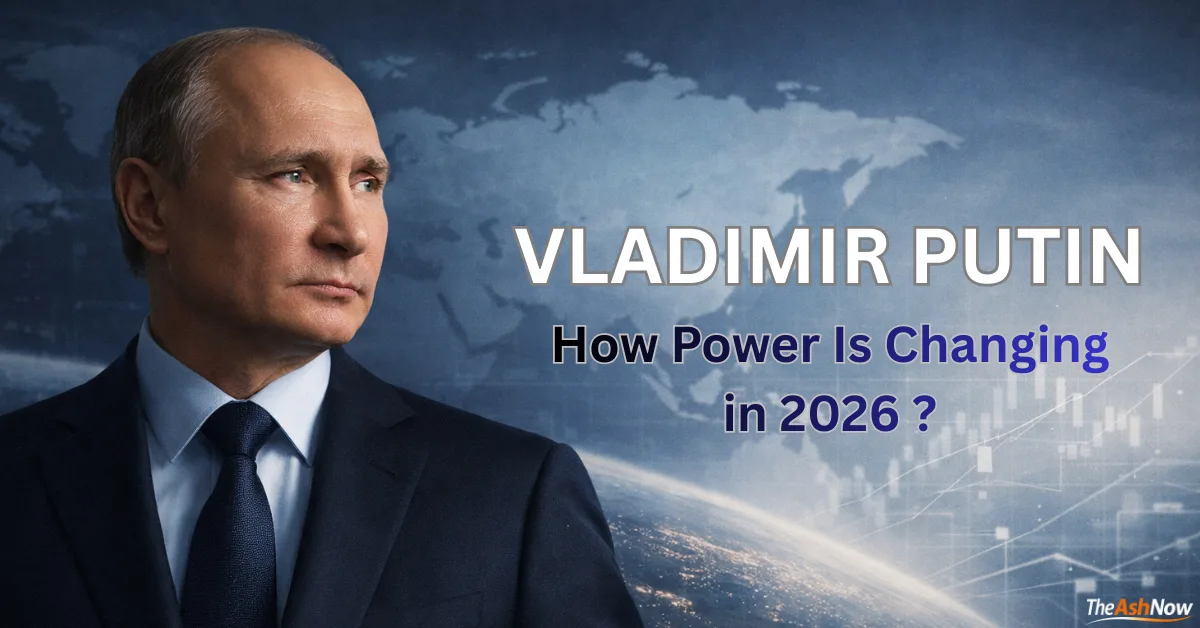
For most of the past three decades, the global system was defined by a simple assumption: Western political, economic, and military dominance was permanent. Countries could rise and fall, but the architecture of power itself would remain largely unchanged.
That assumption is now dissolving.
Not with a dramatic collapse. Not with a single war or treaty. But through a slow, methodical, and strategic reshaping of influence — one in which Vladimir Putin has played a central, underestimated role.
While global attention focuses on elections, crises, and headlines, Russia under Putin has been executing a long-term strategy aimed not at winning dominance outright, but at making dominance itself impossible for anyone else.
Your Leadership Story Deserves the Spotlight
Get featured on TheAshNow — the editorial platform trusted by founders, CEOs & executives worldwide for Google visibility, LinkedIn authority & global recognition.
Apply for Featured Profile →The result is a world that looks fundamentally different from the one the West built after the Cold War — more fragmented, more transactional, more competitive, and far less stable.
This is not a story about Putin as a personality. It is a story about the system he is helping create — and what that system means for power, money, security, and the future of global order.
Table of Contents
What Is Actually Changing in the Global Power Structure
The shift underway is not from one empire to another. It is from a unipolar world to a multipolar one.
In a unipolar system, one dominant power sets the rules, enforces them, and defines legitimacy. In a multipolar system, no single actor can impose order alone. Influence becomes distributed, fragmented, and negotiated.
Putin’s central objective has not been to replace Western dominance with Russian dominance. Russia does not have the economic scale or demographic base to do that. Instead, his objective has been to weaken the idea that dominance itself is sustainable.
This is achieved through four structural moves:
First, undermining institutional authority.
Second, fragmenting alliances.
Third, normalizing transactional power politics.
Fourth, accelerating alternative economic and political networks.
Each of these moves chips away at the coherence of the post-World War II system without directly confronting it.
That is why the change feels slow. And why is it so difficult to reverse?
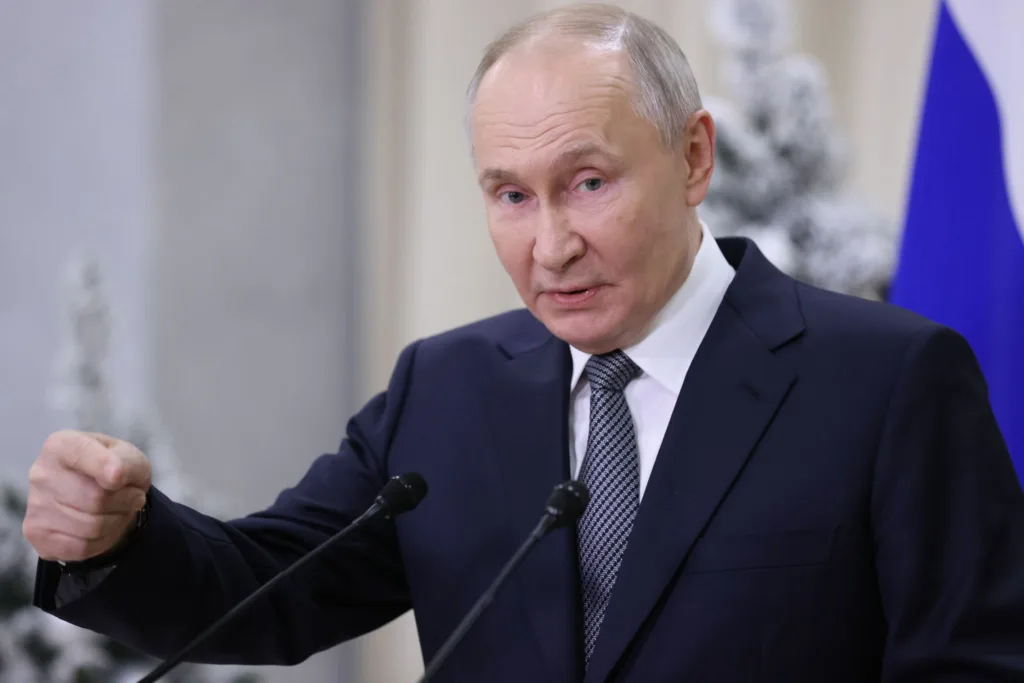
Image Credit – Google
How Russia Undermines Institutional Power Without Confrontation
Institutions only work if most actors believe they are legitimate.
BUILD YOUR LEGACY IN PRINT
Editorial features for founders, CEOs & executives — engineered for search visibility, LinkedIn credibility & industry authority.
APPLY NOW →Global institutions — political, economic, legal — are not enforced purely by force. They are enforced by consent, habit, and perceived fairness.
Putin’s strategy has been to weaken that belief.
Not by attacking institutions head-on, but by consistently highlighting their inconsistencies, selective enforcement, and political bias. Every double standard becomes an argument. Every exception becomes evidence. Every failure becomes proof that the system is not neutral.
Over time, this reframes global norms not as rules but as tools — used by the powerful when convenient and ignored when not.
Once that perception spreads, institutions stop functioning as stabilizers and start functioning as bargaining chips.
This does not destroy the system.
It hollows it out.
- Government Constitutes High-Powered Task Force on Examination Reforms Under Nandan Nilekani
 Latest Appointment: Head of High-Powered Task Force on Examination Reforms (2026) On 26 July 2026, Prime Minister Narendra Modi announced the…
 - Dr. Ashwini Kumar Ashraf: A Life That Refused to Remain in the DarkWhen a Life Becomes Its Own Light Some lives shine because they are placed in the spotlight.Others shine because they generate…
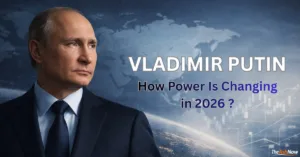
- How Vladimir Putin Is Quietly Reshaping the Global Power in 2026?For most of the past three decades, the global system was defined by a simple assumption: Western political, economic, and military…
- How YouTubers Like Dhruv Rathee Are Reshaping Political Awareness in IndiaIndia me political awareness ka tareeqa quietly, lekin decisively badal chuka hai. Jo kaam pehle TV debates, newspaper columns, aur political…
- Jensen Huang — The Man Quietly Powering the AI WorldIn an age where tech leaders dominate headlines with tweets, controversies, and cult-like followings, Jensen Huang stands apart. He does not…
- Who Was Jeffrey Epstein? Money, Influence, and the Darkest Scandal in America
 Who Was Jeffrey Epstein? A Name That Refuses to Fade Few names in modern American history provoke as much unease, anger,…
The Strategic Use of Energy as Geopolitical Infrastructure
Energy is not just an economic asset. It is infrastructure. And infrastructure shapes behavior.
Russia’s role in global energy flows has allowed Putin to influence not only markets but political decisions.
Energy dependence creates quiet leverage:
• It affects inflation and cost of living.
• It influences domestic political stability.
• It shapes foreign policy risk tolerance.
This leverage is not used dramatically. It is used asymmetrically.
It does not dictate behavior. It narrows options.
Governments become more cautious. More constrained. More willing to compromise.
The result is not submission, but hesitation — and in geopolitics, hesitation is power.
Fragmentation as a Strategic Outcome
One of the defining features of the emerging world order is fragmentation.
Fragmented trade.
Fragmented financial systems.
Fragmented technology standards.
Fragmented security arrangements.
Fragmentation reduces the ability of any one system to dominate. It increases resilience for smaller actors. It creates redundancy and competition.
For Russia, fragmentation is not a failure of globalization. It is the evolution of it.
A fragmented world is harder to control, but also harder to coerce.
It is a world where power is contextual rather than absolute.
And that is a world in which a strategically patient actor can remain relevant far beyond what its raw economic or military weight would suggest.
The Role of Psychological and Temporal Asymmetry
One of the most underestimated elements of Putin’s influence is not military or economic.
It is temporal.
Western democracies operate on short political cycles. Leaders change. Policies shift. Priorities reset.
Putin operates on decades.
This creates asymmetry.
Short-term systems optimize for immediate stability, electoral approval, and crisis management. Long-term systems optimize for structural positioning.
Putin does not aim to win individual confrontations. He aims to shape the environment in which future confrontations occur.
That difference in time horizon is itself a strategic advantage.
Technology, Information, and the New Domain of Power
Power is no longer confined to territory.
It flows through networks.
Information flows shape perception. Perception shapes legitimacy. Legitimacy shapes power.
Russia’s role in the information domain is not primarily about persuasion. It is about destabilization.
Not making people believe something new — but making them doubt what they believed before.
Once trust erodes, coordination becomes harder. Consensus becomes fragile. Authority weakens.
A society that cannot agree on reality cannot mobilize effectively.
This is not about propaganda as messaging. It is about propaganda as entropy.
And entropy favors those who thrive in disorder.

Risks and Unintended Consequences
This reshaping of the global system is not without cost.
Fragmentation increases instability.
Instability increases miscalculation.
Miscalculation increases the risk of conflict.
A world without clear rules does not become more free. It becomes more dangerous.
Power becomes more personalized. Agreements become more fragile. Deterrence becomes harder to calibrate.
The system Putin is helping create is not necessarily better. It is simply different.
And it is not clear that anyone fully controls it anymore — including those who helped shape it.
What Comes Next
The question is no longer whether the global power structure is changing.
It is whether the world can manage that change without collapsing into chaos.
The future is likely to be defined by:
More negotiation, less enforcement.
More regional power centers, fewer global ones.
More uncertainty, less predictability.
Putin’s role in this transformation is not that of a conqueror.
It is that of an accelerant.
He did not create the conditions for this shift — but he recognized them early, adapted to them, and helped push them forward.
In that sense, his most lasting influence may not be geopolitical.
It may be architectural.
He is not reshaping borders.
He is reshaping the logic of power itself.
And once that logic changes, the world cannot return to what it was before.

Frequently Asked Questions About Vladimir Putin
Who is Vladimir Putin?
Vladimir Putin is the President of Russia and one of the most influential political leaders in the world. He has led Russia for over two decades, shaping its domestic politics, economy, military strategy, and global role.
Does Vladimir Putin speak English?
Yes, Vladimir Putin understands and speaks some English, but he usually uses Russian in official settings and relies on interpreters for diplomatic and public communications.
What is Vladimir Putin’s net worth?
Putin’s official income disclosures show a modest salary and assets. However, his true net worth is unknown and widely debated, with estimates ranging from modest to extremely high. There is no verified public figure.
Where is Vladimir Putin right now?
Putin’s exact real-time location is not publicly disclosed for security reasons. He is generally based in Moscow and travels domestically and internationally for state duties.
How tall is Vladimir Putin?
Vladimir Putin is approximately 5 feet 7 inches tall (around 170 centimeters).
Is Vladimir Putin a dictator?
Different political analysts and governments describe Putin’s leadership differently. Supporters see him as a stabilizing leader; critics describe Russia under his rule as authoritarian. The classification depends on political perspective and criteria.
What is Vladimir Putin’s military background?
He does not have a formal military command background but has overseen Russia’s military strategy as head of state and commander-in-chief.
What is Vladimir Putin known for?
He is known for restoring central authority in Russia, asserting Russian influence globally, and challenging Western geopolitical dominance.
Why is Vladimir Putin controversial?
Due to Russia’s foreign interventions, human rights criticisms, political opposition restrictions, and tensions with Western nations.
How popular is Vladimir Putin in Russia?
Approval ratings fluctuate depending on economic conditions and geopolitical events. He maintains significant domestic support, particularly among older and nationalist voters.
What is Vladimir Putin’s role in the Ukraine conflict?
Russia’s actions in Ukraine under Putin’s leadership have been a major source of international tension, sanctions, and geopolitical realignment.