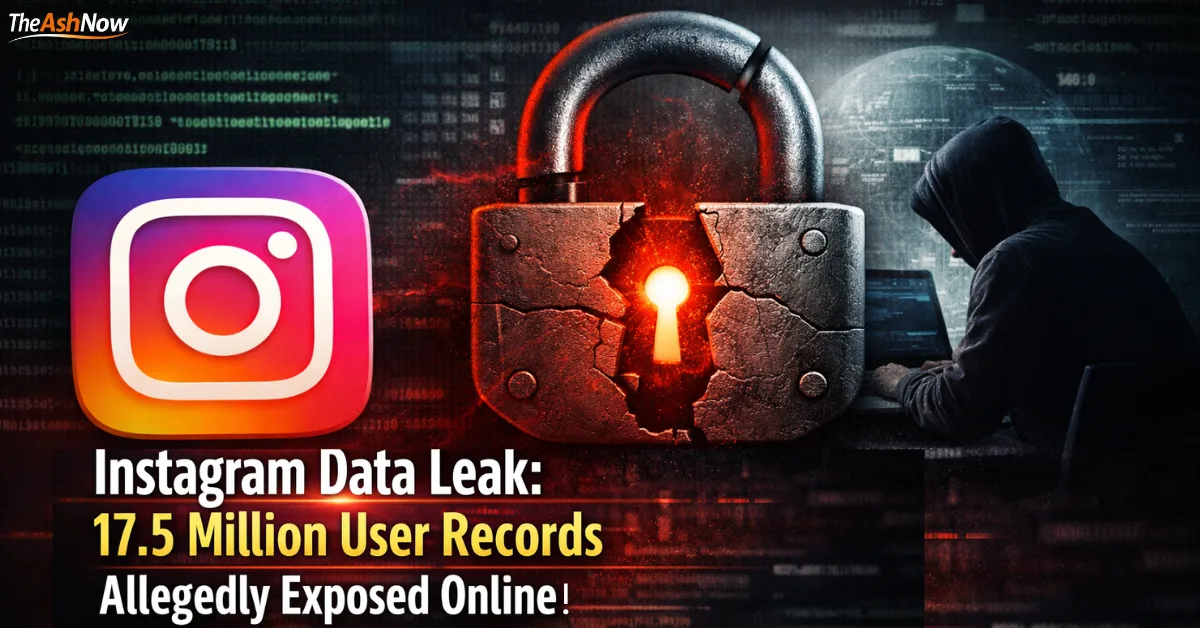
Instagram Data Leak: In early January 2026, cybersecurity monitoring groups and multiple newsrooms reported that a dataset allegedly containing 17.5 million Instagram user records was circulating on underground forums. The dataset is said to include personal identifiers connected to Instagram accounts and is reportedly being shared freely among cybercriminal communities.
If accurate, this is not primarily a “password breach.” It is more dangerous in a subtle way. Personal data like emails, phone numbers, and usernames enable high-precision phishing, impersonation scams, SIM swap attacks, and account takeover attempts. Criminals no longer need to guess who you are — the dataset gives them verified identity markers.
This turns Instagram from a social platform into an attack surface.
What information is reportedly included
The exposed dataset is reported to contain some or all of the following fields:
Your Leadership Story Deserves the Spotlight
Get featured on TheAshNow — the editorial platform trusted by founders, CEOs & executives worldwide for Google visibility, LinkedIn authority & global recognition.
Apply for Featured Profile →Instagram usernames
Full names
Email addresses
Phone numbers with international codes
Partial location or address data
Profile metadata
Even without passwords, this information is enough to create convincing scam messages that appear legitimate, urgent, and personalized.

Where the data allegedly came from
Reports indicate the data may originate from an older Instagram-related API exposure that occurred in 2024 and was later aggregated, packaged, and redistributed publicly in January 2026.
This is common in cybercrime. Old leaks are frequently resold, repackaged, or re-released when criminals believe the data still has economic value. Many people reuse email addresses and phone numbers for years, making even “old” datasets operationally useful.
Has Meta confirmed the breach?
As of now, Meta has not publicly confirmed that a fresh breach of 17.5 million users has occurred. This means the situation likely falls into one of three categories:
A new breach that has not yet been acknowledged
An old dataset that has been resurfaced
A combination of multiple leaks merged into one dataset
Regardless of which is true, the defensive response is the same: assume your data may be present and secure your account accordingly.

Why users are suddenly receiving password reset emails
Many users have reported receiving unexpected password reset emails from Instagram. This does not automatically mean your account is hacked.
Attackers often mass-trigger reset workflows to:
Test which accounts exist
Create panic so users click quickly
Push victims toward fake login pages
Trick users into approving malicious login attempts
BUILD YOUR LEGACY IN PRINT
Editorial features for founders, CEOs & executives — engineered for search visibility, LinkedIn credibility & industry authority.
APPLY NOW →The email itself can be real. The danger is in how people respond to it.
RELATED POST




What you should do right now
These steps significantly reduce your risk.
Enable two-factor authentication using an authenticator app, not SMS
Change your Instagram password to a long, unique one you do not use anywhere else
Secure your email account with two-factor authentication before anything else
Review login sessions and remove any devices you do not recognize
Remove old phone numbers and emails from your account
Revoke access to third-party apps you no longer use
Reduce public visibility of your contact information
If you receive a reset email you did not request, do not click it impulsively. Open Instagram directly through the app or your usual method and check your security settings instead.

Guidance for businesses, creators, and public figures
High-visibility accounts are prime targets because they have financial, reputational, and influence value.
If you manage or run a brand account:
Require two-factor authentication for all admins
Use role-based permissions rather than giving everyone full control
Limit account access to as few people as possible
Prepare a response plan for account recovery before you need it
Monitor messages claiming policy violations, copyright issues, ad suspension, or verification offers — these are common attack lures
FEATURED POST





What this means for U.S. global shock preparation
Cyber incidents are now systemic risks. A data leak at scale can trigger downstream effects across banking, advertising, identity systems, fraud, and even political operations.
Resilience is not about fear. It is about standardization:
Unique credentials
Strong authentication
Controlled access
Fast incident response
User education
This is how digital infrastructure remains stable even during mass disruption.

FAQs: Instagram Data Leak
Was my password exposed?
Most reporting suggests the dataset contains identity data, not passwords. However, identity data alone is enough to enable serious attacks.
Is this a new hack or old data?
It appears more likely that older data has resurfaced and is being redistributed, though this has not been officially confirmed.
Why am I getting reset emails?
Attackers may be mass-triggering reset flows to pressure users or to probe for vulnerabilities.
What is the single most important action I can take?
Enable two-factor authentication and secure your email account.
What should I do if my account is already compromised?
Change your password immediately, enable two-factor authentication, remove unknown sessions, revoke suspicious app access, and secure your email account.

Disclaimer: This content is for informational purposes only and does not constitute legal, forensic, or cybersecurity incident response advice. Breach investigations evolve as data is verified, sources are traced, and platforms issue formal statements. Users and organizations should follow official platform guidance and consult qualified professionals for business-critical exposure.
Source References: Cyber Press – Report on Data Leak, Malwarebytes Data Leak Confirmation, International Business Times – Dark Web Sale and Exploitation Fears