
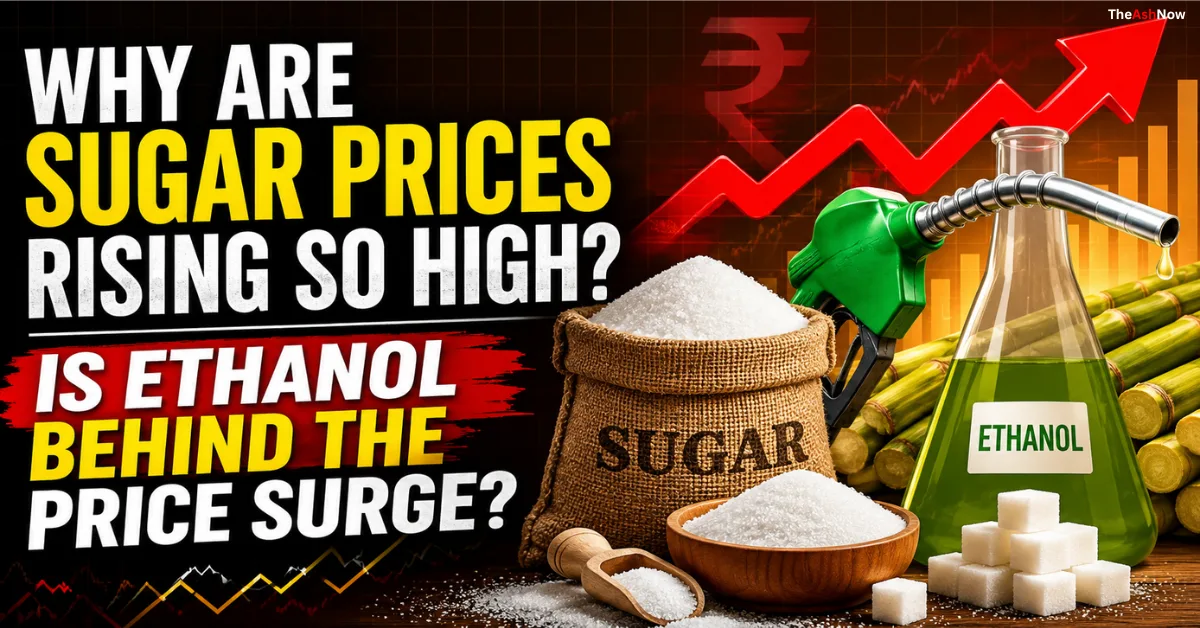
Why Sugar Prices Are Rising? Sugar has long been one of India’s most affordable kitchen staples. Whether it’s morning tea, homemade desserts, bakery products, or festive sweets, millions of households rely on it every day. But in recent weeks, consumers across India have noticed something unusual: sugar prices have climbed sharply, leaving many wondering what changed.
At first glance, it may seem like a simple supply issue. In reality, the current price surge is the result of several interconnected factors—including weather, government policy, ethanol production, festival demand, and global market dynamics.
This article explains why sugar prices are rising in India, what the government is doing to control the situation, and whether consumers should expect prices to remain high in the coming months.
Table of Contents
Your Leadership Story Deserves the Spotlight
Get featured on TheAshNow — the editorial platform trusted by founders, CEOs & executives worldwide for Google visibility, LinkedIn authority & global recognition.
Apply for Featured Profile →Sugar Prices Have Reached Multi-Year Highs
Wholesale and retail sugar prices have risen significantly across major Indian markets. In cities such as Mumbai, retail prices increased by around ₹8 per kilogram within days, while wholesale prices touched record levels in major trading hubs like Kolhapur. Industry analysts expect prices to remain elevated through the festive season unless supply conditions improve.
The increase is significant because India is the world’s largest sugar consumer, and even a small supply imbalance can affect millions of households and businesses.
1. Ethanol Production Has Changed the Sugar Market
One of the most debated topics is India’s ethanol blending program.
The government has aggressively promoted ethanol blending to reduce crude oil imports, improve energy security, and lower vehicle emissions.
Much of India’s ethanol is produced from sugarcane and sugar-based feedstocks.
When more sugarcane is diverted toward ethanol production, less raw material is available for manufacturing sugar.
Supporters argue that the ethanol program:
- reduces dependence on imported oil,
- creates additional income for farmers,
- strengthens India’s renewable energy goals.
Critics argue that during years of weaker sugar production, ethanol diversion can tighten domestic sugar supplies and contribute to higher retail prices.
Recognizing these concerns, policymakers are reportedly evaluating whether future ethanol production should rely more heavily on grain-based feedstocks while preserving more sugarcane for sugar manufacturing.

2. Poor Weather Has Reduced Sugarcane Production
The biggest reason behind higher sugar prices is weaker sugarcane production.
BUILD YOUR LEGACY IN PRINT
Editorial features for founders, CEOs & executives — engineered for search visibility, LinkedIn credibility & industry authority.
APPLY NOW →Sugarcane is a water-intensive crop that depends heavily on consistent rainfall throughout its growing season. During 2026, several important sugar-producing states—including Maharashtra and Karnataka—experienced irregular monsoon rainfall and prolonged dry conditions.
When rainfall becomes unpredictable:
- Sugarcane growth slows.
- Plants produce less juice.
- Sugar recovery rates decline.
- Mills produce less sugar from every tonne of cane.
Meteorologists are also monitoring the possibility of a stronger El Niño pattern, which historically reduces rainfall across parts of India and Thailand while creating additional uncertainty for agricultural production.
3. Festival Season Is Driving Demand Higher
India is entering one of its busiest consumption periods.
From August through November, festivals such as:
- Raksha Bandhan
- Ganesh Chaturthi
- Navratri
- Dussehra
- Diwali
create a significant increase in sugar consumption.
Sweet manufacturers, bakeries, beverage companies, restaurants, and confectionery producers all purchase large quantities of sugar before these festivals. Many businesses also build inventories weeks in advance to avoid future shortages.
This seasonal demand surge comes at the same time that supplies are already tightening, creating additional upward pressure on prices
4. Lower Sugar Stocks Are Making the Market Nervous
Commodity markets react not only to today’s supply but also to expectations about tomorrow.
India’s sugar inventories have been falling, and market participants are concerned that opening stocks for the next crushing season could be among the lowest seen in decades.
As inventories shrink:
- wholesalers buy earlier,
- manufacturers increase purchases,
- traders hold inventories longer,
- retailers prepare for shortages.
This behavior itself pushes prices even higher because demand becomes concentrated before actual shortages occur.

5. Global Sugar Markets Are Also Under Pressure
India is not facing this challenge alone.
Major sugar-producing countries such as Brazil and Thailand are also dealing with weather uncertainty.
Brazil remains the world’s largest sugar exporter, and any disruption there influences global prices almost immediately.
When international sugar prices rise:
- importing sugar becomes more expensive,
- exporters prefer overseas markets,
- domestic markets experience additional pressure.
Although India’s sugar market is largely driven by domestic production, global trends still influence pricing expectations and government policy decisions.
6. Government Is Trying to Prevent Further Price Increases
Because sugar is considered a politically and economically sensitive commodity, the Indian government has introduced several measures to stabilize prices.
Recent actions include:
- stricter limits on how long large dealers can hold sugar stocks,
- earlier stockholding restrictions,
- restrictions on exports,
- discussions about limited duty-free imports if necessary,
- reviewing monthly sugar release mechanisms.
The objective is straightforward: increase market availability while discouraging speculative stockpiling that could worsen shortages.
7. Will Farmers Benefit?
Higher sugar prices generally improve the financial outlook for sugar mills.
If mills earn better margins, they are usually in a stronger position to pay farmers on time for sugarcane purchases.
However, the overall benefit depends on:
- crop yields,
- production costs,
- government pricing policies,
- ethanol allocation,
- rainfall during the remainder of the growing season.
Higher market prices do not automatically translate into proportionally higher farmer incomes.
8. Which Industries Will Feel the Biggest Impact?
Sugar is a basic ingredient in thousands of products.
Industries likely to experience higher costs include:
- confectionery manufacturers,
- biscuit producers,
- beverage companies,
- bakeries,
- dairy dessert manufacturers,
- restaurants,
- sweet shops,
- packaged food companies.
Some businesses may absorb these higher costs temporarily, while others could eventually pass them on to consumers through higher retail prices.
9. Will Sugar Become Even More Expensive?
That depends on several variables.
Prices could remain elevated if:
- rainfall remains below normal,
- sugar production declines further,
- festival demand stays strong,
- inventories continue falling.
On the other hand, prices could stabilize if:
- weather conditions improve,
- sugarcane output exceeds current expectations,
- government imports additional sugar,
- ethanol policies are adjusted to increase domestic sugar availability.
For now, most market participants expect prices to remain firm through the current festive season.
Frequently Asked Questions
What are the current sugar prices in India?
Sugar prices vary by state, city, and retailer. In recent weeks, retail and wholesale prices have risen across several major markets due to tighter supply, higher seasonal demand, and concerns over lower production.
Why sugar prices are rising in India?
Sugar prices are increasing because of multiple factors rather than a single cause. Lower sugarcane production due to uneven monsoon rainfall, strong festival demand, tighter sugar stocks, ethanol production, and uncertainty in the global sugar market have all contributed to the recent price surge.
Is ethanol responsible for higher sugar prices?
Ethanol is considered one of the contributing factors, but it is not the only reason. When more sugarcane is diverted toward ethanol production, less cane may be available for sugar manufacturing. However, weather conditions, lower crop yields, and seasonal demand are also playing significant roles.
Why are sugar prices going up worldwide?
Weather conditions influence global sugar prices in major producing countries such as Brazil, India, and Thailand. Poor harvests, supply chain disruptions, higher production costs, and changing export policies can tighten global supplies and push prices higher.
What are international sugar prices?
International sugar prices refer to the benchmark prices traded on global commodity exchanges, where raw and refined sugar contracts are bought and sold. These prices are influenced by worldwide production, demand, exports, weather, and currency movements.
How do international sugar prices affect India?
Although India produces most of the sugar it consumes, international prices still influence the domestic market. Higher global prices can make imports more expensive, affect export decisions, and influence expectations among traders and sugar mills.
What is happening in the international sugar market?
The international sugar market has experienced volatility due to weather-related production concerns, fluctuating export supplies, and changing demand from major importing countries. These factors have kept global sugar prices under pressure.
Why are global sugar prices so high?
Global sugar prices have remained elevated because of production challenges in key exporting countries, unpredictable weather patterns, strong worldwide demand, and concerns about lower inventories. These factors have reduced confidence in future supply.
Will sugar prices continue to rise?
Future prices will depend on several factors, including India’s upcoming sugarcane harvest, weather conditions, ethanol production policies, government interventions, and demand during the festive season. If production improves, prices may stabilize, but supply constraints could keep prices elevated for longer.
Is the Indian government taking steps to control sugar prices?
Yes. The government has introduced measures such as tighter stock limits, restrictions on speculative hoarding, export controls, and discussions on improving domestic availability. These steps are intended to stabilize the market and reduce price volatility.
How do sugar prices affect consumers?
Higher sugar prices increase household grocery expenses and raise production costs for bakeries, beverage companies, confectionery manufacturers, restaurants, and sweet shops. Over time, these higher costs may also affect the prices of processed foods and desserts.
How do sugar prices impact farmers?
Higher sugar prices can improve revenues for sugar mills, which may support timely payments to sugarcane farmers. However, farmers’ incomes also depend on crop yields, production costs, government pricing policies, and weather conditions.
What is the relationship between sugar production and ethanol production?
Sugarcane can be used to produce both sugar and ethanol. When a larger share of sugarcane is allocated to ethanol production, the quantity available for sugar manufacturing may decrease. Policymakers often balance these two priorities based on domestic sugar availability and energy goals.
Where can I check current sugar prices?
Current sugar prices can be tracked through commodity exchanges, government market reports, agricultural market bulletins, and wholesale market updates. Retail prices may vary depending on location, transportation costs, and local demand.
Why should consumers pay attention to sugar market trends?
Sugar is a key ingredient in many food products. Changes in sugar prices can influence overall food inflation, affect household budgets, and impact industries ranging from beverages and packaged foods to bakeries and confectionery businesses.
Final Thoughts
The current rise in India’s sugar prices is not the result of a single event. It reflects a combination of climate-related production challenges, seasonal demand, tighter inventories, ethanol policy, and global commodity market uncertainty.
While higher prices may temporarily benefit some sugar producers and mills, they also increase costs for households and food manufacturers. The government’s recent interventions suggest that policymakers are trying to balance three competing priorities: protecting consumers from inflation, supporting farmers and the sugar industry, and maintaining India’s long-term ethanol blending strategy.
Whether prices begin to ease later this year will largely depend on the upcoming sugarcane harvest, weather conditions, and how effectively policy measures improve domestic supply.

Sources
- Reuters – India tightens sugar stock limits to tame record prices
- Reuters – India weighs limited duty-free sugar imports to rein in record prices
- The Times of India – Why India is considering sugar imports as prices hit record levels
- USDA Economic Research Service – Sugar & Sweeteners Market Outlook
- USDA ERS – Sugar & Sweeteners Yearbook Tables (Historical Data)
- FRED (Federal Reserve Bank of St. Louis) – Global Price of Sugar, No. 11, World (IMF Data)
- Economic Times Agriculture – Indian sugar prices surge to unprecedented levels
- Economic Times Agriculture – Sugar prices surge as inconsistent monsoon disrupts supply outlook
- Procurement Resource – Global Sugar Retail Price Trends & Historical Analysis
Disclaimer: The information presented in this article is intended for educational and informational purposes only. While every effort has been made to ensure accuracy, sugar prices, government policies, market conditions, and commodity trends are subject to change over time. The analysis is based on publicly available information from reputable government agencies, international organizations, and recognized news publications available at the time of writing.
This article should not be considered financial, investment, agricultural, or legal advice. Readers are encouraged to verify the latest data and consult official sources before making business, investment, or policy-related decisions. TheAshNow is not responsible for any losses or decisions made based on the information provided in this article.






The article presents a thoughtful explanation of the subject during my research and I look forward to reading more from you