
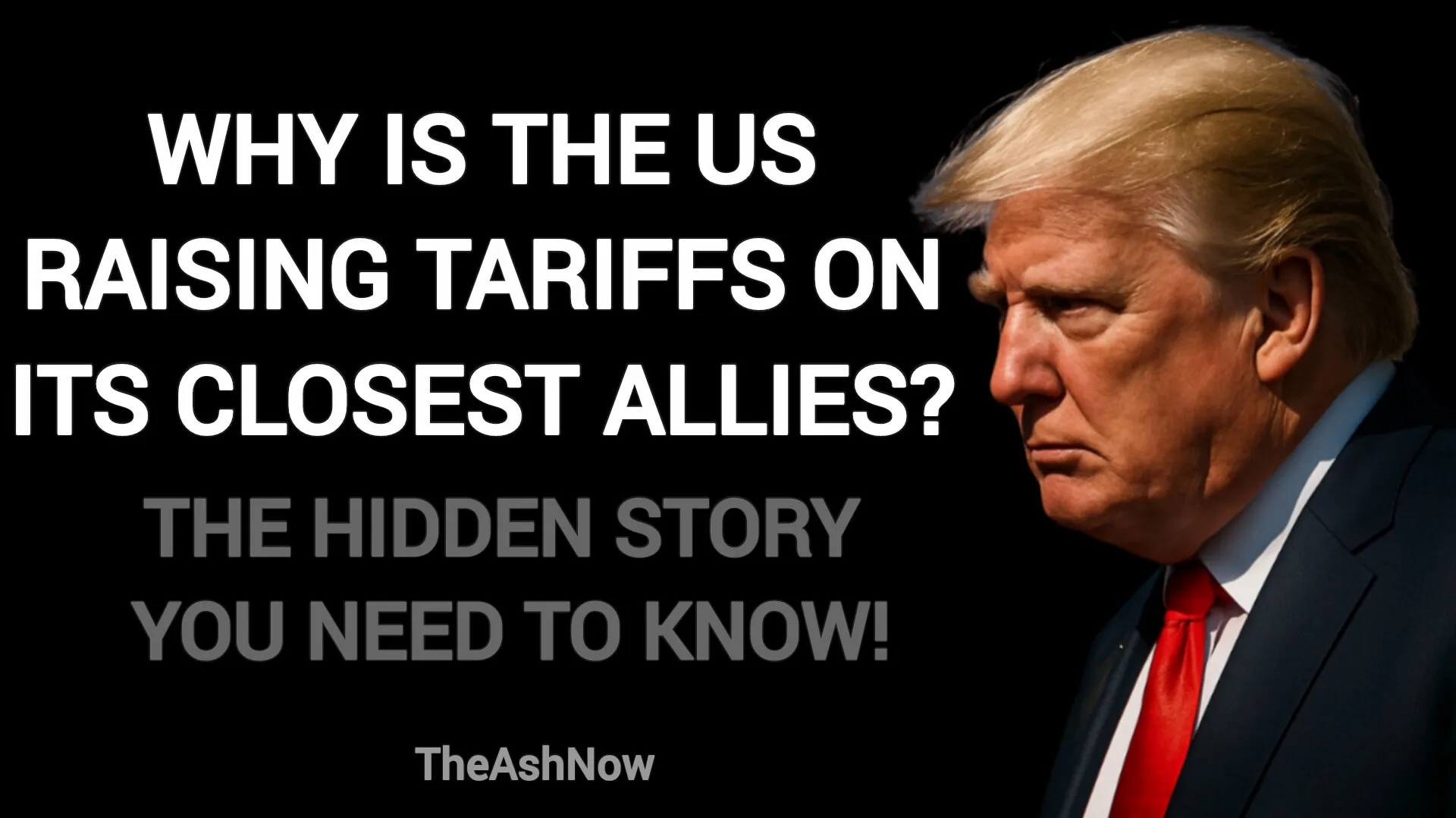
Real Motives Behind US Tariffs: Why America Is Targeting Its Closest Allies?
The Real Motives Behind US Tariffs on Its Own Allies: In recent years, the United States has imposed sweeping tariffs not just on geostrategic competitors such as China, but also on longstanding allies like the European Union, Japan, South Korea, and Canada. This protectionist pivot has confounded many policymakers and business leaders, sparking debates about its true motivations and its consequences for international alliances, economic stability, and global security. While official rationales often invoke trade imbalances, national security threats, and reciprocity, the real drivers behind these tariffs are layered, blending domestic economic anxieties, geopolitical maneuvers, and evolving strategic doctrines.
Table of Contents
Economic and Historical Context
Historically, US trade policy has oscillated between liberalization—marked by free-trade agreements with allies—and episodes of protectionism, particularly during economic crises or periods of declining industrial power. The recent tariffs mark a break from the post-World War II consensus in which economic cooperation among allies enhanced the US-led order’s strength. Instead, these tariffs reflect a return to “America First” nationalism, reminiscent of policies from nearly a century ago.
During the Trump administration, and more prominently in his second term, the US set tariffs ranging from 10% to 50% on key imports from the EU, Japan, South Korea, and even Mexico and Canada, citing trade deficits and a need for “reciprocal” treatment in global trade. The rationale was that such trade imbalances undermined the US manufacturing base, weakened critical supply chains, and left the defense-industrial complex vulnerable to foreign adversaries.
The Official Rationale: National Security and Reciprocity
1. National Security Pretext:
A core public justification for tariffs is the idea that reliance on foreign imports in strategic sectors (such as steel, aluminum, semiconductors, and automobiles) constitutes a national security risk. Laws like Section 232 of the Trade Expansion Act and the International Emergency Economic Powers Act (IEEPA) empower the president to restrict trade in the name of national or economic security. Recent tariffs were thus justified by arguing that foreign competition eroded US industrial capacity critical to defense, and that trade imbalances diluted national resilience.
Your Leadership Story Deserves the Spotlight
Get featured on TheAshNow — the editorial platform trusted by founders, CEOs & executives worldwide for Google visibility, LinkedIn authority & global recognition.
Apply for Featured Profile →2. Reciprocity Clause:
The notion of “reciprocal tariffs” champions the view that many US allies maintain unfair barriers to American exports while benefiting from access to the US market. Policymakers pointed to lopsided trade balances and non-tariff barriers abroad as evidence, arguing that allied economies suppressed domestic wages to boost exports while stymying US entry into their markets.
3. Transactional Alliances:
Under the latest policy moves, alliances are increasingly viewed through a transactional lens, not as enduring security partnerships. The administration’s doctrine frames allies not as friends, but as stakeholders who must “pay their way,” both in defense spending and in reciprocal economic opportunities.
Political and Geopolitical Motives
Beyond the official justifications, deeper—and sometimes less explicitly stated—motives help explain the US’s combative trade stance with its allies.
A. Domestic Political Calculations
Economic Anxiety
The decline in US manufacturing jobs, wage stagnation, and the offshoring of industries have stoked public resentment and a backlash against globalization among certain voters. Tariffs are seen as a potent tool to signal commitment to protecting US workers and revitalizing domestic industry—even if economists caution that the overall costs often outweigh the benefits.
Electoral Calculus
Several studies have shown that US trade wars, including retaliatory measures by allies, can be carefully calibrated to inflict pain in swing states or regions politically vital to key election outcomes. This politicization of trade has blurred traditional divides between foreign policy and domestic electoral strategy.
B. Geopolitical Competition
Containment of China and Hedging on Allies
The US rivalry with China has driven a broad realignment of global supply chains and “decoupling” efforts in sectors such as semiconductors, batteries, electric vehicles, and critical minerals. However, in targeting not just China but also US allies, Washington’s approach signals a world order with few enduring friends, only temporary alignments based on relative gains. The view is that even allies can become competitors or adversaries, so all trade must be transactional and in America’s favor.
Weakened Trust and Alliance Cohesion
By imposing tariffs on allies, the US erodes mutual trust and the cooperative leverage that has long underpinned alliance-based economic and security frameworks. This not only strains diplomatic relations but also weakens collective deterrence against adversaries like China, which stands to benefit from fissures within the Western alliance network.
C. Strategic Economic Statecraft
The US is leveraging its centrality in global markets as a source of diplomatic coercion, and tariffs are seen as a way to apply pressure for compliance with broader US objectives—be it defense spending, alignment against China, or even specific political stances on unrelated issues (e.g., migration policies).
Economic and Diplomatic Impacts
Impact on Trade and Supply Chains
The tariffs have had profound effects:
- Disruption of Supply Chains:
Tariffs as high as 15% on goods from the EU, Japan, and South Korea have forced companies to reconsider sourcing and production, sometimes moving operations to avoid tariff exposure. - Rising Costs:
American companies and consumers bear the brunt, absorbing higher costs on imported goods—costs often passed along the supply chain and eventually to consumers. - Retaliation:
Allies have responded with targeted retaliatory tariffs, often chosen to inflict political damage in key US electoral regions or industries, further escalating economic risks. - GDP and Income Effects:
The IMF has downgraded global GDP forecasts, with real-income losses cited as a direct outcome of tariff-driven disruptions.
Impact on Alliances and US Influence
- Decoupling and Realignment:
Some US allies are under pressure to seek alternatives to US economic dominance—increasing trade with other partners, investing in domestic or regional supply chains, or even pursuing new security arrangements. - Diminished Credibility:
Policymakers and analysts warn that overusing economic coercion, especially against partners, drains US credibility. Allies may pursue immunity to US pressure by diversifying economic ties, reducing reliance on the US dollar, or building alternative payment systems. - Vulnerability to Rivals:
Targeting allies with economic coercion may make them more receptive to overtures from China, which seeks to exploit growing divisions among Western countries.

Case Studies: Europe, Japan, and South Korea
European Union
The EU has faced a baseline 15% tariff on a range of industrial goods. Germany, a major auto exporter, experienced a 44% tariff rate on some products. The auto industry has been especially hard hit, with unions and manufacturers pressing for a swift resolution.
BUILD YOUR LEGACY IN PRINT
Editorial features for founders, CEOs & executives — engineered for search visibility, LinkedIn credibility & industry authority.
APPLY NOW →Japan
Japanese negotiators have cited ongoing damage, with car companies losing millions of dollars daily due to tariffs. Despite attempts to set benchmarks for fairer trade, Japan ultimately accepted less-favorable one-way tariffs in exchange for security guarantees and other considerations.
South Korea
Korean exports of cars and steel have plummeted under 25% duties, leading to significant declines in export revenue and forcing Korean manufacturers to rethink US market strategies. Semiconductor and electronics exports have so far received more lenient treatment, reflecting the mutual dependence between Korean chipmakers and US tech companies.
The Debate Within the US Policy Community
Opinion in US policy circles is divided:
- Supporters argue that the measures are necessary to reset the global trade playing field, protect strategic sectors, and address long-standing imbalances.
- Critics contend that the approach undermines long-term US influence, alienates invaluable partners, and jeopardizes prosperity and security by injecting instability into existing alliances.
What Lies Ahead: Risks and Alternatives
The real motives behind US tariffs on its own allies represent a complex intersection of economic nationalism, political calculation, “reciprocal” justice, and a zero-sum worldview. However, analysts suggest that more constructive alternatives exist:
- Selective, Coordinated Approaches:
Tariffs could be used judiciously—targeting adversaries and truly strategic vulnerabilities, while preserving free trade within alliances and leveraging multilateral institutions to address grievances. - Renewed Focus on Alliance Value:
Rebuilding trust with allies through transparency, consultation, and shared strategic objectives could restore US economic statecraft’s credibility and effectiveness. - Strategic Investment:
Investing in US competitiveness—workforce, technology, infrastructure—would strengthen the US position without resorting to protectionism that ultimately harms all parties.
In summary, the real motives driving US tariffs on its allies are rooted in shifting strategic doctrines, economic grievances, and political opportunism. The outcome, however, risks undermining precisely the alliances and economic dynamism that have long empowered the United States on the world stage.
Here are the Top-searched FAQs related to the Real Motives Behind US Tariffs
Why is the US imposing tariffs on its own allies?
The US imposes tariffs on allies to address trade imbalances, protect domestic industries, and assert leverage in geopolitical and economic negotiations, often citing national security and reciprocity as key reasons.
What impact do US tariffs have on allied economies?
US tariffs raise costs for exporters from allied countries, disrupt supply chains, provoke retaliatory tariffs, and can lead to slower economic growth and strained diplomatic relations.
Are US tariffs on allies hurting American consumers?
Yes, tariffs on imports from allies typically raise prices for American businesses and consumers, as companies often pass increased costs along the supply chain.
How do US tariffs affect global alliances and security?
Tariffs on allies can undermine trust, fragment alliance cohesion, and potentially weaken collective security efforts, leaving space for rival powers like China to exploit divisions.
What alternatives exist to tariffs for resolving trade disputes?
Alternatives include coordinated multilateral negotiations, targeted sanctions on true adversaries, investment in domestic competitiveness, and strengthening international trade institutions.
This article draws on analysis from scholarly, economic, and diplomatic sources to provide a comprehensive picture of the drivers and implications of US tariffs on its own allies.
- https://www.dw.com/en/trump-tariffs-new-levies-hit-eu-japan-south-korea/live-73550668
- https://www.whitehouse.gov/presidential-actions/2025/04/regulating-imports-with-a-reciprocal-tariff-to-rectify-trade-practices-that-contribute-to-large-and-persistent-annual-united-states-goods-trade-deficits/
- https://infomineo.com/economics/u-s-tariffs-2025-what-they-mean-for-global-trade-business/
- https://en.wikipedia.org/wiki/Tariffs_in_the_second_Trump_administration




[…] The Real Motives Behind US Tariffs on Its Own Allies? […]
He is not trump! She is Drump😂😂
Hello is any time in drunk 😂
[…] The Real Motives Behind US Tariffs on Its Own Allies? How to Set Healthy Boundaries with Technology […]
[…] The Real Motives Behind US Tariffs on Its Own Allies […]
[…] The Real Motives Behind US Tariffs on Its Own Allies?USA Imposes 25% Tariff on India Under Trump-Era RulesUSA in 2050: Will It Still Rule the World Economy? USA economy in 2050, Major Economies in 2050, GDP […]