Welcome 2026: The turn of a calendar year is usually symbolic. But 2026 does not arrive as a symbol. It arrives as a shift.
The world is entering a phase where many long-running transitions — in technology, geopolitics, work, money, culture, and human psychology — stop being gradual and start becoming visible. What has been quietly forming over the past decade now begins to shape everyday life in ways that can no longer be ignored.
2026 is not about novelty. It is about consequences.
This is the year when systems change faster than habits, when institutions move slower than technology, and when individuals feel the gap between the world they learned to live in and the world they now inhabit.
Your Leadership Story Deserves the Spotlight
Get featured on TheAshNow — the editorial platform trusted by founders, CEOs & executives worldwide for Google visibility, LinkedIn authority & global recognition.
Apply for Featured Profile →This is what 2026 really represents — and why it matters.
1. AI Stops Being a Product and Becomes Infrastructure
Artificial intelligence is no longer something people “use.” It is something societies now run on.
What electricity did to the 20th century, and what the internet did to the early 21st century, AI is beginning to do now: it becomes invisible, embedded, and unavoidable.
In 2026, AI is not mainly about chatbots, art generation, or automation headlines. It is about:
- Decision-making in finance, healthcare, logistics, and law.
- Predictive systems guiding hiring, pricing, security, and risk.
- Personalized digital layers shape what each person sees, buys, believes, and consumes.
The result is not a world run by machines — but a world increasingly mediated by them.
This changes power.
Those who control infrastructure control outcomes. In 2026, the most influential entities are not only governments or corporations, but the systems that define what information flows where, how fast, and to whom.
The central political question of the decade quietly shifts from “Who governs?” to “Who designs the system that governs behavior?”

2. Work Becomes Less About Jobs and More About Relevance
The idea of a stable “career” was built for a slower world.
In 2026, work is no longer just something you do. It is something you constantly renegotiate.
BUILD YOUR LEGACY IN PRINT
Editorial features for founders, CEOs & executives — engineered for search visibility, LinkedIn credibility & industry authority.
APPLY NOW →Three forces reshape employment:
- Automation of tasks, not roles — meaning parts of many jobs disappear while titles remain.
- AI augmentation — meaning high performers become dramatically more productive, widening inequality inside professions.
- Skill half-life collapse — meaning what you learn today may lose relevance in a few years, not decades.
The economic divide is no longer only between rich and poor. It is increasingly between:
- Those who can adapt fast, and those who cannot.
- Those who work with intelligent systems, and those who compete against them.
- Those whose work is abstract, creative, or relational — and those whose work is repetitive, predictable, or procedural.
In 2026, job security is replaced by adaptability security.
And this psychological shift is just as important as the economic one.
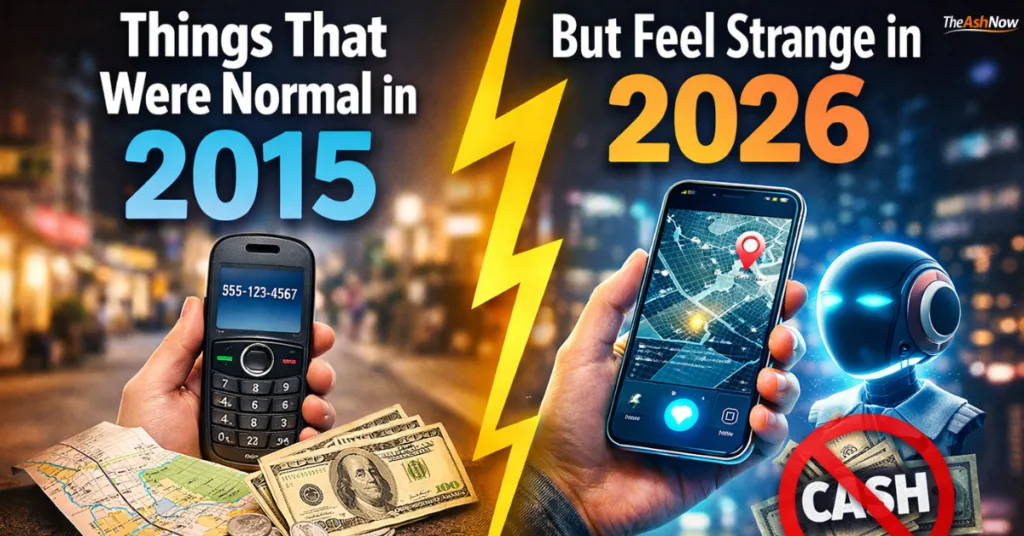
3. Money Becomes More Digital, More Political, and Less Neutral
Money was once a technical instrument. In 2026, it is a geopolitical tool.
We are moving into a world where:
- Digital currencies are increasingly normalized.
- Governments seek greater control over financial flows.
- Sanctions, access, and restrictions become instruments of power.
- Individuals feel both more connected to global markets and more vulnerable to global shocks.
Financial life feels less stable, not because systems are weaker — but because they are faster, more interconnected, and more sensitive.
A small change in one region now echoes across continents.
In this environment, economic security becomes psychological security. Volatility is not only financial — it is emotional.
And people respond not by seeking higher returns, but by seeking higher certainty.
4. A Fragmented World Replaces a Globalized One
The era of frictionless globalization is ending.
In its place, a more complex and fragmented world emerges:
- Supply chains are diversified, not optimized.
- Nations prioritize resilience over efficiency.
- Alliances are more fluid, more transactional, less ideological.
- Conflicts are not always declared — but persist in digital, economic, and informational form.
This does not mean the world is collapsing into chaos. It means it is reorganizing into multiple centers of gravity.
Power is no longer concentrated in a single axis. It is distributed, contested, and constantly shifting.
This makes the world less predictable — but also less centralized.
And unpredictability, more than conflict, is what people struggle with most.

5. Culture Moves Faster Than Meaning
Technological change accelerates. Cultural adaptation lags.
In 2026, people live inside systems that change faster than their ability to emotionally integrate them.
This produces a strange cultural condition:
- Hyper-connectivity combined with deep loneliness.
- Infinite content combined with shrinking attention.
- More choice combined with less clarity.
- More information combined with less trust.
Identity becomes fluid. Communities become digital. Relationships become mediated.
The human challenge of 2026 is not survival — it is coherence.
People are not asking, “How do I succeed?”
They are asking, “How do I make sense of this?”
6. The Psychological Shift: From Optimism to Realism
Previous decades were driven by optimism — the belief that technology would make life better, freer, easier.
2026 is driven by realism.
People are no longer asking what technology can do.
They are asking what it costs.
Not only financially, but socially, psychologically, politically, and ethically.
This does not mean the future is dark. It means the future is no longer naive.
Humanity is entering a more mature relationship with its own creations.
Less excitement. More responsibility.
Less fantasy. More accountability.
Conclusion: 2026 Is Not a Beginning — It Is a Turning Point
The world does not reset on January 1.
But sometimes it crosses a threshold.
2026 feels like such a threshold.
Not because everything changes this year — but because enough has changed that the old frameworks stop working.
We are not entering a new era of answers.
We are entering a new era of questions.
What does work mean when intelligence is everywhere?
What does power mean when systems decide outcomes?
What does identity mean when reality is filtered?
What does freedom mean when convenience is traded for control?
These are not problems to be solved quickly.
They are conditions to be lived through wisely.
Welcome to 2026.
Not a happy year.
A serious one.
And perhaps, a necessary one.
FAQs Related To Welcome 2026
1. What does “Welcome 2026” actually mean in a global context?
“Welcome 2026” is not a greeting — it represents a transition year where long-term shifts in AI, geopolitics, work, and money start becoming visible in everyday life worldwide.
2. Why is 2026 considered different from previous years?
Because multiple transformations that were gradual before — automation, digital finance, geopolitical fragmentation, and cultural change — now reach a scale where they affect daily decisions, not just headlines.
3. How will AI impact people’s lives in 2026?
AI in 2026 functions less as a tool and more as invisible infrastructure, shaping decisions in finance, healthcare, media, hiring, and security rather than simply automating tasks.
4. Will AI replace human jobs in 2026?
AI will not replace all jobs, but it will replace tasks within jobs. This will increase productivity for some workers while making other skills obsolete, shifting the job market toward adaptability rather than stability.
5. Is 2026 a good year economically?
2026 is economically mixed: more digital, more interconnected, and more volatile. Opportunity increases for those who adapt quickly, while uncertainty increases for those who depend on static systems.
6. How will money change in 2026?
Money becomes more digital, more regulated, and more political. Financial systems are faster and more connected, but also more sensitive to global events and policy decisions.
7. Is the world becoming more unstable in 2026?
The world is becoming less centralized and more complex. This feels like instability, but it is better understood as fragmentation — multiple power centers replacing a single global order.
8. What are the biggest global trends defining 2026?
The major trends include AI integration into daily life, job market transformation, digital and political money, geopolitical fragmentation, cultural acceleration, and a psychological shift from optimism to realism.
9. How should individuals prepare for 2026?
By focusing on adaptability, continuous learning, digital literacy, and emotional resilience rather than relying on fixed career paths, stable institutions, or predictable markets.
10. Is 2026 a hopeful year or a worrying one?
It is neither purely hopeful nor purely worrying. It is a serious year — one that requires awareness, responsibility, and thoughtful adaptation rather than fear or blind optimism.
Disclaimer: This article is an independent editorial analysis based on publicly observable global trends, historical patterns, and informed interpretation. It does not constitute financial, legal, political, or professional advice. The views expressed are for general informational purposes only and are intended to encourage thoughtful discussion, not to predict specific outcomes or influence individual decisions. Readers should use their own judgment and consult qualified professionals before making decisions based on any topics discussed in this article.