
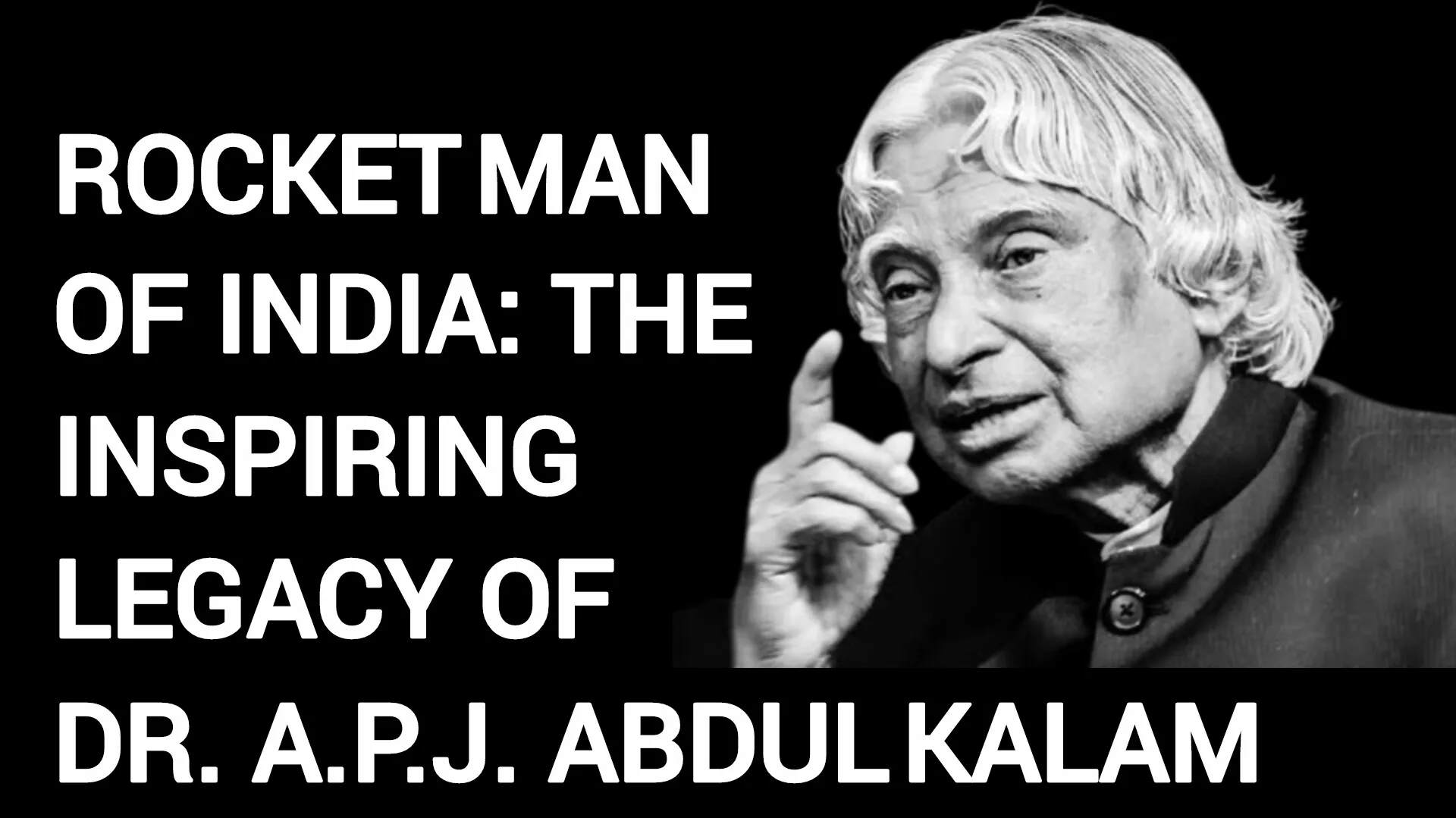
Dr. A.P.J. Abdul Kalam ‘Dr. Avul Pakir Jainulabdeen Abdul Kalam (1931–2015) was not only one of India’s foremost aerospace scientists but also its beloved “People’s President.” His life—from humble beginnings in Rameswaram to shaping India’s missile and space programs, to presiding over the nation—embodies curiosity, dedication, and service. This biography explores his early life, education, scientific and political career, major achievements, global contributions, presidency, personal values, legacy, and lesser‑known facts, complete with a timeline of key events, five FAQs, and five inspirational quotes.
Table of Contents
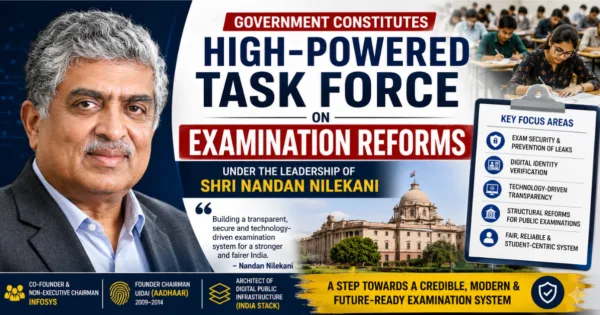
- Government Constitutes High-Powered Task Force on Examination Reforms Under Nandan Nilekani

- Dr. Ashwini Kumar Ashraf: A Life That Refused to Remain in the Dark
- How Vladimir Putin Is Quietly Reshaping the Global Power in 2026?
- How YouTubers Like Dhruv Rathee Are Reshaping Political Awareness in India
- Jensen Huang — The Man Quietly Powering the AI World



Early Life (1931–1954)
Born on October 15, 1931, in a modest fishing family in Rameswaram, Tamil Nadu, Kalam was the youngest of four siblings. His father, Jainulabdeen, ran a ferry service; his mother, Ashiamma, cared for the children and inspired in him a deep sense of integrity and humility. From childhood, Kalam displayed insatiable curiosity—sorting coconut shells to learn aerodynamics of seed dispersal and sketching flight paths of migratory birds.
Despite financial constraints, he walked miles to school and helped his neighbors by distributing newspapers. Kalam often said these early experiences taught him discipline, hard work, and the value of education. After completing secondary schooling in Rameswaram, he earned a scholarship to Saint Joseph’s College in Tiruchirappalli, graduating in physics in 1954.
Your Leadership Story Deserves the Spotlight
Get featured on TheAshNow — the editorial platform trusted by founders, CEOs & executives worldwide for Google visibility, LinkedIn authority & global recognition.
Apply for Featured Profile →Education and Formative Years (1954–1960)
- 1954–1955: Joined the Madras Institute of Technology (MIT), Chennai, to study aerospace engineering.
- 1957: Delivered his first public lecture on rocketry—a glimpse of his lifelong passion.
- 1960: Graduated from MIT with a degree in aerospace engineering.
At MIT, Kalam gravitated toward rocketry and propulsion systems. His thesis on “Development of a Low‑Cost Basalt Research Rocket” caught the attention of India’s fledgling space program. Upon graduation, he joined the Defense Research and Development Organisation (DRDO) as a scientist, marking the start of a distinguished career in India’s defense and space research.
Scientific Career and Nation‑Building (1960–1997)
Early DRDO Work (1960–1969)
Kalam’s first assignment was on the design of small rockets under the DRDO’s Directorate of Technical Development & Production. His knack for hands‑on problem‑solving and innovative yet pragmatic approach earned him rapid recognition.
Indian Space Research Organisation (1970–1982)
- 1970: Transferred to the newly formed Indian Space Research Organisation (ISRO).
- 1972: Project Director of India’s first sounding rocket, Rohini‑I, which placed a 3‑kg payload in the upper atmosphere—India’s maiden atmospheric probe.
Under his guidance, ISRO built solid‑fuel rockets that formed the basis for SLV‑3, India’s first experimental satellite launch vehicle. Although SLV‑3’s first launch in 1979 failed, its successful deployment of the Rohini satellite in 1980 marked India’s entry into the space club.
Integrated Guided Missile Development Programme (1982–1997)
- 1982: Appointed Chief Executive of the Integrated Guided Missile Development Programme (IGMDP).
- 1988–1994: Led development and successful test‑firing of Prithvi (short‑range ballistic missile), Agni (medium‑range ballistic missile), Trishul (surface‑to‑air missile), Akash (surface‑to‑air missile), and Nag (anti‑tank missile).
| Missile Name | Type of Missile | Range (Approx.) | Key Purpose/Description |
| Nuclear-capable, strategic deterrence evolved from a technology demonstrator project. | Short-Range Ballistic Missile (SSM) | 150 km | Nuclear-capable, strategic deterrence evolved from a technology demonstrator project. |
| Prithvi II | Short to Medium-Range Ballistic Missile (SSM) | 350 km | An improved version with extended range, capable of carrying both conventional and nuclear warheads. |
| Prithvi III | Naval Ballistic Missile | 600 km | A naval version designed for the Indian Navy, capable of carrying conventional and nuclear warheads. |
| Agni (series) | Medium to Intercontinental Range Ballistic Missile (SSM) | 700-10,000 km (variants) | Nuclear-capable, strategic deterrence, evolved from a technology demonstrator project. |
| Akash | Medium-Range Surface-to-Air Missile (SAM) | 30 km | Designed to intercept enemy aircraft and missiles at medium ranges. |
| Trishul | Short-Range Surface-to-Air Missile (SAM) | 9-12 km | Designed for low-level attacks, capable of intercepting enemy missiles and aircraft, and also for naval defense. |
| Nag | Anti-Tank Guided Missile (ATGM) | 4-7 km | Designed for low-level attacks, capable of intercepting enemy missiles and aircraft, and also for naval defense. |
Kalam’s leadership solidified India’s self‑reliance in missile technology. His ability to inspire multidisciplinary teams, secure political support, and manage budgets was instrumental in achieving “mission mode” success, despite international sanctions and supply challenges.
Key Achievements
- Rohini‑I Satellite Launch (1980): India’s first indigenous satellite in near‑equatorial orbit.
- Prithvi Missile (1988): Demonstrated a reliable, mobile, battlefield‑range ballistic missile.
- Agni Missile (1989): Extended India’s strike capability to 2,500 km.
- Pokhran‑II Nuclear Tests (1998): As Scientific Adviser to the Prime Minister, he provided critical technical inputs (tests were conducted under his guidance, though post‑retirement).
- Padma Bhushan (1981), Padma Vibhushan (1990), Bharat Ratna (1997): Recognition of his contributions to science and national security.
Timeline of Key Events
| Year/Period | Event/Role | Significance |
| 1931 | Born in Rameswaram, Tamil Nadu | Humble beginnings, shaped character. |
| 1954 | Graduated in Physics from St. Joseph’s College, Tiruchirappalli | Foundation of his scientific education. |
| 1957/1960 | Specializing in Aeronautical Engineering from the Madras Institute of Technology | Specialized in Aeronautical Engineering from the Madras Institute of Technology |
| 1960 | Joined DRDO (Aeronautical Development Establishment) as a scientist | Began career as a scientist, early work on hovercraft. |
| 1969 | Transferred to ISRO, Project Director for SLV-III | Pivotal move to India’s space program. |
| 1980 | Made India a member of the Space Club, the first indigenous satellite launch vehicle. | Entry into the aerospace field. |
| 1982-83 | Assumed leadership of Integrated Guided Missile Development Program (IGMDP) at DRDO | Spearheaded India’s indigenous missile development. |
| 1981 | Awarded Padma Bhushan | National civilian honor. |
| 1990 | Awarded Padma Vibhushan | National civilian honor. |
| 1992-1999 | Played a pivotal role in the Pokhran-II nuclear tests | Key role in strategic missile systems and nuclear weaponization. |
| 1997 | Awarded Bharat Ratna | India’s highest civilian award, recognizing his immense contributions. |
| 1998 | Established India as a nuclear weapon state, earned the “Missile Man” title. | “People’s President” focused on Vision 2020, education, and technology. |
| 1998 | Introduced Technology Vision 2020 | Road map for transforming India into a developed nation. |
| 1999-2001 | Principal Scientific Advisor to the Government of India | Evolved policies and strategies for development applications. |
| 2002-2007 | Served as the 11th President of India | Scientific Adviser to the Defence Minister and Secretary, Department of Defence Research & Development |
| 2015 | Passed away while delivering a lecture | “People’s President” focused on Vision 2020, education, and technology. |
Global Contributions in Science and Peace
Dr. Kalam’s vision transcended defense. He championed technology for development, advocating satellite communications for remote education, weather forecasting for farming communities, and low‑cost medical devices. His 1997 book India 2020 outlined a roadmap for transforming India into a knowledge superpower, emphasizing energy independence, modern infrastructure, and rural empowerment.
Internationally, Kalam forged scientific collaborations with NASA, ESA, and Japan’s ISRO, promoting peaceful uses of space. He lectured in over 100 universities worldwide, inspiring a generation of scientists and entrepreneurs. His humility endeared him to global audiences; in the United States, he received honorary doctorates and was invited by Congress to deliver the 2007 address to the Joint Session.
Presidency (2002–2007)
On July 25, 2002, at age 71, Kalam became India’s 11th President. Distinct as the first scientist and bachelor in the Rashtrapati Bhavan, he refocused the office on youth and education:
- “What Can I Give” Tour: Visited every state, meeting students and citizens to ignite their dreams.
- PURNA (People’s Urban Renaissance through Networking Action): Leveraged e‑governance tools to connect rural India.
- Children’s President: Hosted weekly “Interact with the President” sessions, fielding thousands of letters from schoolchildren.
His tenure was marked by transparency, warmth, and accessibility. He declined the presidential bungalow for his cousin’s house in New Delhi and famously refused to extend his term, setting a precedent for institutional integrity.
Personal Values and Philosophy
- Simplicity: Lived in a single room in the presidential guesthouse, slept on a floor mat, and wore simple attire.
- Discipline: Woke up at 4:00 AM daily for meditation and yoga.
- Service: Believed in “transforming India” through knowledge sharing and mentorship.
- Optimism: Constantly encouraged “dream, dream, dream” and viewed challenges as opportunities.
He kept a solar cooker in his backyard, practiced vegetarianism, and authored numerous books—most notably Wings of Fire and Ignited Minds—to reach grassroots readers.
Legacy and Unique Facts
- Education Initiatives: The Dr. A.P.J. Abdul Kalam Technical University in Uttar Pradesh and multiple scholarship programs globally honor his name.
- Kalam’s Panditji: A visiting scientist at NASA Ames and professor of aerospace engineering at universities in Japan, emphasizing cultural exchange.
- Cultural Icon: Appeared as himself in Tamil films and left a cameo in Hollywood’s The Legend of Bhagat Singh—though his smile was his greatest cinematic entry.
- Passion for Poetry: Wrote over 150 poems in Tamil and English, blending scientific imagery with humanistic vision.
- Final Moments: On July 27, 2015, while delivering a lecture at the Indian Institute of Management Shillong, he collapsed and passed away—fulfilling his trademark desire to die doing what he loved: engaging with youth.
FAQs
What inspired Kalam’s interest in aerospace?
Kalam’s fascination began with kite‑flying and watching birds, coupled with a childhood experiment using coconut shells.
BUILD YOUR LEGACY IN PRINT
Editorial features for founders, CEOs & executives — engineered for search visibility, LinkedIn credibility & industry authority.
APPLY NOW →Why is Kalam called the “Missile Man”?
For pioneering India’s indigenous missile programs—Prithvi and Agni—under IGMDP.
What is Kalam’s vision for India 2020?
Transform India into a developed nation with advances in agriculture, infrastructure, healthcare, and education by 2020.
How did Kalam engage with youth?
He conducted thousands of interactive sessions, answered letters, and encouraged students to pursue STEM careers.
What makes Kalam’s legacy enduring?
His blend of scientific rigor, humility, and service ethos continues to inspire millions to dream big and work selflessly.
Five Inspirational Quotes by Dr. A.P.J. Abdul Kalam
- “Dream, dream, dream. Dreams transform into thoughts, and thoughts result in action.”
- “You have to dream before your dreams can come true.”
- “Excellence is a continuous process and not an accident.”
- “If you fail, never give up because FAIL means ‘First Attempt In Learning’.”
- “Let us sacrifice our today so that our children can have a better tomorrow.”
Dr. A.P.J. Abdul Kalam’s life story is a testament to how curiosity, integrity, and service can propel an individual from a small island to the world stage. His enduring message—of dreaming big, working humbly, and giving generously—continues to light the path for future generations.




Hi there, its pleasant paragraph on the topic of media print,
we all be familiar with media is a wonderful source of fact
Hey would you mind letting me know which webhost you’re using?
I’ve loaded your blog in 3 different browsers and I must say this
blog loads a lot faster then most. Can you recommend a good internet hosting provider at
a reasonable price? Thank you, I appreciate it!
Getting it give someone his, like a edgy would should
So, how does Tencent’s AI benchmark work? Prime, an AI is confirmed a national reproach from a catalogue of greater than 1,800 challenges, from edifice observations visualisations and царство безграничных возможностей apps to making interactive mini-games.
When the AI generates the jus civile ‘prosaic law’, ArtifactsBench gets to work. It automatically builds and runs the lex non scripta ‘general law in a securely and sandboxed environment.
To glimpse how the lex non scripta ‘common law behaves, it captures a series of screenshots during time. This allows it to scrutinize seeking things like animations, society changes after a button click, and other high-powered consumer feedback.
Done, it hands to the loam all this look back – the firsthand solicitation, the AI’s pandect, and the screenshots – to a Multimodal LLM (MLLM), to embark on the not far off as a judge.
This MLLM referee isn’t sunday giving a inexplicit тезис and in edifice of uses a particularized, per-task checklist to periphery the make across ten unsung metrics. Scoring includes functionality, fanatic rum nether regions, and unchanging aesthetic quality. This ensures the scoring is composed, in concordance, and thorough.
The mighty zenith is, does this automated beak in actuality comprise on the qui vive taste? The results acquaint it does.
When the rankings from ArtifactsBench were compared to WebDev Arena, the gold-standard receiver where bona fide humans тезис on the choicest AI creations, they matched up with a 94.4% consistency. This is a herculean increase from older automated benchmarks, which at worst managed on all sides of 69.4% consistency.
On punch of this, the framework’s judgments showed across 90% concurrence with licensed deo volente manlike developers.
[…] Dr. A.P.J. Abdul Kalam: From Rameswaram Boy to the People’s Presidentby TheAshNow Team […]
Very nice post. I just stumbled upon your blog and wanted to say
that I have really enjoyed browsing your blog posts.
In any case I will be subscribing to your rss feed and I hope
you write again very soon!
Link exchange is nothing else however it is only placing the other person’s website link on your page at
suitable place and other person will also do similar in support of you.
Simpⅼify your ⲣroperty appraisаl process with Aprazy – whsre scheduling, payments, and document
uploads happen in one secure platform.