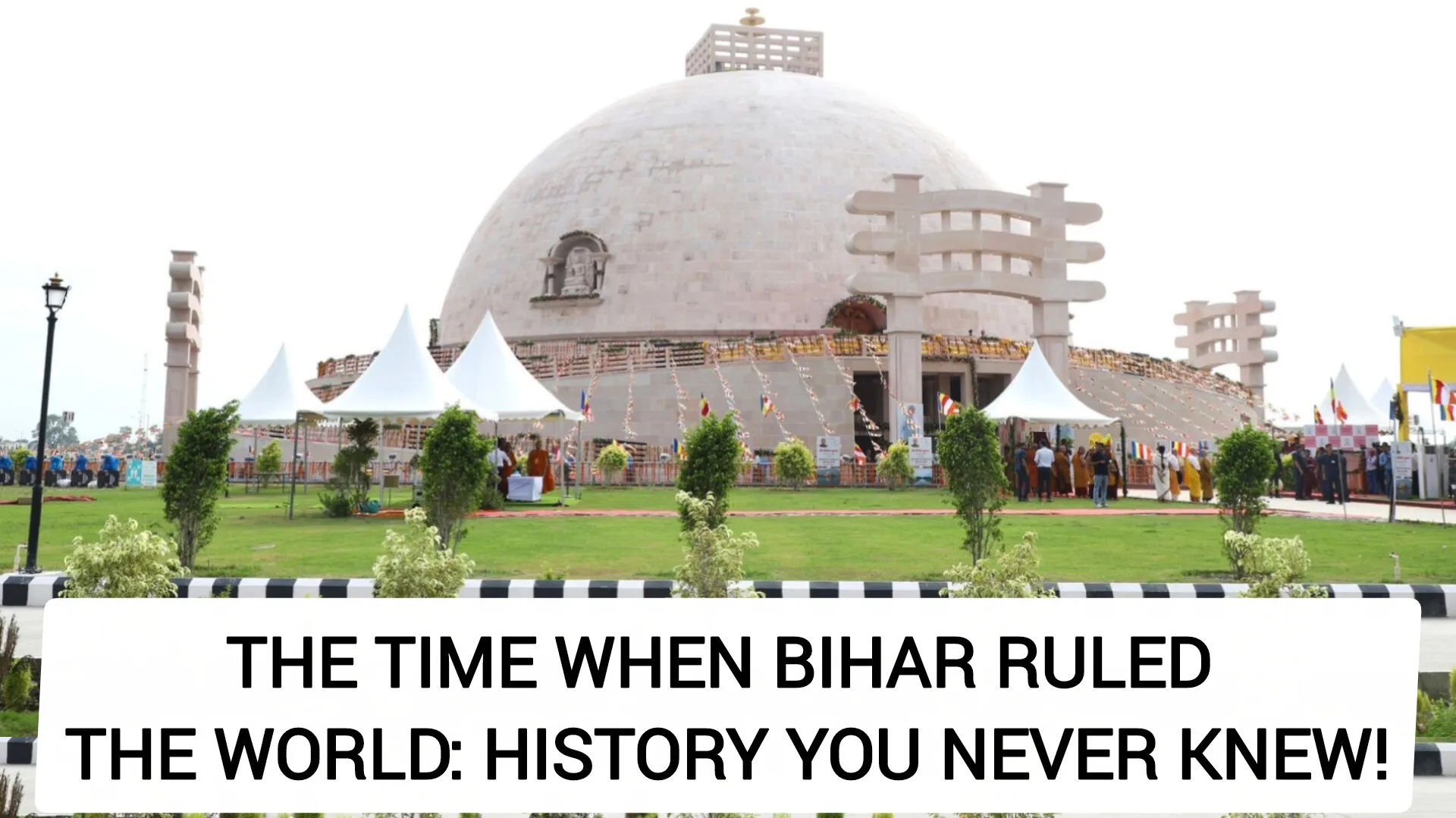
Bihar, a state in eastern India often associated with migration, underdevelopment, or political churn today, once stood as the crown jewel of the ancient world. From the rise of the Maurya Empire to the globally revered Nalanda University, Bihar was not just a land of kings and warriors, but a superpower in education, economy, culture, and governance.
Let’s unravel this forgotten golden history of Bihar — backed by historical facts and global references.
Table of Contents
- India’s 80th Independence Day 2026: History, Significance & Celebrations

- The Truth About Wife Swapping: History, Facts, Laws, Psychology, and Global Trends
- The Time When Bihar Ruled the World: History You Never Knew!

- 20 Next-Level Welcome 2026 Prompts for Ultra-Realistic AI Images
- 2025 World Rewind: The 25 Moments That Defined Our World





I. Pataliputra – The Capital of the World’s Largest Empire
Era: 322 BCE – 185 BCE (Mauryan Empire)
Your Leadership Story Deserves the Spotlight
Get featured on TheAshNow — the editorial platform trusted by founders, CEOs & executives worldwide for Google visibility, LinkedIn authority & global recognition.
Apply for Featured Profile →Bihar’s capital city, Pataliputra (modern-day Patna), was once the political epicenter of the largest empire the Indian subcontinent has ever seen.
🔹 Founded by: Chandragupta Maurya, guided by his mentor Chanakya (Kautilya)
- Unified most of present-day India under one rule.
- Overthrew the Nanda Dynasty and ended Greek influence in north-west India.
- Adopted and implemented the Arthashastra – an early masterpiece on political economy and strategy.
🔹 Expanded by: Samrat Ashoka the Great
- After the brutal Kalinga War, Ashoka embraced Buddhism and became a global icon of peace.
- His empire stretched from modern-day Afghanistan to Bangladesh, and down to the southern tip of India.
- Sent Buddhist missionaries to Sri Lanka, China, Egypt, and Greece – effectively globalizing Indian philosophy.
🏛️ Pataliputra:
- Described by Megasthenes, the Greek ambassador, as a city larger than Rome, filled with grand wooden palaces and an organized administration.
- Home to thousands of officials, artisans, scholars, and monks.
II. Nalanda: The World’s First Residential University
Era: 5th to 12th Century CE
When the world was in the Dark Ages, Nalanda University, in today’s Bihar, was the world’s premier center of learning.
🔹 Founded during the Gupta Empire (likely under Kumaragupta I)
- Located near modern-day Rajgir.
- Had over 10,000 students and 2,000 teachers.
- Offered courses in philosophy, grammar, logic, medicine, mathematics, astronomy, and Buddhism.
- Students came from Tibet, China, Korea, Japan, Indonesia, Persia, and Sri Lanka.
🔹 Famous Visitors:
- Xuanzang (Hiuen Tsang) and Yijing, Chinese monks, studied and lived here for years.
- Nalanda had nine-storey libraries filled with thousands of palm-leaf manuscripts.
🔥 Destruction:
- Destroyed in the 12th century by Bakhtiyar Khilji, who set fire to its vast libraries.
- It is said that the fire burned for months, destroying centuries of knowledge.
III. The Gupta Empire – India’s Golden Age
Era: 319 – 550 CE
Often called the “Classical Age of India“, the Gupta Empire, with its capital at Pataliputra, saw a renaissance in science, literature, and art.
🔹 Great Rulers:
- Chandragupta I, Samudragupta, and Chandragupta II Vikramaditya
- Samudragupta was called the Napoleon of India by historians for his military genius.
🔹Achievements:
- Aryabhata, born in Bihar (Kusumpura near Patna), wrote the Aryabhatiya – introducing the concept of zero, pi (π), and heliocentric astronomy.
- Kalidasa, India’s greatest poet-dramatist, likely flourished under Gupta patronage.
- Decimal system, advanced metallurgy (e.g., the Iron Pillar of Delhi), and temple architecture flourished.
IV. Sher Shah Suri – The Father of Modern Indian Administration
Era: 1540 – 1545 CE
Origin: Sasaram, Bihar
While the Mughals ruled North India, a man from Bihar rose and briefly replaced them, leaving a permanent administrative legacy.
Key Contributions:
- Built the Grand Trunk Road – connecting Bengal to Afghanistan (still in use today).
- Introduced Rupiya, a standardized silver currency.
- Reformed land revenue, postal systems, governance, and military structure.
- His administrative model was later adopted by the Mughals and the British.
Legacy:
- Sher Shah’s tomb in Sasaram is an architectural marvel.
Ad
- Anmol Jaiswal – The Story Behind Indian Backpacker and India’s Most Adventurous Travel Creator
- Joshua Freedman: Emotional Intelligence Leader & CEO
- Alex Hormozi: The Entrepreneur Who Turned Business Growth Into a $100M Playbook
- Alakh Pandey: The Founder of Physics Wallah Who Turned Affordable Education Into a National EdTech Movement
- Kunal Shah: How the FreeCharge and CRED Founder Came to Lead WhatsApp Globally





V. Global Cultural Footprint of Ancient Bihar
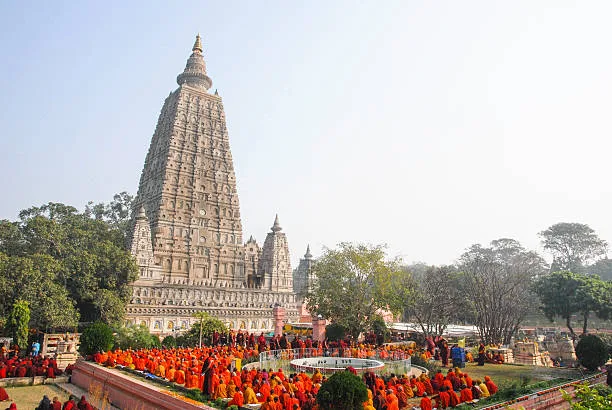
- Buddhism, a religion founded in Bihar (Bodh Gaya), is now practiced in more than 50 countries.
- Ashoka’s Edicts found in Sri Lanka, Nepal, Afghanistan, and Pakistan — proof of Bihar’s ancient global influence.
- Even today, countries like China, Japan, and Thailand revere Bihar as the spiritual home of Buddhism.
VI. What Went Wrong? Why Did Bihar Fall?
Despite its glorious past, Bihar’s decline began post the 12th century due to:
- Repeated invasions – Bakhtiyar Khilji’s destruction of Nalanda was symbolic.
- Political fragmentation – No stable regional power after the early medieval period.
- Colonial exploitation – British rule shifted the center of power and economy away from Bihar.
- Post-independence neglect, corruption, and poor governance.
VII. Why This History Matters Today
- Restoring pride in Bihar’s past can inspire future generations.
- The world’s first university, the strongest rulers, the earliest scientists, and economists once lived here.
- Bihar’s story is not of decline — it’s of potential waiting to be reclaimed.
Conclusion:
Bihar was once the intellectual, spiritual, political, and economic nucleus of not just India—but a large part of the ancient world. Its story isn’t one of backwardness, but of forgotten brilliance.
BUILD YOUR LEGACY IN PRINT
Editorial features for founders, CEOs & executives — engineered for search visibility, LinkedIn credibility & industry authority.
APPLY NOW →It’s time we reclaim, restore, and retell this incredible history — because you can’t write the history of India without Bihar.
FAQs About Bihar’s Glorious Past
1. Was Bihar more powerful than Delhi?
Yes, during the Maurya and Gupta empires, Bihar (Pataliputra) was the capital of India’s most powerful dynasties, far superior to Delhi in influence.
2. Who founded Nalanda University?
Likely founded under Kumaragupta I in the Gupta period (5th century CE).
3. Who was Aryabhata, and what did he do?
A genius mathematician-astronomer from Bihar, who gave the world zero, approximated pi, and proposed Earth’s rotation.
4. Was Buddhism born in Bihar?
Yes. Bodh Gaya, where Gautama Buddha attained enlightenment, is in Bihar.
5. What did Sher Shah Suri contribute?
He built roads, reformed the economy, and laid the foundation of modern administration in India.
6. How big was Ashoka’s empire?
Covered 95% of the Indian subcontinent, including modern-day Afghanistan, Nepal, Bangladesh, and Sri Lanka.
7. What destroyed Nalanda University?
Bakhtiyar Khilji, a Turkic invader, destroyed it around 1193 CE.
8. Was Bihar a global education hub?
Yes. Nalanda and Vikramshila attracted students from Asia and the Middle East.
9. Is any part of ancient Nalanda preserved?
Yes. Nalanda ruins are a UNESCO World Heritage Site today.
10. Can Bihar reclaim its lost glory?
With investment in education, infrastructure, and heritage tourism, Bihar has the potential to rise again.