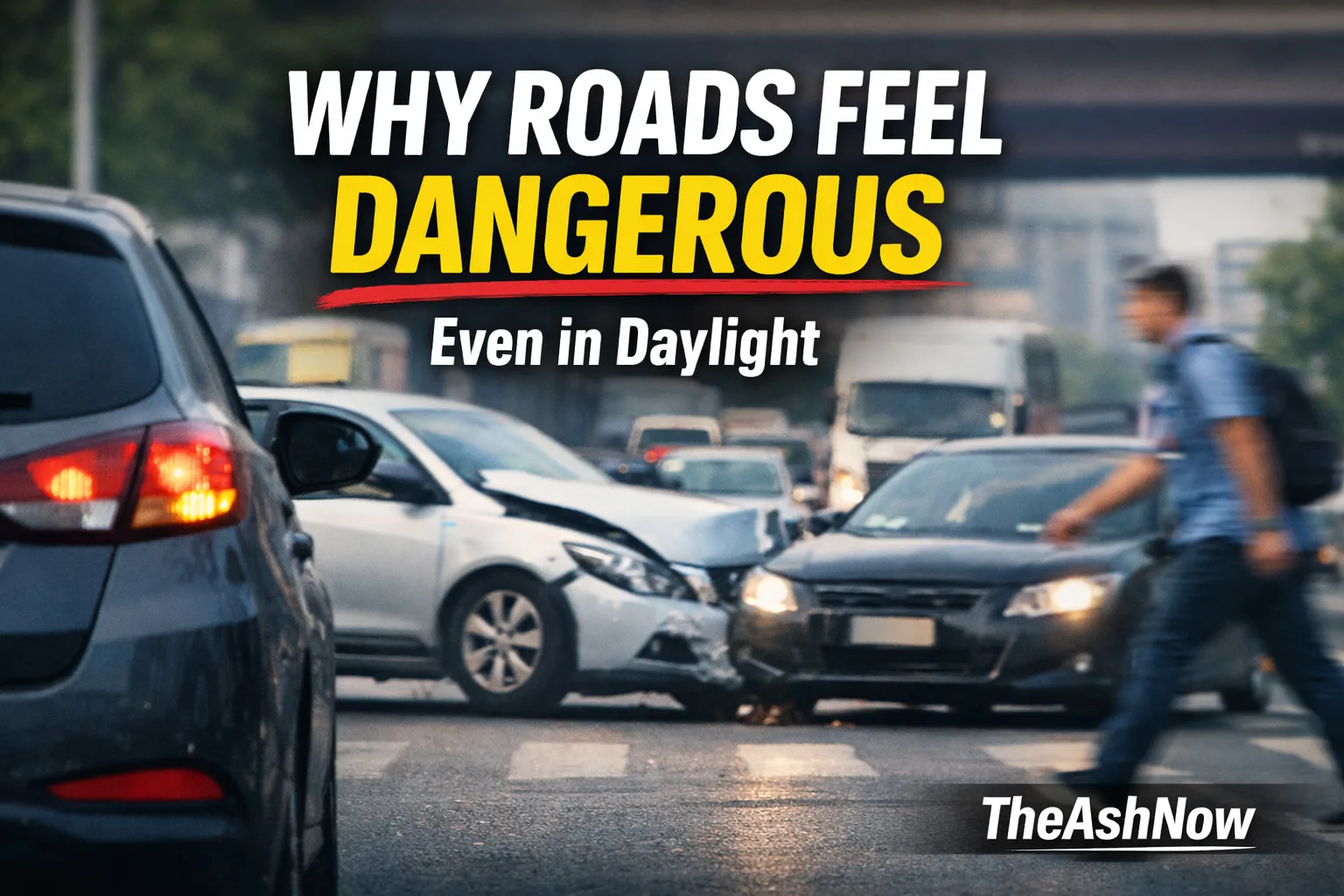
Why Roads Feel More Dangerous: Across countries, cultures, and continents, one shared feeling is becoming impossible to ignore: roads no longer feel safe—even in broad daylight. This is not limited to one nation or one type of road. From highways in North America to city streets in Europe, Asia, and beyond, people report higher anxiety while driving, walking, or even sitting inside vehicles.
This perception is not imaginary. It is the result of multiple overlapping shifts—technological, behavioral, social, and infrastructural—that have quietly changed how roads function in everyday life.
Below is a clear, research-informed, global explanation of why this is happening.
Table of Contents
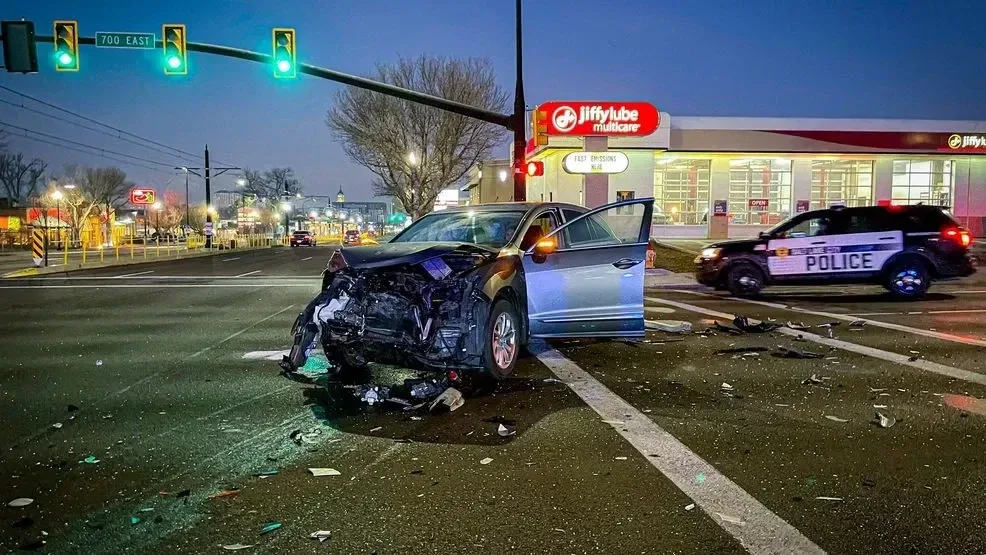
1. Daylight No Longer Means Safety
For decades, daylight driving was considered low-risk. Visibility was better. Alertness was higher. Traffic followed predictable rhythms.
Your Leadership Story Deserves the Spotlight
Get featured on TheAshNow — the editorial platform trusted by founders, CEOs & executives worldwide for Google visibility, LinkedIn authority & global recognition.
Apply for Featured Profile →That assumption no longer holds.
Modern roads operate under constant pressure:
- Higher vehicle density
- Faster decision-making requirements
- Shorter reaction windows
- More unpredictable human behavior
Daylight now simply means more activity, not more safety.
- Why Sugar Prices Are Rising in India: Is Ethanol Behind the Price Surge?
 Why Sugar Prices Are Rising? Sugar has long been one…
 - Colombia Earthquake: A 7.4-Magnitude Disaster Exposes the Human Cost of Seismic Risk Across Western ColombiaA Morning That Turned Into a National Emergency A powerful…
- Bankipur By-Election Result 2026 LIVE: Counting Updates, Vote Margin & Latest Trends🔴 LIVE | Last Updated: 3 August 2026 | 05:40…
- Assam Floods 2026: When the Brahmaputra Turns Into a SeaAssam Floods 2026: Every year, millions of people in Assam…
- Pralhad Joshi Takes Charge as India’s New Education MinisterFollowing the appointment of Pralhad Joshi as India’s new Education…





2. Smartphones Changed Driving Psychology
One of the most critical global shifts is cognitive distraction.
Drivers today are not just driving—they are:
- Reading notifications
- Navigating apps
- Mentally switching between conversations
- Reacting to alerts, vibrations, and prompts
Even when eyes stay on the road, attention often does not.
This has created a new category of risk:
Drivers who appear alert but are mentally delayed by milliseconds that now matter.
At modern speeds, a fraction of a second can mean the difference between control and collision.
3. Aggressive Driving Has Become Normalized
What was once considered reckless is now widely tolerated:
- Tailgating
- Sudden lane changes
- Speeding in urban zones
- Honking and pressure-driving
This shift is global and cultural.
BUILD YOUR LEGACY IN PRINT
Editorial features for founders, CEOs & executives — engineered for search visibility, LinkedIn credibility & industry authority.
APPLY NOW →Why it matters:
- Roads rely on predictability
- Aggression destroys predictability
- Stress spreads from one driver to others
When aggression becomes common, everyone becomes defensive, and defensive driving increases risk rather than reducing it.
- Government Constitutes High-Powered Task Force on Examination Reforms Under Nandan NilekaniLatest Appointment: Head of High-Powered Task Force on Examination Reforms…
- Real Ways to Make Money From Home for FreeReal Ways to Make Money From Home for Free: Making…
- Dr. Ashwini Kumar Ashraf: A Life That Refused to Remain in the DarkWhen a Life Becomes Its Own Light Some lives shine…
- How Millions Are Quietly Making $3000 a Month in 2026 — Without Quitting Their JobsMaking $3000 a Month in 2026: Across the world, a…
- How to Start a YouTube Channel in 2026 and Get 10,000 Subscribers FAST!Welcome to 2026! YouTube remains the world’s largest video platform…





4. Faster Vehicles, Slower Infrastructure
Vehicles have evolved faster than roads.
Modern cars accelerate quicker, handle better, and feel safer inside. Roads, however:
- Were designed decades ago
- Often lacks expansion space
- Were not built for current traffic volume
This mismatch creates an illusion of control inside vehicles while external conditions remain outdated.
The result is overconfidence in environments that cannot support it.
5. More New Drivers, Less Experience
Globally, millions of new drivers enter the roads every year:
- Younger drivers
- Urban first-time drivers
- Rideshare and delivery workers are under time pressure
Many learn to drive through short-form instruction, simulations, or necessity-driven practice rather than long-term experience.
This leads to:
- Inconsistent driving styles
- Unpredictable reactions
- Poor judgment under stress
When experience levels vary widely, coordination breaks down.
6. Roads Are Now Multitasking Zones
Modern roads are no longer just for cars.
They are shared with:
- Pedestrians wearing headphones
- Cyclists and electric scooters
- Delivery bikes
- Ride-hailing stops mid-lane
Each group moves at different speeds and follows different rules.
The complexity has increased, but human attention has not scaled accordingly.
7. Mental Fatigue Is a Hidden Factor
A global rise in mental exhaustion plays a major role.
People today drive while:
- Sleep-deprived
- Emotionally stressed
- Cognitively overloaded
Even short trips feel demanding because the mind is already fatigued before entering traffic.
This reduces:
- Reaction time
- Risk assessment accuracy
- Emotional regulation during conflict
Fatigue turns minor road situations into major hazards.
8. Enforcement Feels Inconsistent
In many regions, traffic enforcement has become:
- Automated but impersonal
- Inconsistent across locations
- Focused on fines rather than behavior correction
When people believe enforcement is uneven, compliance drops.
Rules without perceived fairness lose authority.
9. Why This Feels Worse Than Before
Humans are excellent at detecting shifts in patterns.
Even if statistics vary by region, the collective experience is clear:
- More near-misses
- More sudden braking
- More unpredictable actions
- More stress behind the wheel
When safety depends on everyone behaving reasonably—and that assumption fails—roads feel dangerous regardless of time of day.
10. What This Means Going Forward
This is not a temporary phase.
Unless addressed, roads will continue to feel:
- More chaotic
- More mentally exhausting
- More dangerous, not because of darkness—but because of complexity
The future of road safety depends not just on technology, but on:
- Attention discipline
- Behavioral correction
- Infrastructure adaptation
- Cultural reset around driving norms
Final Thought
Daylight once symbolized safety on the road. Today, it symbolizes crowded systems under strain.
The danger is not the sun or visibility.
The danger is how much has changed without us noticing.
And until behavior, infrastructure, and awareness realign, the feeling will persist—globally.

FAQs — Why Roads Feel More Dangerous
1. Are roads actually more dangerous today, or does it just feel that way?
It is both. In many regions, near-misses, aggressive driving, and distraction-related incidents have increased. Even where statistics are mixed, daily road behavior has become more unpredictable, which strongly affects perceived safety.
2. Why does daytime driving feel stressful now?
Daytime traffic is denser than ever. More vehicles, delivery riders, pedestrians, and constant decision-making overload the brain, turning daylight into a high-pressure driving window.
3. Is smartphone use the biggest reason behind unsafe roads?
It is one of the most significant contributors. Even brief attention shifts caused by phones reduce reaction time and situational awareness, which is critical at modern traffic speeds.
4. Why does aggressive driving seem so common everywhere?
Time pressure, stress, and social normalization have made aggressive behavior feel acceptable. Unfortunately, aggression breaks road predictability, which is essential for safety.
5. Have roads failed to keep up with modern traffic?
Yes. Many road systems were designed decades ago for fewer vehicles and lower speeds. Today’s traffic volume and vehicle performance exceed what those roads were built to handle.
6. Do new drivers increase risk on roads?
Yes, especially when experience levels vary widely. Inconsistent driving decisions make it harder for others to anticipate movements, increasing accident risk.
7. Why do even short drives feel exhausting now?
Mental fatigue plays a major role. Many drivers start trips already tired, stressed, or distracted, reducing alertness even in good daylight conditions.
8. Is this problem global or country-specific?
It is global. Similar driving patterns and safety concerns are reported across North America, Europe, Asia, and emerging urban regions worldwide.
9. Will better technology make roads safer again?
Technology helps, but it cannot fully compensate for distracted or aggressive human behavior. Behavioral discipline and infrastructure upgrades are equally necessary.
10. Is daytime road safety likely to improve soon?
Not without systemic changes. Without stronger enforcement, awareness, and cultural shifts in driving habits, roads will continue to feel dangerous regardless of lighting conditions.