
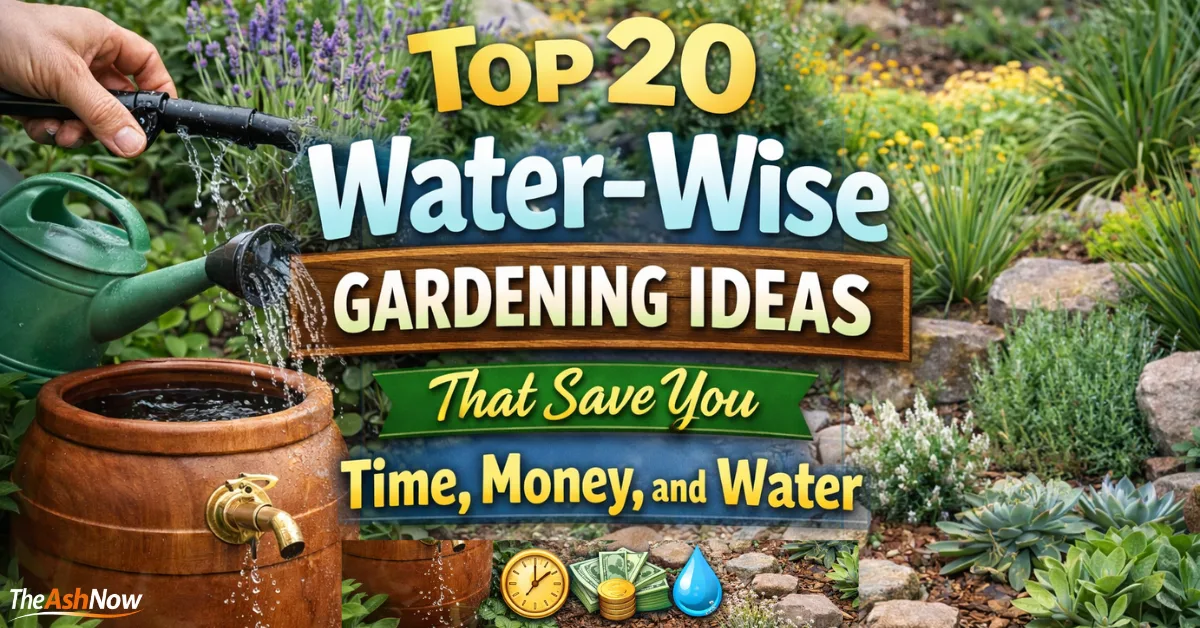
Water is becoming one of the world’s most precious resources — and home gardens are quietly becoming part of the solution.
From California to Australia, homeowners are rethinking how they grow food and design green spaces.
Water-wise gardening isn’t about sacrificing beauty. It’s about designing smarter gardens that thrive with less water, less effort, and lower costs.
Here are 20 proven, practical, and future-ready water-wise gardening ideas that work in both small urban homes and large suburban yards.
Table of Contents
Your Leadership Story Deserves the Spotlight
Get featured on TheAshNow — the editorial platform trusted by founders, CEOs & executives worldwide for Google visibility, LinkedIn authority & global recognition.
Apply for Featured Profile →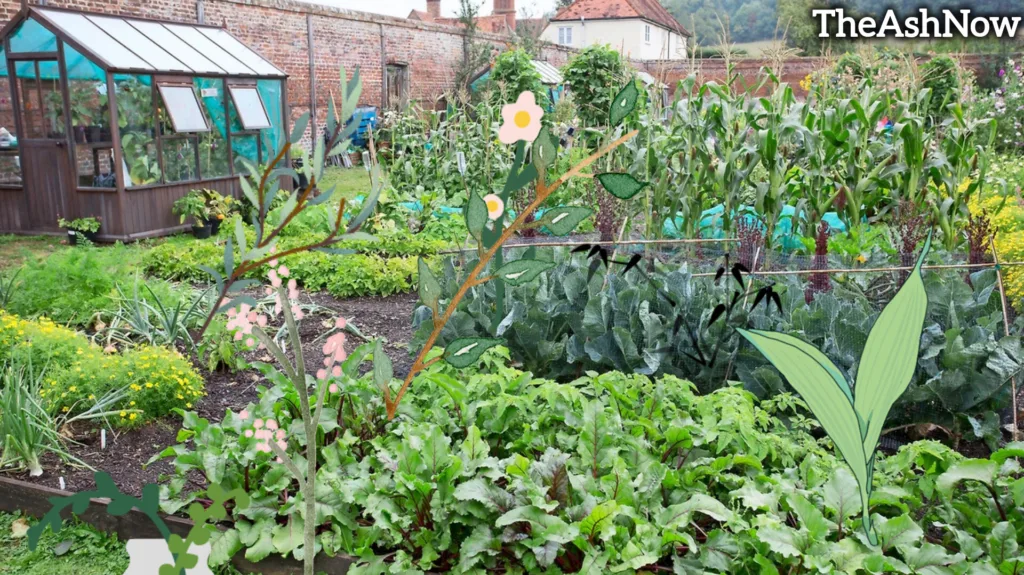
Top 20 Water-Wise Gardening Ideas
1. Choose Drought-Tolerant Plants
These plants naturally survive on low water because they evolved in dry climates.
Why it works: They need watering only during establishment, then almost none.
Examples Include Lavender, rosemary, thyme, sage, succulents, ornamental grasses, and native wildflowers.
Tip: Prefer native species for your region — they survive better and support local insects.
2. Switch to Drip Irrigation
Drip irrigation slowly delivers water straight to the root zone.
Why it works: No overspray, no evaporation, no water waste.
Savings: Up to 50–60% less water than sprinklers.
Tip: Use pressure-regulated emitters for even flow.
RELATED POST


3. Use Mulch Generously
Mulch covers the soil, preventing moisture loss.
Benefits:
- Reduces evaporation
- Prevents weeds
- Improves soil fertility over time
Best mulch: Wood chips, straw, compost, shredded leaves.
4. Harvest Rainwater
Rainwater from your roof is free irrigation.
How: Install rain barrels or tanks under gutter downspouts.
One inch of rain on a roof can collect hundreds of gallons.
5. Improve Soil with Compost
Healthy soil holds water like a sponge.
BUILD YOUR LEGACY IN PRINT
Editorial features for founders, CEOs & executives — engineered for search visibility, LinkedIn credibility & industry authority.
APPLY NOW →How: Mix compost into beds once or twice a year.
Result: Roots grow deeper, and soil retains moisture longer.
6. Group Plants by Water Needs (Hydrozoning)
Put thirsty plants together and drought-tolerant ones together.
Why: Prevents overwatering some plants and underwatering others.
Result: More control, less waste.
7. Water Early Morning or Late Evening
Sun causes water to evaporate quickly.
Best time: Before 9 AM or after 6 PM.
Avoid: Midday watering.
8. Replace Lawn with Ground Covers
Lawns are water-hungry.
Alternatives: Clover, creeping thyme, sedum, native grasses.
They look beautiful and require far less water.
9. Use Smart Irrigation Controllers
These systems adjust watering based on weather forecasts.
Benefit: Prevent watering when rain is coming.
Result: Saves water automatically without manual control.
FEATURED POST





10. Try Xeriscaping
Xeriscaping is landscaping designed for dry conditions.
It uses:
- Gravel or stones
- Minimal turf
- Drought-tolerant plants
Result: Extremely low water use and low maintenance.
11. Plant Trees for Shade
Shade reduces soil temperature.
Cooler soil = less evaporation = less watering.
Trees also protect smaller plants from heat stress.
12. Install Soaker Hoses
Soaker hoses release water slowly into the soil.
Why better than sprinklers:
- No wind drift
- No evaporation
- Deep watering
13. Grow Deep-Rooted Plants
Plants with deep roots reach groundwater naturally.
Examples: Sunflowers, tomatoes, fruit trees, perennial herbs.
14. Use Self-Watering Containers
These containers have water reservoirs below the soil.
Benefit: Plants take only what they need.
Result: No overwatering, no waste.
15. Collect Greywater (Where Legal)
Reuse water from sinks, showers, or washing machines.
Important: Only biodegradable soap and safe systems should be used.
Check local regulations before implementing.
16. Reduce Hard Surfaces
Concrete and tiles cause runoff.
Replace with:
- Permeable pavers
- Gravel
- Soil and mulch
This allows water to seep into the ground.
17. Create Windbreaks
Wind dries plants faster than the sun.
Use:
- Hedges
- Fences
- Tall shrubs
to reduce evaporation caused by wind.
18. Choose Smaller-Leaf Varieties
Smaller leaves lose less water through transpiration.
Benefit: Plants stay hydrated longer with less irrigation.
19. Prune Strategically
Less leaf area = less water loss.
Pruning also improves airflow and plant health.
20. Observe Before You Water
Don’t water on a schedule blindly.
Check soil moisture by inserting your finger 2–3 inches into the soil.
If it’s moist, skip watering.
Final Thought: Why Water-Wise Gardening Is the Future of Home Living
Water-wise gardening is no longer a niche idea for dry regions or eco-enthusiasts. It is becoming a mainstream necessity driven by climate change, rising water costs, urbanization, and increasing pressure on natural resources.
Across the United States and the world, households are facing:
- More frequent droughts and water restrictions
- Higher utility bills
- Hotter summers and unpredictable rainfall
- Smaller living spaces with less access to traditional gardens
In this new reality, traditional high-water gardens are becoming impractical, expensive, and environmentally unsustainable.
Water-wise gardening is not about giving up beauty, productivity, or enjoyment — it is about redesigning how we grow so our gardens work with nature instead of against it.
It’s a Shift From Control to Cooperation
For decades, gardening was based on control: controlling pests with chemicals, controlling growth with fertilizers, and controlling water through heavy irrigation.
Water-wise gardening represents a philosophical shift:
- From forcing plants to survive → to choosing plants that naturally thrive
- From overwatering and correcting problems later → to designing systems that prevent problems
- From short-term aesthetics → to long-term resilience
This approach makes gardens more self-sufficient, healthier, and easier to maintain over time.
It Saves More Than Water
Most people think water-wise gardening is only about saving water. In reality, it saves:
- Time — less daily watering, fewer plant failures
- Money — lower water bills, fewer replacements, fewer inputs
- Energy — less pumping, less equipment use
- Stress — fewer emergencies when you forget to water or go on vacation
It turns gardening from a chore into a sustainable, low-effort lifestyle.
It Makes Homes More Climate-Resilient
As climate extremes increase, homes that rely on heavy water consumption become vulnerable.
Water-wise gardens:
- Survive heat waves better
- Recover faster after dry periods
- Are less dependent on the external water supply
- Increase property resilience and even long-term value
In other words, a water-wise garden is a form of future-proofing your home.
It Reconnects People With Natural Systems
Perhaps most importantly, water-wise gardening changes how people relate to nature.
You stop asking:
“How can I make this plant survive here?”
You start asking:
“What belongs here naturally?”
This creates:
- Healthier ecosystems
- More pollinators and birds
- Better soil life
- A deeper understanding of local climate and seasons
The garden becomes a living system, not just a decoration.
VIRAL CONTENT





The Big Picture
When millions of households shift to water-wise gardening, the impact becomes massive:
- Reduced pressure on municipal water systems
- Less groundwater depletion
- Lower energy demand for water treatment and pumping
- Healthier urban and suburban environments
What begins as a personal choice quietly becomes a collective solution.
Closing Perspective
Water-wise gardening is not a trend. It is a response to a changing world.
It represents a smarter way to live — one that respects limits, embraces efficiency, and values long-term stability over short-term convenience.
In the coming years, the most beautiful gardens will not be the ones that consume the most resources — they will be the ones that use the least while offering the most.
That is the real promise of water-wise gardening.

FAQs: Water-Wise Gardening Ideas
1. What does “water-wise gardening” mean?
Water-wise gardening means designing and maintaining a garden that uses the least amount of water possible while keeping plants healthy and productive.
2. How much water can water-wise gardening actually save?
A properly designed water-wise garden can reduce outdoor water use by 30% to 60% compared to traditional lawns and gardens.
3. Is water-wise gardening only for dry or desert climates?
No. Water-wise gardening works in all climates because it focuses on efficiency, soil health, and plant selection — not just drought survival.
4. Does water-wise gardening cost more to set up?
Initial setup can cost slightly more, but long-term savings on water bills, fertilizers, and plant replacement usually outweigh the upfront costs.
5. Can I grow vegetables with water-wise gardening?
Yes. Many vegetables, such as tomatoes, peppers, beans, and herbs, grow very well in water-wise systems with drip irrigation and mulch.






[…] Top 20 Water-Wise Gardening Ideas That Save You Time, Money, and Waterby TheAshNow Team […]
[…] Top 20 Water-Wise Gardening Ideas That Save You Time, Money, and Waterby TheAshNow Team […]