
📅 Key Dates & Policy Context
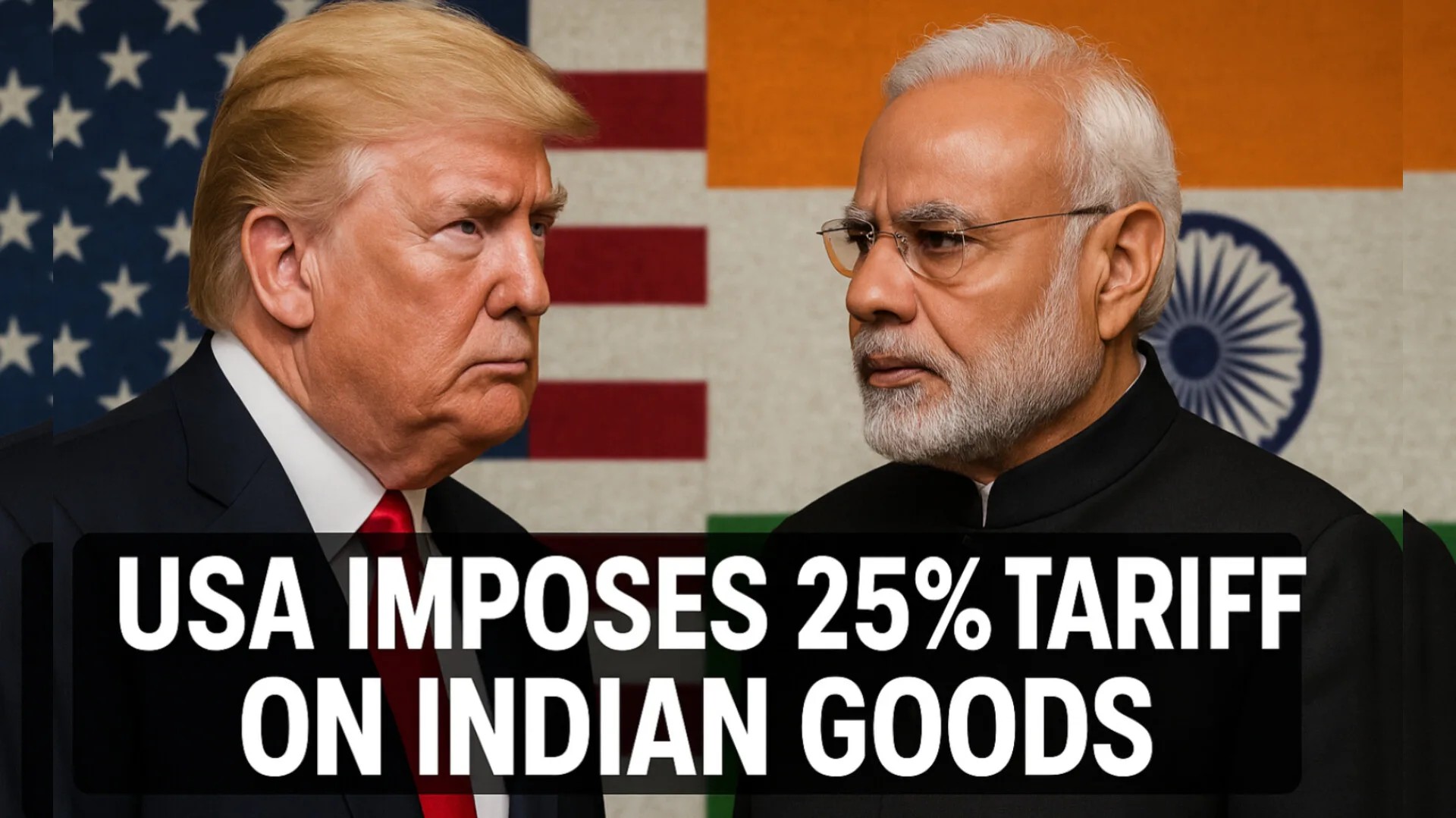
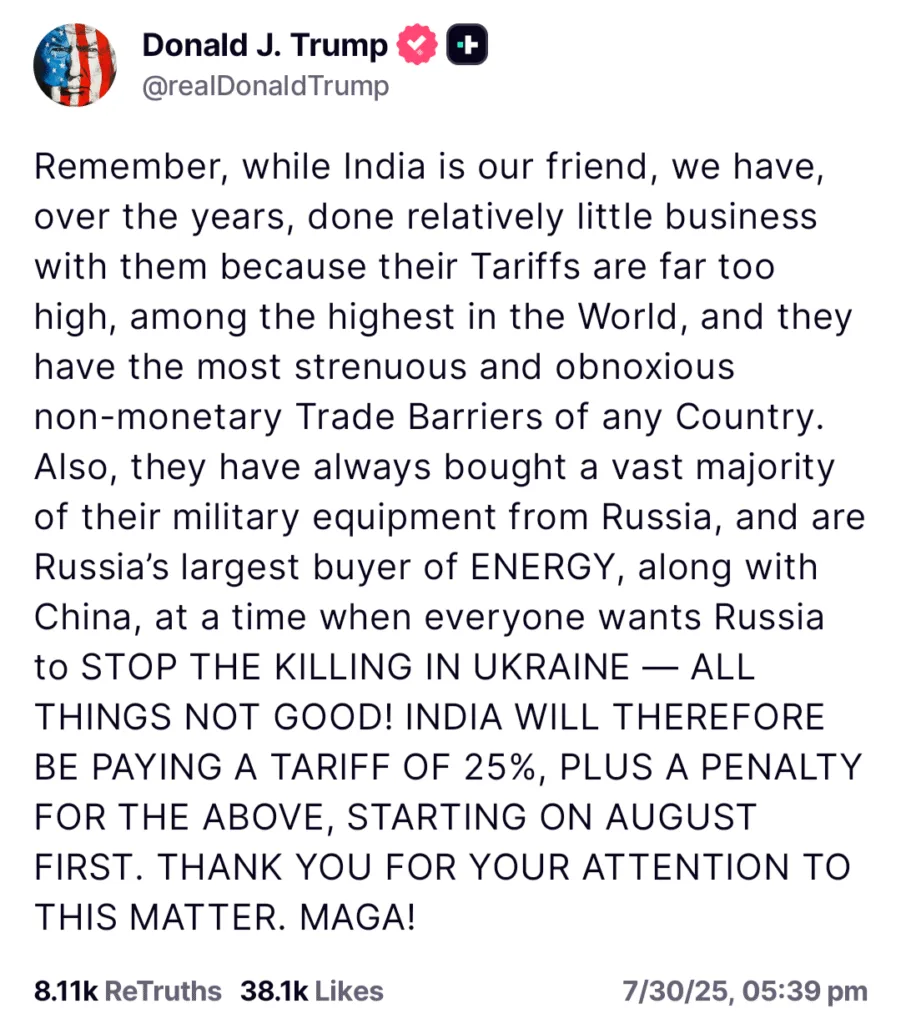
On July 30, 2025, former President Donald Trump announced a 25% tariff on imports from India, effective August 1, 2025. This move comes under the framework of his earlier “America First” trade policies, revived through Executive Order 14257—also known as the “Liberation Day Tariffs.” The administration cited India’s high tariff rates, non-monetary trade barriers, and continued purchases of Russian oil and military equipment as primary reasons for the decision.
This action places India among the countries most affected by the elevated tariffs, with rates exceeding those imposed on countries like Vietnam (20%), Indonesia (19%), and Japan or the EU (15%).
Table of Contents
- India’s 80th Independence Day 2026: History, Significance & Celebrations

- The Truth About Wife Swapping: History, Facts, Laws, Psychology, and Global Trends
- The Time When Bihar Ruled the World: History You Never Knew!

- 20 Next-Level Welcome 2026 Prompts for Ultra-Realistic AI Images
- 2025 World Rewind: The 25 Moments That Defined Our World





📦 Goods & Sectors Affected
Although the full tariff schedule has not been disclosed, the following Indian export sectors are expected to be heavily impacted:
Your Leadership Story Deserves the Spotlight
Get featured on TheAshNow — the editorial platform trusted by founders, CEOs & executives worldwide for Google visibility, LinkedIn authority & global recognition.
Apply for Featured Profile →- Textiles & Garments
- Gemstones & Jewellery
- Footwear, Leather Products
- Furniture & Home Décor
- Pharmaceuticals
- Automotive Components
These industries represent over $11 billion in annual exports to the U.S. and heavily depend on access to the American market.
⚖️ Why the U.S. Took This Step
U.S. Rationale:
- To reduce trade deficits with countries that maintain high tariffs on U.S. products.
- To retaliate against what Trump called “obnoxious” trade barriers in India.
- As a diplomatic signal over India’s increasing defense and energy ties with Russia.
The move is designed to pressure India into negotiating more favorable trade terms and to align more closely with U.S. geopolitical interests.
🚧 India’s Response and Challenges
India’s Position:
- The government is “studying implications” and remains open to resolving trade disputes through bilateral dialogue.
- Indian officials have emphasized the need to protect farmers, MSMEs, and traditional exporters like those in textiles and gems.
- India sees room for negotiation, especially since the announcement came through social media and not via official diplomatic channels.
Economic Risks:
- Industries in Surat and Tiruppur have already reported halted orders and paused production due to pricing uncertainty.
- Indian exporters now face stiff competition from countries like Bangladesh and Vietnam, whose tariffs are lower.
- The potential annual loss to Indian exporters may exceed $7 billion if the tariffs remain in place long-term.
Strategic Outlook:
- Indian trade policy analysts recommend market diversification, especially strengthening ties with the EU, ASEAN, and African countries.
- Calls for reducing over-reliance on the U.S. as a single trade partner are growing louder across industries.
🔍 Top 10 FAQs on U.S.–India Tariffs
🇺🇸 U.S. Perspective
1. Why did Trump impose a 25% tariff on Indian imports?
To counter India’s high tariff barriers and send a strong signal about its alignment with Russia.
2. When do the tariffs take effect?
From August 1, 2025, as per the July 30 announcement.
3. What is the additional penalty Trump mentioned?
An unspecified economic penalty aimed at punishing India’s ongoing energy and defense deals with Russia.
4. How were these specific tariff rates decided?
India was given a 25–26% rate based on trade deficits, protectionist policies, and geopolitical concerns.
BUILD YOUR LEGACY IN PRINT
Editorial features for founders, CEOs & executives — engineered for search visibility, LinkedIn credibility & industry authority.
APPLY NOW →5. How does India compare to other nations under this policy?
India is hit hardest with 25%, compared to 20% on Vietnam, 19% on Indonesia, and 15% on the EU and Japan.
🇮🇳 Indian Perspective
6. Which Indian goods are most affected by the 25% tariff?
Textiles, garments, footwear, gems, jewellery, auto parts, and select pharma products.
7. What is the Indian government’s response?
India is reviewing the impact and remains committed to a “fair, balanced, and mutually beneficial” trade outcome.
8. How much could India lose annually?
An estimated $7 billion or more, especially from MSME-heavy sectors.
9. Is there any hope of rollback or negotiation?
Yes, both sides have left room open for discussion, and talks are expected to continue in August.
10. How can India respond strategically?
By diversifying its export markets, promoting FTAs with other regions, and boosting domestic competitiveness.
✅ Executive Snapshot
| Element | Details |
|---|---|
| Tariff Rate | 25% on Indian goods entering the U.S. |
| Effective Date | August 1, 2025 |
| Trump’s Justification | Textiles, jewellery, leather, pharma, and auto parts |
| Key Impacted Sectors | Textiles, jewellery, leather, pharma, auto parts |
| India’s Stand | Open to talks, protecting MSMEs, exploring alternatives |
| Global View | Risk of broader trade tension, possible WTO response |
Read More:
- Tsunami Warning: California on Alert After 8.7 Earthquake
- How Scrolling Before Bed Affects Your Mental Health – TheAshNow
- Dr. A.P.J. Abdul Kalam: From Rameswaram Boy to the People’s President
- iOS 18 Hidden Features Apple Didn’t Tell You
- What is Dopamine Detox and Does It Work? [2025 Scientific Guide]








[…] USA Imposes 25% Tariff on India Under Trump-Era Rules What is Dopamine Detox and Does It Work? [2025 Scientific Guide] […]