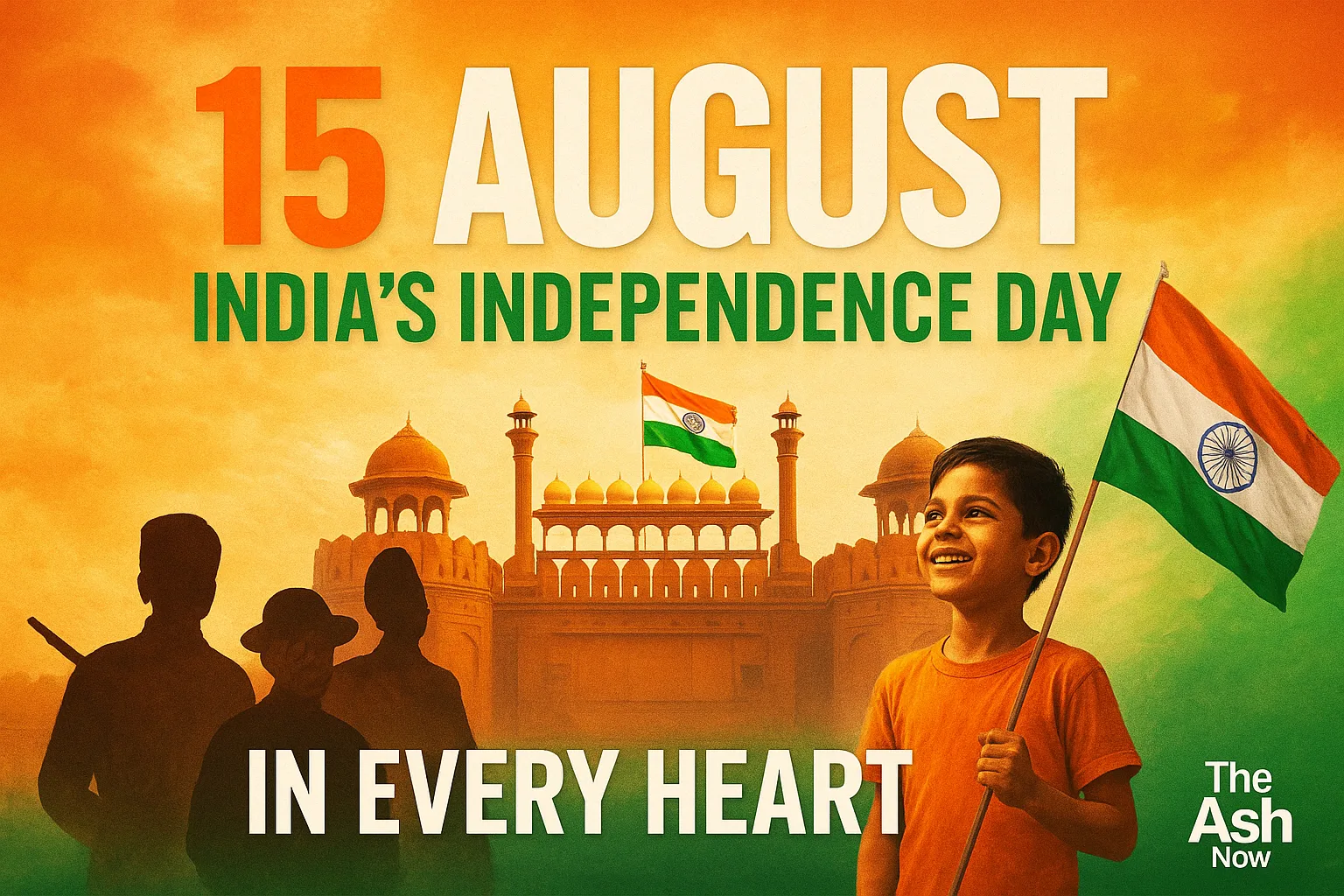
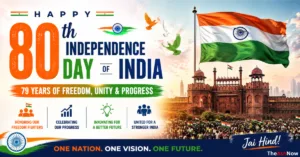
Every year on 15 August, India celebrates one of its most important and emotional days—Independence Day. This day is much more than just a date on the calendar; it symbolizes the sacrifice, struggles, and dreams of millions who fought for India’s freedom. It is a day filled with patriotism, pride, and renewed commitment to the nation.
Table of Contents
The Long Struggle for Freedom
India’s path to independence was neither easy nor short. It was a long, arduous struggle that spanned over decades, involving countless sacrifices by freedom fighters and ordinary citizens alike.
The First War of Independence (1857)
The fight against British colonial rule began with the First War of Independence in 1857. Although it was suppressed, it ignited the fire of resistance and sowed the seeds of a larger movement for freedom.
The Era of Mahatma Gandhi and Non-Violence
Mahatma Gandhi’s arrival in India in 1915 marked a turning point. Through his philosophy of Satyagraha (truth-force) and Ahimsa (non-violence), he united the masses and led two major movements: the Non-Cooperation Movement (1920) and the Civil Disobedience Movement (1930). These movements challenged British authority peacefully yet powerfully.
Your Leadership Story Deserves the Spotlight
Get featured on TheAshNow — the editorial platform trusted by founders, CEOs & executives worldwide for Google visibility, LinkedIn authority & global recognition.
Apply for Featured Profile →The Moment of Freedom: 15 August 1947
After years of relentless struggle, India finally achieved independence on the midnight of 15 August 1947. It was the dawn of a new era. Jawaharlal Nehru, India’s first Prime Minister, delivered his famous “Tryst with Destiny” speech, expressing hope and vision for the nation’s future.
Patriotic Quotes for 15 August
- “At the stroke of the midnight hour, when the world sleeps, India will awake to life and freedom.” – Jawaharlal Nehru
- “Give me blood, and I will give you freedom!” – Subhash Chandra Bose
- “Swaraj is my birthright, and I shall have it.” – Bal Gangadhar Tilak
- “Inquilab Zindabad!” (Long Live the Revolution!) – Bhagat Singh
- “A nation’s culture resides in the hearts and in the soul of its people.” – Mahatma Gandhi
- “We are Indians, firstly and lastly.” – B. R. Ambedkar
- “It is easy to kill individuals, but you cannot kill the ideas.” – Bhagat Singh
- “So long as you do not achieve social liberty, whatever freedom is provided by the law is of no avail to you.” – B. R. Ambedkar
- “Forget not that the grossest crime is to compromise with injustice and wrong.” – Netaji Subhash Chandra Bose
- “The preservation of freedom is not the task of soldiers alone. The whole nation has to be strong.” – Lal Bahadur Shastri
- The Ultimate Collection of 20+ New Year 2026 Image Prompts

- Why Google Discover Is Replacing Search In 2026

- Bihar Election Result 2025: Seat-Wise Result With Full Details
- Why We Celebrate Teachers Day on September 5 in India
- 79वें स्वतंत्रता दिवस पर प्रधानमंत्री का भाषण: मुख्य बिंदु + आधिकारिक पीआईबी भाषण





The Global Significance of 15 August
India’s Independence Day is not just a national celebration but a beacon of hope worldwide. It reminds us that the quest for freedom is universal and that people united by a common cause can overcome oppression.
Post-independence, India emerged as the world’s largest democracy, a symbol of resilience, diversity, and strength. 15 August reflects India’s commitment to democracy, secularism, and progress.
The National Flag and Anthem: Symbols of Unity
The Tricolor flag (Tiranga) is the most powerful symbol of India’s freedom. It stands for:
- Saffron (Kesari): Courage and sacrifice
- White: Peace and truth
- Green: Growth and prosperity
- Ashoka Chakra (wheel): Justice and progress
The national anthem, “Jana Gana Mana,” fills every Indian heart with pride. Singing it on Independence Day unites millions in patriotism and respect for the nation’s ideals.
- Why Sugar Prices Are Rising in India: Is Ethanol Behind the Price Surge?
- Colombia Earthquake: A 7.4-Magnitude Disaster Exposes the Human Cost of Seismic Risk Across Western Colombia
- Bankipur By-Election Result 2026 LIVE: Counting Updates, Vote Margin & Latest Trends
- Assam Floods 2026: When the Brahmaputra Turns Into a Sea
- Pralhad Joshi Takes Charge as India’s New Education Minister



How Independence Day is Celebrated
Across the country, 15 August is celebrated with great enthusiasm and reverence.
- Flag Hoisting at Red Fort
The Prime Minister hoists the national flag at Delhi’s historic Red Fort and addresses the nation, highlighting achievements and future goals. - Schools and Colleges
Students participate in patriotic songs, speeches, and cultural programs that foster a sense of national pride. - Public Events and Parades
Cities and towns organize parades, exhibitions, and rallies celebrating India’s rich heritage and freedom struggle. - Homes and Offices
The Tricolor is hoisted on houses, cars, and offices, symbolizing collective respect and unity.
The True Value of Freedom: Stories of Sacrifice
Independence was not gifted; it was earned with immense sacrifice. Brave souls like Bhagat Singh, Chandrashekhar Azad, Rani Lakshmibai, Sardar Patel, Subhash Chandra Bose, and Mahatma Gandhi laid down their lives for the motherland.
Their stories teach us that true patriotism means putting the country above oneself, showing courage and unwavering commitment to justice and liberty.
- Digital Detox Strategies the World Needs Right Now
- Benefits of Digital Detox in a Hyper-Connected World
- Inside a Digital Detox Retreat — Life Without Screens
- Best Digital Detox Apps to Beat Phone Addiction in 2026
- The Digital Detox Book for a Calmer Mind





Today’s India: A Nation Soaring High
Since 1947, India has transformed itself remarkably in technology, space research, agriculture, economy, and defense. The youth of India are the torchbearers of this new progress, carrying forward the legacy of freedom with innovation and dedication.
Independence Day is a reminder that freedom is not an end but a beginning—a call to each citizen to contribute toward building a stronger, more prosperous India.
BUILD YOUR LEGACY IN PRINT
Editorial features for founders, CEOs & executives — engineered for search visibility, LinkedIn credibility & industry authority.
APPLY NOW →The Spirit of Patriotism: More Than Just a Feeling
Patriotism is not just about celebrations or speeches; it’s a daily commitment. It means respecting diversity, following the law, working honestly, and protecting the country’s interests.
Every Indian, whether a student, farmer, worker, or entrepreneur, must carry the flame of love for the nation and act for its betterment.
- India’s 80th Independence Day 2026: History, Significance & Celebrations
- The Truth About Wife Swapping: History, Facts, Laws, Psychology, and Global Trends
- Why FIFA World Cup 2026 Is the Biggest World Cup in History?
- The Time When Bihar Ruled the World: History You Never Knew!
- The Most Expensive Play in NFL History



Challenges and Responsibilities in Independent India
Freedom brought new challenges—corruption, poverty, inequality, and social injustice. On 15 August, Indians pledge to fight these evils and work towards an inclusive and equitable society.
Every citizen must uphold the values of freedom and democracy, to educate themselves and others, and to build a nation worthy of the sacrifices made.
Memorable Moments of Independence Day
- Nehru’s “Tryst with Destiny” Speech
The speech remains a timeless inspiration, capturing the hopes and dreams of a new India. - First Flag Hoisting at Red Fort
The Red Fort became the symbol of India’s sovereignty and pride. - Annual National Celebrations
The day continues to unite Indians across regions, religions, and cultures, reinforcing the country’s unity.

Teaching Patriotism to Future Generations
Passing the legacy of freedom to children is vital. They must learn the history, understand the sacrifices, and develop a sense of responsibility towards their country.
Patriotism nurtured from childhood builds strong citizens who will safeguard and progress the nation.
- “Freedom is not given, it is taken.”
- “A flag does not fly because of the wind; it flies with the last breath of each soldier who died protecting it.”
- “True freedom lies in the power to live with dignity.”
- “Our freedom is the result of countless sacrifices—let’s honor them.”
- “Liberty is priceless; once lost, it is lost forever.”
- “The tricolor is not just a piece of cloth—it’s our soul.”
- “Freedom without responsibility is meaningless.”
- “The real celebration of Independence is in serving the nation.”
- “We owe our today to those who gave their tomorrow.”
- “National pride is the heartbeat of a true citizen.”
- “Every drop of a martyr’s blood is a seed for a free future.”
- “Unity is our greatest weapon; diversity is our greatest strength.”
- “The worth of freedom is best known to those who have lost it.”
- “A free India is our inheritance; a strong India is our duty.”
- “Jai Hind is not just a slogan—it’s a promise.”
- “Protecting freedom is harder than winning it.”
- “Patriotism is not a one-day feeling; it’s a lifelong duty.”
- AI Deception Exposed: UK AI Security Institute Catches Anthropic and OpenAI Models Lying
- The End of Paper Invitations? Why Digital Invitations Are Taking Over Weddings and Events Worldwide in 2026
- Inside TheAshNow AI: Engineering a Scalable Revenue Engine for US Real Estate Teams
- Game-Changing Gadgets of 2026: The Next Tech Revolution
- Real Ways to Make Money From Home for Free





Conclusion: Long Live India!
15 August reminds us not only of our freedom but also of the duties that come with it. It calls upon every Indian to stand tall, protect the nation’s honor, and work tirelessly for its progress.
Let us celebrate this Independence Day by singing the national anthem with pride, hoisting the tricolor high, and saluting the brave heroes who made our freedom possible.
Jai Hind! Vande Mataram!
FAQs – 15 August (India’s Independence Day)
Q1. How many days until August 15?
The number of days until 15 August depends on today’s date. For example, if today is 13 August, then there are only 2 days left until Independence Day in India.
Q2. What day is August 15?
August 15 is celebrated as India’s Independence Day every year. In 2025, it will fall on a Friday.
Q3. How long ago was August 15?
If referring to the most recent 15 August, the number of days since that date depends on today’s date. For example, if today is 20 August, then 15 August was 5 days ago.
Q4. 15 August India – What is its significance?
15 August is the day when India gained independence from British rule in 1947. It is a national holiday marked by flag hoisting ceremonies, cultural events, and patriotic celebrations across the country.